

It is evident that public agricultural land in Hanoi has not been fully utilized, leading to wasted land resources and budget losses. The challenge lies in removing bottlenecks to bring public agricultural land into production. This would not only prevent the waste of land resources but also create material wealth and jobs for the people.
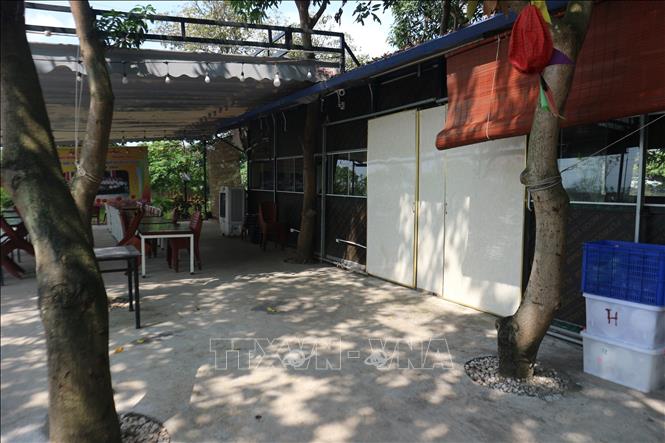
Redraw the "map"
According to Mr. Nguyen Anh Quan, Deputy Director of the Hanoi Department of Natural Resources and Environment, there are still shortcomings in the management of public agricultural land that require guidance. Initially, the Department requires communes to put an end to the situation where agricultural cooperatives, villages, and hamlets in some wards and communes manage and lease public agricultural land in violation of the law.
In cases where organizations receive agricultural land transfers under Decree 64-CP of 1993 on the allocation of agricultural land to households and individuals for stable, long-term use for agricultural production purposes, or lease public agricultural land from the commune-level People's Committee but violations occur, the organization must prepare a land lease application and submit it to the Department of Natural Resources and Environment for appraisal and submission to the City People's Committee for consideration of leasing the land to implement the project in accordance with the law.
For cases that are inconsistent with the land use plan, consider providing guidance on preparing annual land lease applications. Simultaneously, the organization leasing the land must commit to relocating upon notification from the competent People's Committee when implementing the project according to the plan. The district-level People's Committee will prepare land recovery documents and handle violations in accordance with the law.
According to Mr. Quan, for cases where land cannot continue to be used for agricultural purposes, a report will be compiled and submitted to the City People's Committee for consideration and approval of land use conversion, and the signing of land lease contracts for use in accordance with the land use plan and planning approved by the competent authority.
As a locality facing numerous shortcomings in the management and use of public agricultural land as mentioned above, to overcome these existing problems and obstacles, the Chairman of the Son Tay Town People's Committee, Ngo Dinh Ngu, stated that he is requesting the People's Committees of communes and wards to conduct a review and inventory on the ground and in cadastral records. Simultaneously, they will compile statistics, establish management records, and develop measures and plans for the effective exploitation and use of agricultural land used for public purposes in each commune and ward. Furthermore, they will publicly disclose information about each plot and location of public land so that the people can be aware of and monitor it.
The People's Committee of the town directed departments and divisions to coordinate with the People's Committees of communes and wards to expedite the auction process for leasing public land plots that meet the conditions; gradually resolve difficulties for land plots with remaining land issues, especially ponds, lakes, and lagoons serving aquaculture; and public land plots with large areas and favorable locations for agricultural production...
Regarding fundamental solutions for managing public agricultural land in the area, Mr. Nguyen Manh Ha, Chairman of the Long Bien District People's Committee (Hanoi), shared that the locality has a very large amount of public agricultural land and alluvial land along the riverbanks, but its potential advantages have not yet been fully exploited. Therefore, the district has developed a plan for managing public agricultural land and alluvial land along the riverbanks. Accordingly, the district will redraw the "map" of public agricultural land. Areas with violations will be demarcated and the progress of clearing the violations clearly stated. As for areas without owners or vacant land, based on the planning, the district will direct relevant departments to consider factors for re-auctioning the land for households to use. In particular, for large areas of public agricultural land, the district will organize auctions and develop plans to attract businesses to invest in agriculture to create higher economic value.
Mr. Nguyen Manh Ha added that the district is directing wards to strengthen specialized inspections and supervision in the field of land management, considering this a crucial and regular annual task for Party committees at all levels. The district is directing the Fatherland Front and other organizations to propagate and educate to raise awareness and responsibility among the people and community in complying with laws on the use of agricultural land for public purposes; and to implement specific measures to establish the government's management rights over areas of public land that were previously not managed in practice. Local authorities are encouraging and creating conditions for households to lease public land for rational and efficient exploitation and use to increase revenue for lessees, as well as to fulfill their obligations to the State, avoiding leaving land fallow and causing waste.
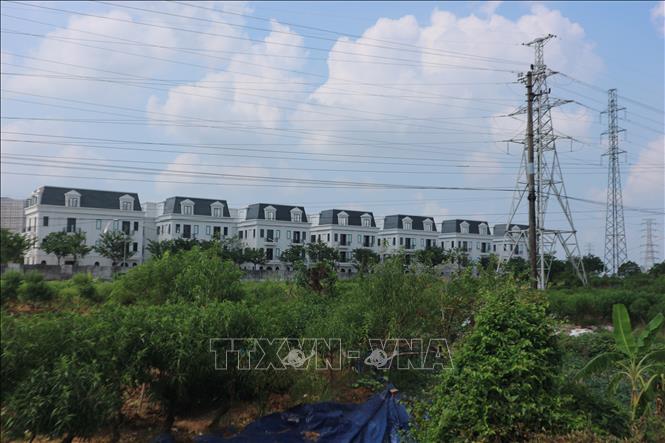
Unlocking land resources through policy.
It is argued that the management of public agricultural land is a long historical story, with periods of allocation to the district level and periods of return to the commune level for auction and management. According to Mr. Tran Quang Khuyen, Vice Chairman of the People's Committee of Ba Vi District (Hanoi), in special cases of scattered, small, and fragmented public agricultural land plots, with issues related to land acquisition and asset liquidation, etc., the communes should use the successful auction prices of other land plots as a basis for valuation. From there, the land is re-allocated to individuals or units that have used it effectively and have seriously fulfilled their financial obligations during the previous lease/contract period.
From the perspective of working directly with land lessees, Mr. Vu Phuong Dong, Chairman of the People's Committee of Giang Bien Ward (Long Bien District), cited an example: The Land Law has regulations and policies in place, but implementation encounters difficulties due to discrepancies between reality and the law. Therefore, guidance is needed to resolve issues regarding public agricultural land areas that are currently unsuitable for agricultural production.
"If those land areas could be converted into temporary parking lots or sports and recreation areas, managed by the commune level, it would not only prevent land waste but also generate revenue," Mr. Vu Phuong Dong observed.
Expressing her concerns about investing hundreds of billions of dong in the Hoa Bay project (Hiep Thuan commune, Phuc Tho district) 17 years ago when the land was still barren and eroded, and now not knowing its fate, Ms. Do Huong Giang (Yen Hoa, Cau Giay district), the project owner, hopes that while the State is encouraging the development of agricultural tourism, this type of tourism also needs accommodation, restrooms, and rest areas. Therefore, she hopes the city and higher authorities will find a way to resolve the issues for tourism projects on public agricultural land, specifically by providing accommodation facilities in addition to agricultural production.
Meanwhile, Mr. Pham Quang Thien, Vice Chairman of the People's Committee of Phu Lam Ward (Ha Dong District), suggested that during the land use process, the lessees had invested time, effort, and money in leveling the land, building roads, and creating a flat surface for cultivation or constructing buildings. The residents hope that when the government reclaims the land, there will be a policy to compensate them for their previous investments.
According to Le Xuan Phu, Chairman of the People's Committee of Van Thang commune (Ba Vi district), the commune has over 30,000 square meters of public agricultural land interspersed with agricultural land allocated to people under Decree 64-CP. Therefore, surveying this public agricultural land for auction is very difficult and costly. Measuring both land parcels together is not feasible. Separately measuring each parcel is also very difficult for the surveying unit and incurs significant costs. A series of tasks require substantial expenditure on hiring qualified surveying units, yet the revenue collected for the budget after the auction is very low. Revenue is insufficient to cover expenses, so the commune government is currently unsure how to effectively utilize this public agricultural land.
Struggling to find a solution, Mr. Phu proposed that all levels of government should have a mechanism to allow local authorities to make their own decisions regarding public agricultural land plots that cannot be auctioned off. The communes could then reallocate the land to the people for agricultural production, maximizing its effectiveness.
Based on the above proposals and recommendations, Mr. Dang Hung Vo, former Deputy Minister of Natural Resources and Environment, believes that if Hanoi does not soon issue guidelines to resolve the aforementioned obstacles, it will cause many negative consequences in land management. The most obvious immediate consequences are the waste of natural resources and revenue losses.
According to VNA
Source: https://doanhnghiepvn.vn/kinh-te/chong-lang-phi-dat-dai-bai-cuoi-go-diem-nghen/20250110103243664



![[Image] 20 islands in the Spratly Islands special administrative region hold early elections.](https://vphoto.vietnam.vn/thumb/1200x675/vietnam/resource/IMAGE/2026/03/08/1772949669607_img-20260308-112026-90-jpg.webp)
![[Photo] Meeting of the Standing Committee of the National Assembly Party Committee with the Standing Committee of the Government Party Committee on the First Session of the 16th National Assembly](https://vphoto.vietnam.vn/thumb/1200x675/vietnam/resource/IMAGE/2026/03/10/1773107502031_ndo_br_thu-tuong-pham-minh-chinh-va-chu-tich-qh-tran-thanh-man-dong-chu-tri-hoi-nghijpg-jpg.webp)


















![[Image] Vietnam's diverse colors on its journey of innovation](https://vphoto.vietnam.vn/thumb/1200x675/vietnam/resource/IMAGE/2026/03/09/1773041390813_anh-man-hinh-2026-03-09-luc-14-28-17.png)















































Comment (0)