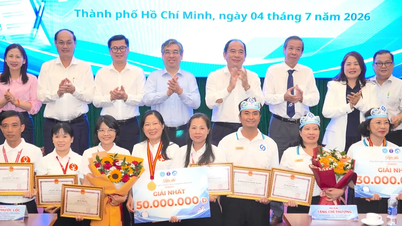
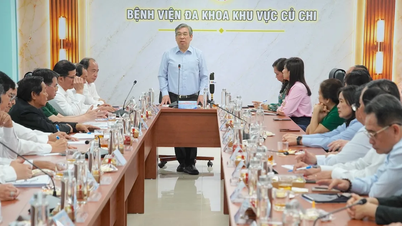
Specifically, under the project " Developing several large higher education institutions in the Southeast region towards achieving advanced regional standards," Ho Chi Minh City University of Medicine and Pharmacy will increase its training capacity by an additional 11,000 students, build two practical training facilities with approximately 750 hospital beds, and establish numerous specialized research centers based on a model that combines training - practical hospitals - research - entrepreneurship - business.
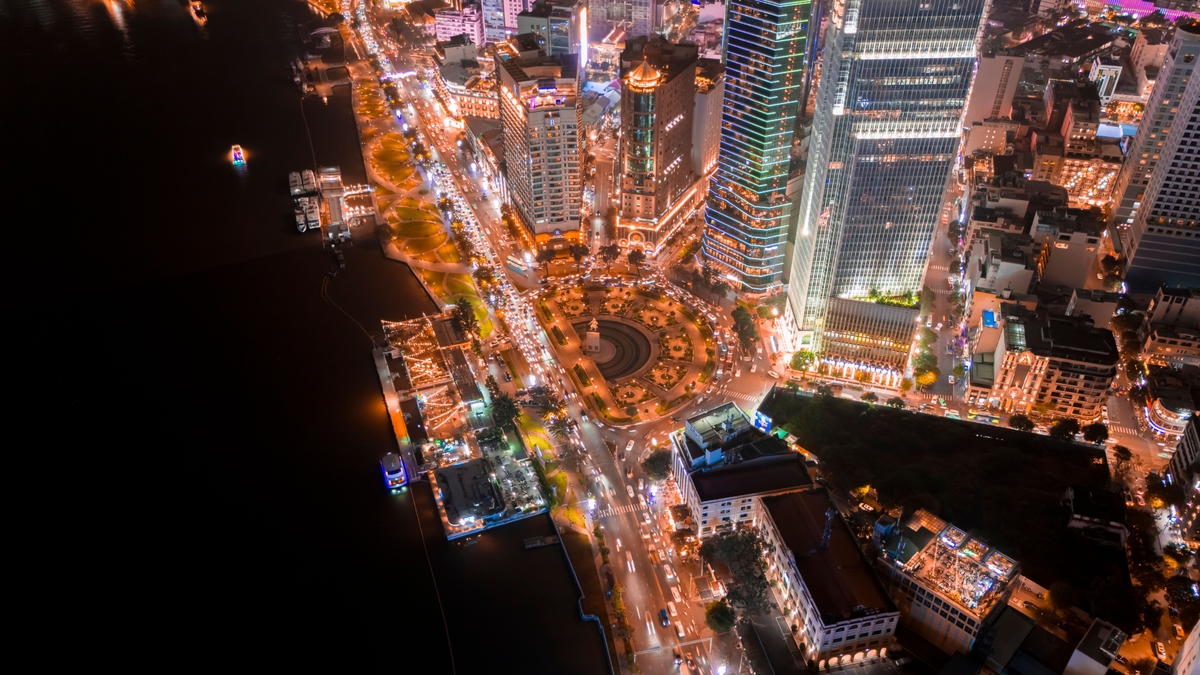
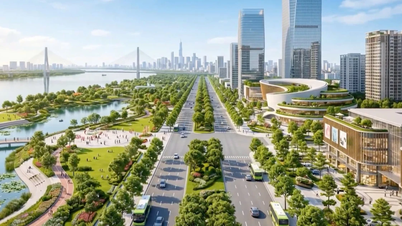
For example, recently Ho Chi Minh City decided to halt a housing construction project, requisition a large plot of land in a prime location to create a park, build a memorial for those who died in the Covid-19 pandemic, and expand nearby roads to address long-standing traffic congestion and accident hotspots… These are examples of a correct and popular policy, a concrete and practical way to combat waste.
The reorganization of administrative boundaries has resulted in a surplus of public assets and land that need to be promptly repurposed for units with urgent needs. Projects that are stalled cannot wait until they are resolved; instead, solutions must be found to repurpose them for sectors facing land shortages. In these cases, practical requirements will guide the step-by-step implementation process and procedures (unlocking the projects) with the ultimate goal of "preserving land for the people," serving the legitimate needs of the people of Ho Chi Minh City.
More than two years ago, when Resolution 98 on piloting some special mechanisms and policies for the development of Ho Chi Minh City was being implemented, the question of land waste due to stalled projects arose. A proposal was put forward to temporarily use these "stalled" land plots for public works. Specifically, they were to be used as parking lots and for installing restrooms to serve residents and tourists, especially during festivals and events. In reality, this implementation has brought benefits to the community. By the beginning of this year, the issue of waste has been raised to another level. It's not just about missing opportunities to serve the people, but also about the responsibility to complete and bring public works projects into operation.
With clearly established viewpoints and policies, the remaining task is to determine the implementation and speed of execution. How will the administrative facilities and centers of the former Binh Duong and Ba Ria- Vung Tau provinces be incorporated and expanded by public education and healthcare institutions? Or how will public investment be used for socio-cultural projects to ensure social and public objectives are met? After all, the capital allocation for park construction projects isn't a huge undertaking; what's more important is community participation, starting with the people's own ideas to contribute to their ecological and cultural space.
Inviting private investors through land-for-infrastructure exchanges requires careful consideration, especially for cultural projects and facilities. Areas with cultural sites and parks tend to attract more urban development, including real estate. The presence of private investors may increase in some of the policy adjustments and amendments to the draft Resolution 98, which will soon be submitted to the National Assembly .
Clearly, various options need to be considered in order to expedite the implementation and completion of public works projects for Ho Chi Minh City.
Source: https://www.sggp.org.vn/chong-lang-phi-thiet-thuc-post820684.html