

Given the complex developments of late-season pests and diseases, the provincial agricultural sector is focusing on directing localities to strengthen field inspections and guide farmers to proactively implement control measures to protect the yield and production of the spring rice crop.
Field inspections revealed that the common density of planthoppers ranges from 100-200 individuals/m2, with some areas reaching 300-500 individuals/m2, and exceptionally, clusters with densities of up to 2,000-3,000 individuals/m2. The density of planthopper egg clusters in many areas is 7-10 clusters/clump, with some areas recording 30-50 clusters/clump. Areas with high planthopper densities are mainly concentrated in the eastern and southeastern coastal regions of the province, such as Giao Ninh, Giao Hoa, Giao Hung, Hai Hau, Hai Quang, Hai Anh, Hai Hung, Hai Tien, Quy Nhat, Nghia Lam, Yen Tu, and Yen Mac…
According to experts, the third generation of rice planthoppers continues to hatch in rice fields that have already flowered between May 8th and 18th. For rice crops that flowered later than May 10th, the peak period for planthopper infestation will be from May 23rd to 30th, with overlapping generations and increasing density towards the end of the season. This is a very dangerous period because if farmers are complacent, do not regularly inspect their fields, or spray pesticides at the wrong time, the risk of damage is very high.
In particular, densely planted, lush green rice paddies and low-lying fields are often areas where rice planthoppers thrive and cause severe damage. When the density is high, planthoppers concentrate on sucking sap from the base of the rice plants, causing them to weaken, turn yellow, and dry up in clumps. If not treated promptly, this can seriously affect yield, even causing complete crop failure in some areas.
Mr. Nguyen Quoc Viet, Deputy Head of the Department of Crop Production and Plant Protection of Ninh Binh province, said that planthoppers are pests with a short life cycle but a very rapid reproduction rate. In the current hot and humid weather conditions interspersed with thunderstorms, the density of planthoppers can increase sharply in a short period. Therefore, localities need to strengthen field monitoring and direct aggressive spraying in areas infested with planthoppers at densities of 1,000 or more per square meter, when the planthoppers are mostly young, in order to achieve the highest effectiveness.
To proactively control the pest, the Ninh Binh provincial agricultural sector also advises farmers to focus on spraying pesticides on rice fields that have already flowered during the peak period from May 10th to 18th. Three days after spraying, farmers should re-inspect their fields. If the density of planthoppers remains high and exceeds the threshold, they should immediately apply additional treatments to prevent recurrence and late-season pest outbreaks. For rice fields that are about 80% ripe, the specialized agency recommends that farmers proactively harvest early, about 7 days before full ripeness, to minimize the risk of damage caused by planthoppers.
Besides brown planthoppers and white-backed planthoppers, many other pests and diseases are also emerging and causing damage to late-season spring rice crops, such as two-spotted stem borers, bacterial blight, leaf spot, and neck blast. The specialized agencies recommend that localities strengthen field inspections, guide farmers in implementing control measures according to proper technical procedures, and absolutely avoid complacency or negligence in order to protect the late-season spring rice crop and ensure the planned yield and production.
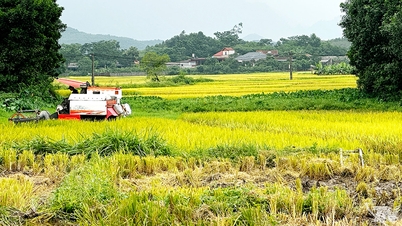
The An Hoa General Service Cooperative in Kim Son commune has a rice cultivation area of 360 hectares, planting key rice varieties such as Bac Thom, ST25, and Nep 97. These days, cooperative members are urgently inspecting their fields and implementing measures to control brown planthoppers and white-backed planthoppers to protect the spring rice crop in the final stages of the season. Through field monitoring, the cooperative has early detected infestations of brown planthoppers and other pests and diseases such as small leaf-rolling caterpillars and bacterial blight in some rice fields during the ripening stage.
Mr. Duong Van Phai, Director of An Hoa General Service Cooperative, said that immediately after detecting the pest outbreak, the unit notified households to organize simultaneous spraying of pesticides according to the instructions of specialized agencies, and intensified propaganda and guidance for people to closely monitor the development of pests and diseases. However, after inspection, some areas still had a relatively high density of pests, especially in rice fields that were lush, had excessive nitrogen fertilization, or had not been sprayed correctly.
To minimize the risk of rice planthopper outbreaks at the end of the season, the cooperative continues to disseminate information and guide farmers in implementing a second spraying according to the flowering rate and the level of planthopper infestation in the fields. At the same time, technical staff regularly visit the fields to inspect and guide farmers in selecting appropriate pesticides, using the correct dosage and timing to improve control effectiveness and prevent pest outbreaks that could damage rice yield and production.
This spring, the An Hoa General Service Cooperative has 5 hectares participating in a pesticide demonstration model implemented by the Provincial Department of Crop Production and Plant Protection. Through this model, farmers are directly guided on how to identify pests, monitor aphid density, and practice the "four correct principles" in pesticide use. This is considered a practical solution to raise awareness, change farming habits, and reduce the overuse of pesticides in pest control.
Amidst unpredictable weather patterns, rising temperatures and humidity create favorable conditions for the emergence of various pests and diseases. Proactive field inspections, early detection, and timely control are becoming crucial factors in protecting the safety of the late-season spring rice crop. With the coordinated efforts of the agricultural sector, local authorities, and the proactive spirit of the people, Ninh Binh is striving to minimize damage caused by pests and diseases, aiming to ensure the spring rice yield and production meet the planned targets.
Source: https://baotintuc.vn/kinh-te/chu-dong-phong-tru-sau-benh-hai-lua-xuan-20260518101400170.htm




























































































Comment (0)