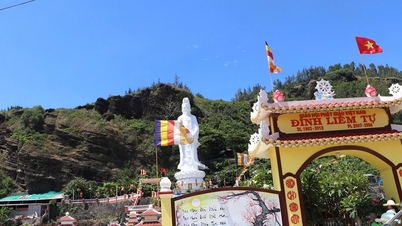
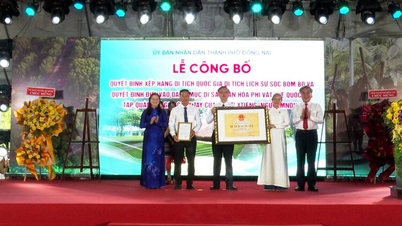
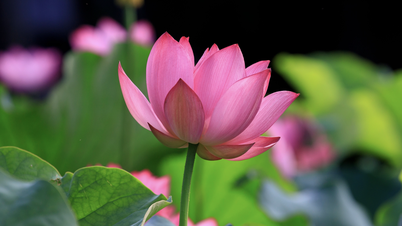
Co Le Pagoda (Than Quang Temple), located in Co Le commune, Ninh Binh province, was built during the Ly Dynasty (12th century) by the Venerable Nguyen Minh Khong and is one of Vietnam's famous landmarks. In the early 20th century, Venerable Thich Quang Tuyen, along with the people and followers, rebuilt the pagoda in the style of "Zen gates on a national cultural foundation, combining Eastern and Western influences," including the "nine-lotus" pagoda tower. Due to its outstanding values, in 1988, Co Le Pagoda was classified as a National Architectural and Artistic Monument by the Ministry of Culture (now the Ministry of Culture, Sports and Tourism). On September 11, 2025, the Prime Minister issued Decision No. 1959/QD-TTg classifying Co Le Pagoda as a Special National Historical and Architectural Monument.
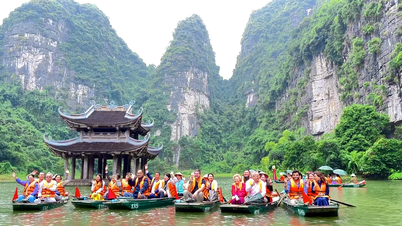
 For the 2025 festival season , Co Le Pagoda is ready to welcome pilgrims and visitors from all over to come and worship in a solemn atmosphere, with meticulous and thorough preparations. The Co Le Pagoda festival has a long history, taking place from the 13th to the 16th of September in the lunar calendar every year, with unique ceremonial and festive activities.
 The festival section includes activities such as boat racing, card games (like "to tom diem"), chess, cockfighting, and many other cultural activities.


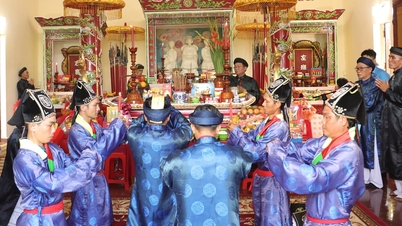
The Co Le Pagoda Festival takes place from the 13th to the 16th of September in the lunar calendar each year, commemorating the birthday of the Venerable Ancestor Nguyen Minh Khong with many unique rituals. In particular, the festival includes a ceremony of offering incense to commemorate the monks who sacrificed their lives in the national resistance wars, a unique feature of the Co Le Pagoda Festival. This is a major festival associated with the worship of the Zen master, the National Master, the Venerable Ancestor Nguyen Minh Khong, who contributed to saving the country and helping the people, teaching them fishing, agriculture , bronze casting, and medicine. He is considered the tutelary deity, a benevolent god protecting the happiness of the people of Co Le in particular and rice-farming communities in general. The activities in the festival reflect the rich and diverse intangible cultural heritage of customs, traditions, and beliefs, expressing the thinking and understanding of the worldview of the rice-farming community, contributing to the study of traditional Vietnamese culture and society. Over time, the Co Le Pagoda festival has been preserved, maintained, and passed down through many generations by the local people, becoming a distinctive cultural heritage of Ninh Binh province.
The Co Le Pagoda Festival, with its various cultural and religious activities, aims to express gratitude to those who have contributed to the nation and its people, and to the ancestors who founded and established the village, forming the land of Co Le as it is today. Attending the festival allows the community to fulfill their spiritual aspirations and admire the beauty of a unique and captivating complex of architectural structures. Therefore, the Co Le Pagoda Festival serves as a "bond" connecting the community, fostering solidarity, love, and mutual support; showcasing the strength of community unity, spreading traditional cultural values, and guiding people towards the values of Truth, Goodness, and Beauty.

 Huong Nhu

Source: https://sodulich.ninhbinh.gov.vn/vi/tin-tuc-su-kien/chua-co-le-truoc-them-le-hoi-2438.html

![[Image] Ho Chi Minh City: Ma Lang area, Chicken-Rice Market about to change its appearance](https://vphoto.vietnam.vn/thumb/1200x675/vietnam/resource/IMAGE/2026/06/25/1782377698627_ndo_br_m1-jpg.webp)



























![[Image] Schools organize meetings and introduce teaching models to students admitted to grade 10.](https://vphoto.vietnam.vn/thumb/1200x675/vietnam/resource/IMAGE/2026/06/25/1782368077271_ndo_br_z7970052192242-1ec8daeb77a6eed1a4e9f58c564ddd3e-jpg.webp)