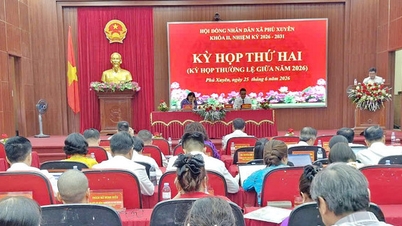
However, amidst the rapid pace of urbanization, many traditional village cultural values are at risk of disappearing. This highlights the urgent need to correctly identify the cultural values of villages in order to both preserve and promote them in contemporary life.
Preserving cultural values
From the lands of Thanh Hoa, Nghe An, and Ha Tinh, waves of Vietnamese migrants brought with them their language, customs, traditions, beliefs, folk culture, and even the names of their old villages and homelands as they migrated south. The names of places, villages, rivers, mountains, and coastal areas served as a covenant, defining sovereignty in the new land. More than just administrative place names, these were historical memories, traces of migration, cultural maps, the soul of the community, and the spiritual identity of the people of Quang Nam.
Today, due to administrative unit mergers, many ancient village and commune names are at risk of disappearing from community life. This is creating an urgent need to preserve traditional place names as a form of safeguarding the nation's intangible cultural heritage.
A village is not just a place to live, but a place to remember, to return to, to preserve the identity of the nation. A country can modernize very quickly, but if it loses its village culture, it will lose the deepest part of its national soul. Each village has its own customary rules, unanimously established by the villagers to guide their living, traveling, worship, and civic duties. The feudal government greatly respected these village customs, hence the saying: "The king's law is inferior to village custom."
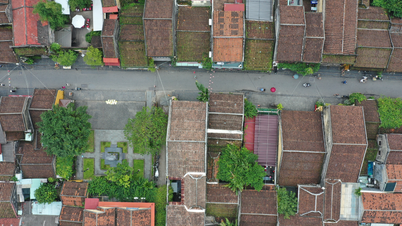
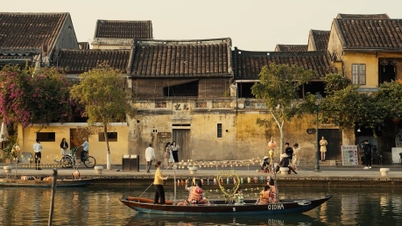
Studying village culture requires considering socio-cultural, ideological, and artistic factors. In the rural society of the past, images of banyan trees, wells, communal houses, temples, shrines, sugarcane fields, and mulberry plantations evoked memories of home. Quang Nam's villages also had ancestral temples of traditional crafts, and families known for their scholarly achievements, such as the Three Phoenixes, Five Phoenixes flying together, and Six Phoenixes not flying together, becoming the essence of Quang Nam's villages, their names inscribed on stone tablets, in folk literature, and in music and art.



Preserving space and identity
Preserving the essence of village culture today is not about returning to the past, but rather a path to building an advanced Vietnamese culture rich in national identity. Studying village culture should not only celebrate its positive values but also objectively acknowledge its historical limitations in order to overcome them in the new era.
The biggest challenge today is not preserving or erasing village culture, but transforming it from a closed community to an open one, from a parochial mindset to a national one, from village customs to the supremacy of law, from conservatism to innovation, while still retaining the essence of the village.
During his lifetime, President Ho Chi Minh said: "Culture must illuminate the path for the nation to follow." He also instructed: "The new life does not mean discarding everything old, nor adopting everything new. What is old and bad must be abolished, what is old and good must be further developed, and what is new and good must be implemented." This ideology is very much in line with the preservation and promotion of Vietnamese village culture in the era of integration and development.
Today, merging villages and residential areas to reduce administrative layers, intermediate levels, and non-professional personnel is a necessary step, helping to improve management in line with the demands of the digital age and modern standards. However, during the merger process, focusing solely on administrative aspects without considering cultural factors can easily lead to the loss of village names and the fading of community memories.
Therefore, solutions are needed to preserve the village name in social life. This could include installing traditional village name signs, incorporating the village name into cultural landmarks, and preserving the village name in schools, cultural institutions, historical sites, village communal houses, temples, and traditional craft villages.
Preserving traditional cultural institutions such as village temples, communal houses, ancestral shrines, banyan trees, ancient wells, and festival spaces should be considered as landmarks of community memory. Based on this, advisory councils such as village temple management boards, clubs for filial children, clubs for filial daughters-in-law, and clubs for those who preserve community memories can be established. Monthly meetings can be held for social interaction, storytelling, and passing on this knowledge to the younger generation.



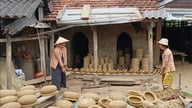
In fact, there are villages that have developed, preserved, maintained, and promoted their resources very well, such as Nam O fish sauce village, Non Nuoc stone carving village, Kim Bong carpentry village, Lam Yen drum-making village, Phuoc Kieu gong-making village, Tra Que vegetable village, Thanh Ha pottery village... This proves that conservation and economic development can go hand in hand right in each village.
The purpose of merging villages and residential areas is to improve management, but under no circumstances should it lead to the loss of village names, village memories, the disruption of village cultural spaces, or the loss of community identity. If we can achieve this, we will both build a modern governance system and preserve the essence of Vietnamese villages – a crucial foundation of national cultural identity in the era of integration and development.
Source: https://baodanang.vn/nep-lang-va-chuyen-bao-ton-3341915.html