


Speaking to the press, Dr. Angela Pratt, WHO Representative in Vietnam, shared: "I always keep a mask with me. I contracted Covid-19 last week. The reality is that Covid-19 is still present." According to Dr. Pratt, while severe cases and deaths from Covid-19 have decreased and people have developed natural immunity in the community, this does not mean that Covid-19 is less dangerous or no longer poses a threat to public health.
"COVID-19 cannot be like seasonal flu, despite some similarities. COVID-19 is significantly different because it is not seasonal, whereas seasonal flu usually occurs in winter. COVID-19 is still a very new disease, as we have only been familiar with it for four years, while seasonal flu has undergone decades of research. Therefore, the WHO ending the global emergency does not mean the end of the COVID-19 pandemic," the WHO representative in Vietnam emphasized.

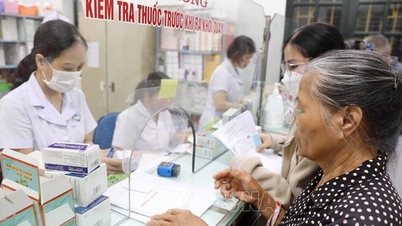
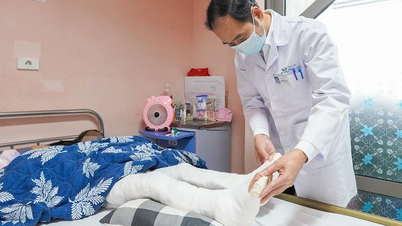
Treating Covid-19 patients in Ho Chi Minh City
Dr. Angela Pratt assessed that Vietnam has the lowest Covid-19 mortality rate in the region, and recommended maintaining the national achievements while preparing for future scenarios, as the virus causing the pandemic continues to mutate unpredictably.
TRAVEL AROUND
Professor Phan Trong Lan, Director of the Department of Preventive Medicine ( Ministry of Health ), stated that Vietnam has flexible and long-term epidemic prevention and control scenarios because the virus mutates unpredictably. The latest update shows that as of May 8th, Omicron has 900 sub-variants, even though the number was 600 a month earlier. While no changes in virulence have been recorded yet, we still need to conduct thorough research on this aspect.
"COVID-19 travels everywhere with people, therefore COVID-19 prevention and control is global in nature, not limited to any particular locality or country," Professor Lan said. To continue controlling the epidemic effectively, we need to ensure that epidemic prevention measures are always ready for various outbreak situations. The virus mutates, potentially causing new waves of infection. According to Professor Lan, considering the main factors, COVID-19 remains a Group A epidemic in Vietnam.
The Director of the Department of Preventive Medicine urged people to adhere to the 2K guidelines (masks and disinfection), vaccinations, and other measures. Each individual needs to proactively protect themselves, which also means protecting those around them and the community.
Mr. Nguyen Trong Khoa, Deputy Director of the Department of Medical Examination and Treatment Management (Ministry of Health), said that Vietnam will focus on monitoring severe Covid-19 cases, as these are unusual "indicator" cases of the epidemic. Currently, the mortality rate is 0.47% among hospitalized cases and 0.37% of the total number of cases. This rate is currently lower than the global mortality rate (currently 0.99%). However, the Covid-19 mortality rate in Vietnam is still higher than some other infectious diseases. For dengue fever, this rate is 0.09%. Therefore, Covid-19 remains a worrying issue. Currently, all deaths are among high-risk individuals (elderly, with underlying diseases, immunocompromised).
Associate Professor Dr. Duong Thi Hong, Deputy Director of the Central Institute of Hygiene and Epidemiology, stated that the vaccination rate for the 3rd and 4th doses in high-risk groups and those with underlying conditions has reached over 80%. Going forward, the Covid-19 vaccine will be integrated into regular immunization sessions at commune and ward health facilities. Immunity acquired from Covid-19 and after vaccination will decrease over time; therefore, high-risk groups need booster shots for the 3rd and 4th doses approximately 4 months after completing the basic vaccination.
![[Photo] National Assembly Chairman Tran Thanh Man inspects election preparations in Hai Phong city.](https://vphoto.vietnam.vn/thumb/1200x675/vietnam/resource/IMAGE/2026/02/26/1772095420401_ndo_br_bnd-8016-jpg.webp)
![[Photo] Thousands of tourists visit the Quang Trung Emperor Temple in Nghe An during the early spring season.](https://vphoto.vietnam.vn/thumb/1200x675/vietnam/resource/IMAGE/2026/02/26/1772095410680_img-9305-3882-jpg.webp)
![[Photo] National Assembly Chairman Tran Thanh Man working with the Hai Phong City Election Committee](https://vphoto.vietnam.vn/thumb/1200x675/vietnam/resource/IMAGE/2026/02/26/1772103806795_ndo_br_bnd-8224-jpg.webp)













































Comment (0)