

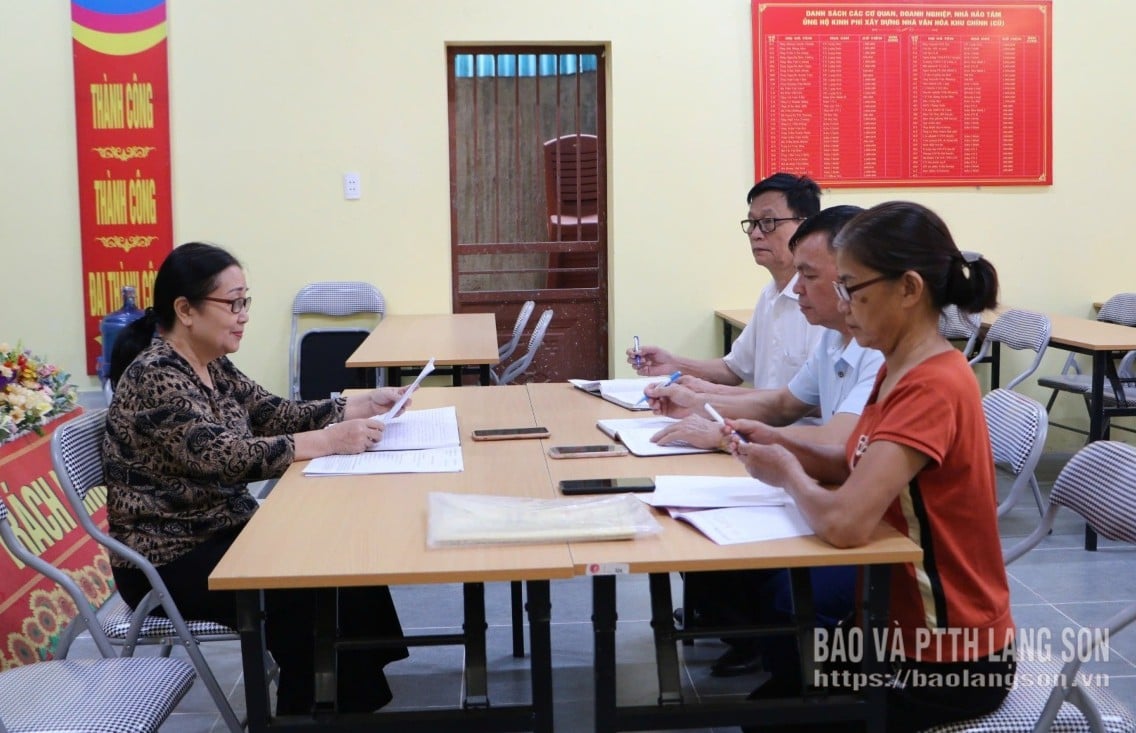
Reorganizing villages and residential areas is an essential task aimed at streamlining organizations, reducing administrative layers, and improving the effectiveness and efficiency of management and administration, thereby better meeting the requirements of development and serving the people in the new era.
Public awareness campaigns to build consensus.
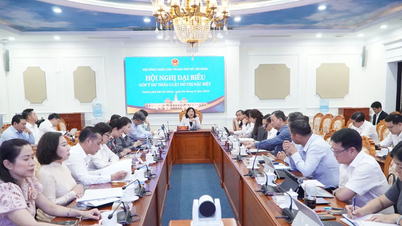
Immediately after the Central Committee of the Communist Party of Vietnam issued Conclusion No. 210 on November 12, 2025, regarding the continued building and improvement of the organizational structure of the political system in the coming period, Party committees and authorities at all levels throughout the province proactively prepared for the rearrangement of villages and residential areas. In fulfilling its assigned task, the Department of Internal Affairs issued a document requesting the People's Committees of communes and wards to review the size and population of villages and residential areas in their localities, and to guide communes in developing proposed rearrangement plans. Accordingly, in April and May 2026, communes and wards urgently reviewed, reported, and proposed rearrangement plans.
According to statistics, out of 1,646 villages and residential areas in the province, 1,340 villages have fewer than 150 households and 97 residential areas have fewer than 300 households. These are the villages and residential areas that need to be reorganized.
Currently, Party committees and authorities at all levels in the area are focusing on promoting awareness to help cadres, Party members, and the people understand the purpose, significance, and requirements of the reorganization; thereby creating unity in understanding and consensus in the implementation process. Information related to the reorganization of villages and residential areas has been disseminated through Party branch meetings, mass organization activities, people's conferences, and the local broadcasting system…
According to statistics, out of 1,646 villages and residential areas in the province, 1,340 villages have fewer than 150 households and 97 residential areas have fewer than 300 households. These are the villages and residential areas that need to be reorganized. |
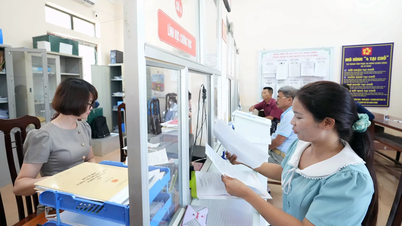
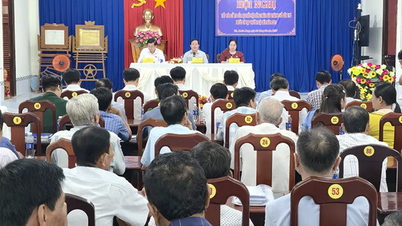
According to Ms. Lanh Thi Hue, Secretary of the Party Committee of Yen Phuc commune, closely following the directives and guidance of higher authorities, the commune has established a Steering Committee for the reorganization of villages, consisting of 20 members. To prepare for the reorganization, through a meeting, we also disseminated this policy to the Party branch secretaries and village heads. Afterwards, they also disseminated the information to all residents in the area and proactively monitored the situation. Currently, the commune has 31 villages, and it is expected that after the reorganization, the number will be reduced by approximately 10 villages.
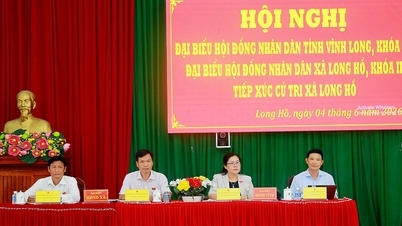
Along with disseminating information about the purpose and significance of reorganizing villages and residential areas, Party committees and authorities at all levels have strengthened efforts to understand the aspirations and opinions of the people through direct dialogue meetings and through a network of social opinion collaborators. This has enabled communes and wards to proactively review the current situation of villages and residential areas in their localities to develop reorganization plans, ensuring the appropriate number of households, geographical conditions, travel distance, community characteristics, and specific factors of each area.
In reality, following several rounds of administrative unit reorganization and organizational streamlining in recent years, the awareness of officials, Party members, and the people regarding the need for innovation and improved efficiency of the political system has been increasingly enhanced. This provides a favorable foundation for localities to implement the reorganization of villages and residential areas in the coming period, ensuring adherence to the roadmap, regulations, and practical circumstances.
Develop a suitable plan.
The basic village reorganization plan adheres closely to the established standards. However, for mountainous, highland, and border communes, the plan must be developed cautiously to ensure it is appropriate to the actual conditions and convenient for people in their daily lives and participation in community activities after reorganization. The reorganization plan must be democratic, open, and transparent; it must inherit and promote the historical, cultural, and positive customs and traditions of the community. At the same time, the reorganization must be linked to the requirement of improving the effectiveness of commune-level government management and the quality of community activities.

For example, a field study in Ba Son border commune revealed that out of 25 villages, the majority did not meet the standard of 150 households. Mr. Nong Hong Giang, Deputy Secretary of the Ba Son Commune Party Committee, stated: After reviewing and considering the situation, the commune has planned to reorganize villages with similar history, geography, customs, and traditions. However, the commune has proposed not reorganizing three villages. These are villages with large areas and sparse populations, including border villages. Reorganizing them into new villages to meet the population criteria would, on the other hand, create difficulties in management and the daily lives of the villagers.
Similar to Ba Son, many other communes have also proposed not reorganizing certain villages due to fragmented terrain, large areas, dispersed populations, and difficult transportation. For example, Chau Son commune was formed by merging four old commune-level administrative units: Dong Thang, Cuong Loi, Chau Son, and Bac Lang. Currently, all 24 villages in Chau Son commune have fewer than 150 households. Dong Thang commune, before the reorganization, had four villages; merging all four villages of the old Dong Thang commune would still not meet the standard of 150 households.
This reality shows the need for flexible mechanisms and criteria for mountainous, border, and sparsely populated areas. To address this issue, in May 2026, the Department of Internal Affairs established a working group to survey the practical situation in several communes to develop and supplement reasonable explanations for villages that did not undergo reorganization.
Following the province's general direction, the reorganization of villages is linked to the placement of officials, aiming to both leverage capabilities and prestige while also focusing on young officials with IT skills to meet the requirements of digital transformation. Currently, communes and wards are carefully reviewing their non-professional staff to develop appropriate placement plans. Those with prestige, competence, and responsibility will continue to be considered for positions; at the same time, plans are being studied to support redundant personnel, ensuring their rights and fostering consensus.
Mr. Do Duc Viet, Party Secretary and head of An Ninh village, Huu Lung commune, shared: "As soon as the plan to reorganize the villages was announced, we implemented it, disseminated information, and created consensus within the community. An Ninh and An Thinh villages in the commune were originally one old village that was separated, so when the plan to merge the two villages into one was announced, the people basically agreed. After the reorganization, the new village is expected to have about 700 households."
According to the plan, the province will complete the reorganization of villages and residential areas in June. To prepare for this reorganization, local authorities will continue to promote public awareness campaigns, gather public opinions, and develop and refine a scientific , flexible, and practical reorganization plan. With thorough and careful preparation, it is believed that the reorganization of villages and residential areas will be successful and receive high levels of public support.
Source: https://baolangson.vn/san-sang-cho-cuoc-sap-xep-thon-5094056.html


![[Image] Shipbuilders exposed to steel and record-breaking heat.](https://vphoto.vietnam.vn/thumb/1200x675/vietnam/resource/IMAGE/2026/06/04/1780545781745_ndo_br_img-5402-4683-jpg.webp)















![[Infographic] VN-Index continues to fall for the 7th consecutive session, declining by 7.46 points (-0.41%)](https://vphoto.vietnam.vn/thumb/402x226/vietnam/resource/IMAGE/2026/06/04/1780544013554_667259_thumb_1780534507_07550804.jpeg)





























![[Video] Sunset at Lap An Lagoon – Where the sun sets over the fishing nets](https://vphoto.vietnam.vn/thumb/1200x675/vietnam/resource/IMAGE/2026/05/31/1780192137701_beach-landscape-sea-water-nature-grass-745871-pxhere-com.jpeg)



















![[INFOGRAPHICS] Sustainable Business Support Program (2026 – 2030)](https://vphoto.vietnam.vn/thumb/402x226/vietnam/resource/IMAGE/2026/06/04/1780552996067_1780552915.webp)













Comment (0)