

 |
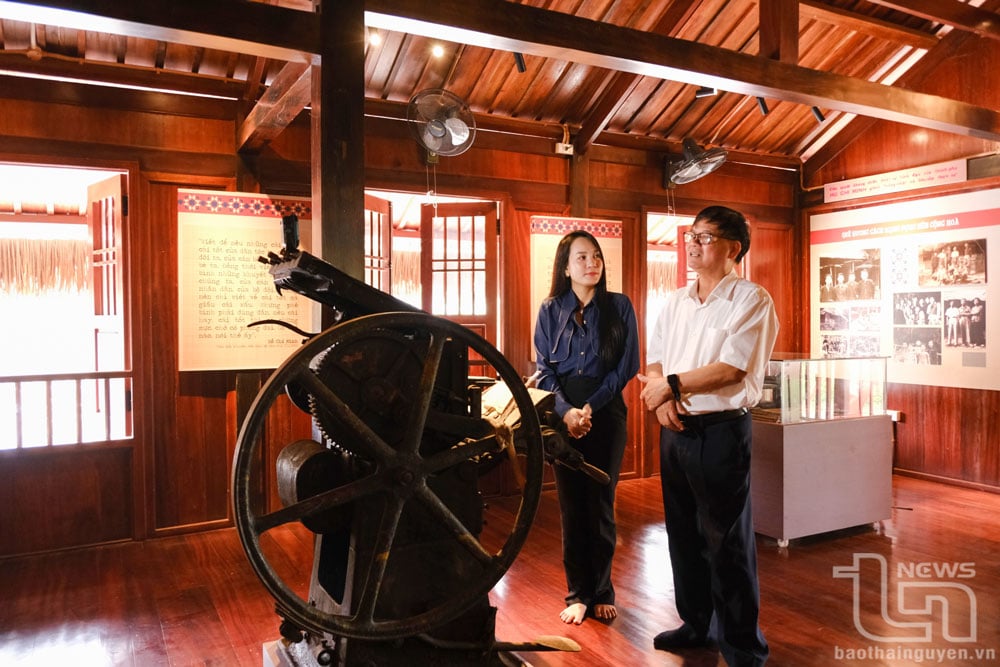
| Journalist Phan Huu Minh shares his journey of making a documentary about President Ho Chi Minh in the war zone. |
According to journalist Phan Huu Minh (former Editor-in-Chief of Thai Nguyen Newspaper, former Director of Thai Nguyen Radio and Television Station), documentary films are a combination of historical documents, images, and emotions, creating a form of expression rich in depth, enduring vitality, and lasting social significance.
He shared: "I love making documentaries because it's my way of paying tribute to history, honoring people, and preserving irreplaceable moments." Because of this love, he has directly produced hundreds of episodes throughout his career, many of which have gained significant recognition, such as: "The Roads of Viet Bac," "Land and People of the South," "Places Bearing the Mark of Poetry," and "Travel Chronicles Following Vu Xuan's Diary…"
Similarly, for journalist Ngoc Linh (Thai Nguyen Radio and Television Station), documentary film is the most unique journalistic genre – where journalists can tell a lengthy story, delving into the essence of people and events. After years of experience in news, reportage, and feature stories, she realized that the power of documentary film lies in its presentation: not relying on narrated commentary, but on images, background sounds, on-location audio, and the narratives of the subjects themselves.
 |
| Journalist Ngoc Linh and her team produced the television program. |
Journalist Chu The Ha (Deputy Editor-in-Chief of Thai Nguyen Newspaper) views the role of documentary filmmakers as no different from that of guardians of cultural layers. He affirms: The characters are a vital element. When narratives, documents, and reality are woven into a whole, a documentary film will have depth. But to achieve that, the scriptwriter and commentator must have a rich cultural background, talent, and above all, a passion for the truth.
Journalist Nguyen Ngoc (from Thai Nguyen Newspaper) likens documentary filmmakers to "storytellers." For him, documentary film is a genre that allows journalists to "slow down, delve into hidden corners, and contemplate each layer of time." The most moving story in his career was when he made the film "At Both Ends of the Victory" on the occasion of the 70th anniversary of the Dien Bien Phu Victory. "When I witnessed veterans embracing the tombstones of their comrades in the old battlefield, I deeply understood the value of peace and silent sacrifice. Those moments create an irreplaceable depth for documentary films," he shared.
Behind every frame of film
What gives documentary films their vitality doesn't lie in special effects or large budgets, but in the depth of their content, the authenticity of their emotions, and the reliability of their source material. Therefore, making documentaries is a journey that demands patience, subtlety, and meticulous attention to detail. The biggest challenge isn't the editing technique, but how to tell a compelling, moving story while remaining objective. Especially with silent films – the most difficult genre – journalists must yield the stage to the characters and reality themselves.
That's when the filmmaker's emotions blend into the lens and are transmitted to the audience's hearts," journalist Ngoc Linh affirmed. Films without narration are even more difficult, as they require deep empathy. The most moving moment in her career was while making the film "The Story of Three Mute Women." During more than a month of filming, the crew shed tears many times witnessing the extraordinary lives of these women. The film not only won the Silver Award at the National Television Festival but also left a deep impression on viewers thanks to its authentic, unembellished "mute" moments.
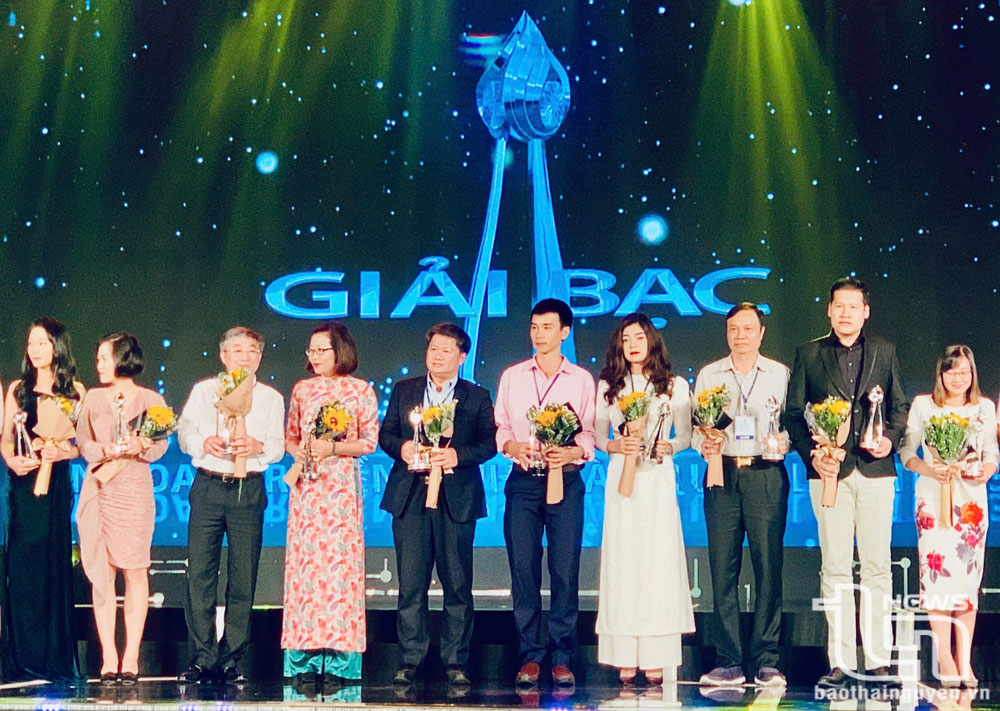 |
| Journalist Ngoc Linh received the Silver Award at the National Television Festival for her documentary "The Story of Three Mute Women". |
From a management perspective, journalist Chu The Ha asserts: Documentary films are archival and promotional materials. They last longer than the filmmakers themselves. Therefore, every detail in the film must be accurate, and every piece of documentary information must be thoroughly investigated and compared. For example, the film "Journey Following Vu Xuan's Diary," which he participated in producing in 2006, is still regularly broadcast during prime time on many television stations nationwide because the weight of the information and emotions in the film is of enduring value.
In the context of rapidly transforming journalism, where many professional values are being redefined, documentary film has retained its essence: enduring, profound, and deeply emotional. From films depicting human destinies to reports documenting past battlefields, journalists in Thai Nguyen have been and continue to be "storytellers of time," contributing to building a vibrant archive of documents not only for Thai Nguyen but for the entire beloved S-shaped land of Vietnam.
Placing his faith in the next generation, journalist Phan Huu Minh hopes: For young reporters, the path to documentary filmmaking may not be easy. But with enough passion, perseverance, and belief in the value of truth, they can absolutely continue the journey of their predecessors with their own fresh perspective, sensitivity to the times, and hearts always moved by life. This is not only a professional responsibility, but also a way for today's journalism to continue affirming its irreplaceable role as an honest and humane witness to history.
Source: https://baothainguyen.vn/xa-hoi/202506/chung-toi-di-lam-phim-23725a0/


![[Photo] General Secretary To Lam receives President of the European Council Antonio Costa](/_next/image?url=https%3A%2F%2Fvphoto.vietnam.vn%2Fthumb%2F1200x675%2Fvietnam%2Fresource%2FIMAGE%2F2026%2F01%2F29%2F1769697816651_a1-bnd-5216-9741-jpg.webp&w=3840&q=75)


![OCOP during Tet season: [Part 3] Ultra-thin rice paper takes off.](/_next/image?url=https%3A%2F%2Fvphoto.vietnam.vn%2Fthumb%2F402x226%2Fvietnam%2Fresource%2FIMAGE%2F2026%2F01%2F28%2F1769562783429_004-194121_651-081010.jpeg&w=3840&q=75)


![OCOP during Tet season: [Part 2] Hoa Thanh incense village glows red.](/_next/image?url=https%3A%2F%2Fvphoto.vietnam.vn%2Fthumb%2F402x226%2Fvietnam%2Fresource%2FIMAGE%2F2026%2F01%2F27%2F1769480573807_505139049_683408031333867_2820052735775418136_n-180643_808-092229.jpeg&w=3840&q=75)
![OCOP during Tet season: [Part 1] Ba Den custard apples in their 'golden season'](/_next/image?url=https%3A%2F%2Fvphoto.vietnam.vn%2Fthumb%2F402x226%2Fvietnam%2Fresource%2FIMAGE%2F2026%2F01%2F26%2F1769417540049_03-174213_554-154843.jpeg&w=3840&q=75)



Comment (0)