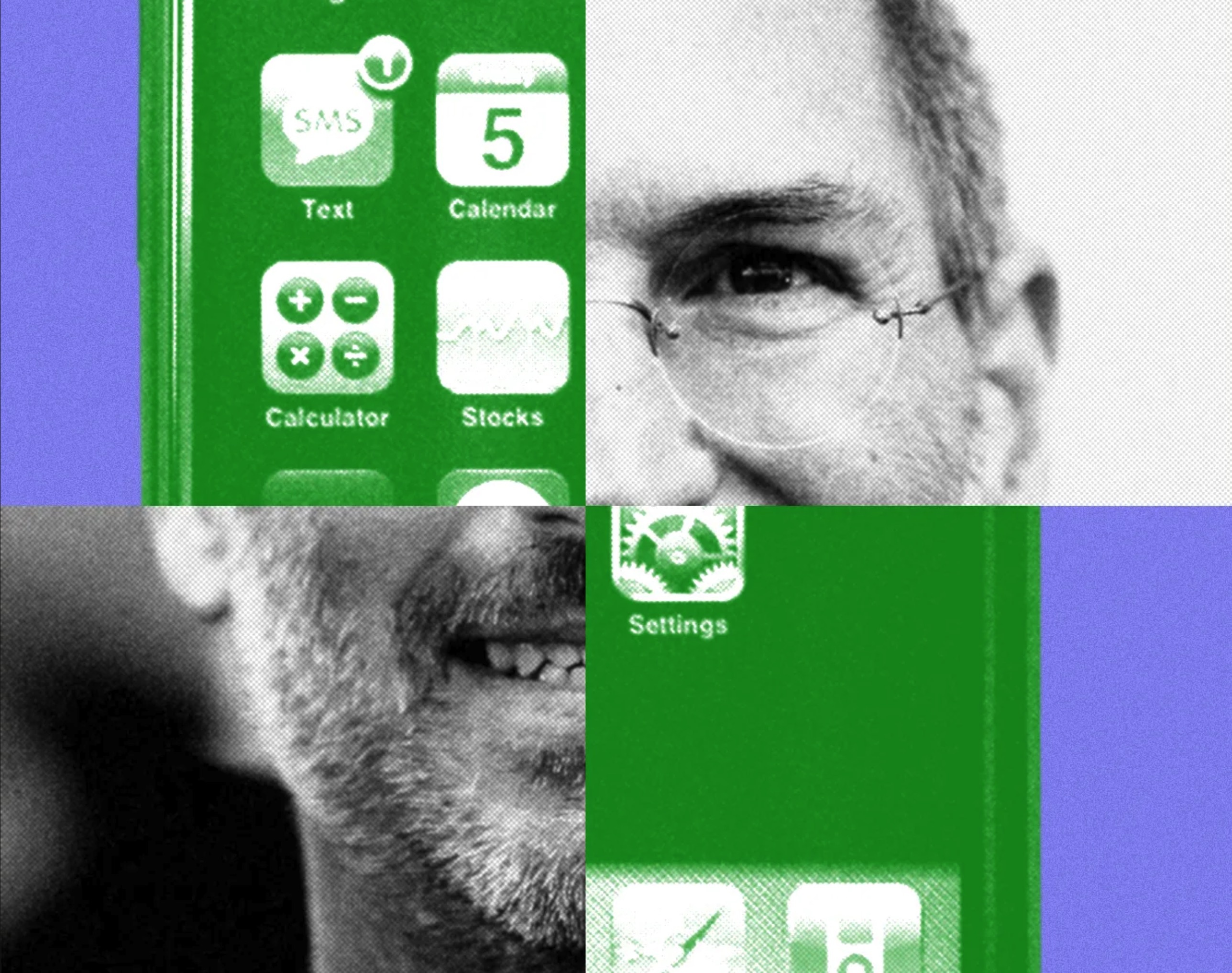
The iPhone is one of Apple's most successful devices. It was created through bold decisions, meticulous design, and a forward-looking vision.
To celebrate Apple's 50th anniversary, in his upcoming book , "Apple: The First 50 Years ," author David Pogue recounts how Steve Jobs created the first iPhone, including previously untold stories.
First idea
Few people know that Apple's first product development goal wasn't a smartphone, but a tablet.
At Apple, teams are always experimenting with new technologies. In 1999, Duncan Kerr, a designer specializing in engineering, industrial design, and user interfaces, joined Jony Ive's studio, leading the industrial design department.
In 2003, Kerr organized a meeting with interface designers and input engineers to find new ways to interact with computers, replacing the mouse and keyboard, which had been in use for 25 years.
According to Wired , Kerr's team experimented with technologies such as camera-controlled operation, spatial audio, vibration feedback, and 3D displays.
"We invite researchers or companies with interesting technology, do a lot of demonstrations, and test a lot of things," Kerr shared.
Kerr was fascinated by the idea of controlling objects on the screen with his fingers. To realize this, Apple partnered with FingerWorks, a company specializing in trackpads. The two companies launched the iGesture NumPad, a trackpad capable of recognizing multi-touch gestures.
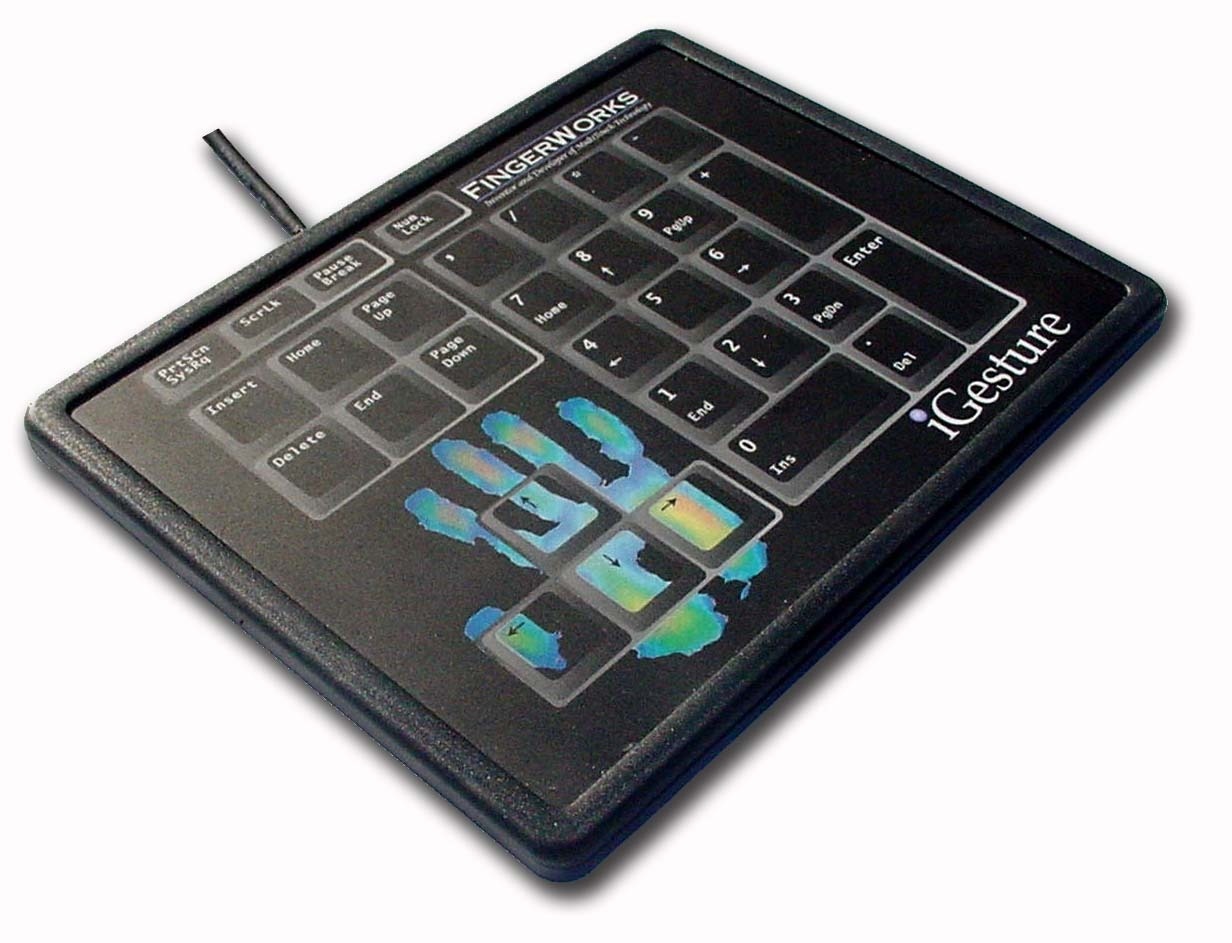 |
The iGesture NumPad trackpad features a multi-touch surface. Photo: FingerWorks . |
In late 2003, Apple allowed FingerWorks to produce a larger version measuring 12 x 9.5 inches, nearly the same size as a computer monitor. Kerr's team also installed an LCD projector system, projecting images onto the trackpad. Users could slide their fingers to move icons or zoom in on the map using two fingers.
In November 2003, Kerr's team presented the idea to Ive, who then demonstrated it to Jobs. Upon seeing the demo, both men affirmed that this was the future.
Things really took a turn in late 2005, when Steve Jobs attended the 50th birthday party of a Microsoft engineer. At the party, he repeatedly boasted about how Microsoft was solving the future of computing with its stylus-powered tablet.
"But he completely messed up the device," Jobs' words are quoted in Walter Isaacson's biography. Soon after, the Apple CEO was determined to show the world "what a tablet could really do."
The prototype failed.
Jobs' subsequent meeting with the board was tense. He insisted that tablets didn't need a stylus because "God has already given us ten," while gesturing with his fingers.
Using iBook laptops, Ive's team developed prototypes of several multi-touch tablets running the Mac OS X operating system. However, they weren't truly convincing due to their bulky size and the need for large processors and batteries.
The Mac operating system was also not suitable for touch operation. Ultimately, Apple completely acquired FingerWorks and its patents.
2005 also marked the beginning of the popularity of phones with music playback capabilities. Despite their limitations, this development led to a decline in user interest in dedicated music players. In other words, the fate of the iPod was gradually sealed.
Initially, Apple had no experience manufacturing phones. Following a suggestion from the board of directors, Jobs decided to partner with Motorola, a popular phone manufacturer at the time.
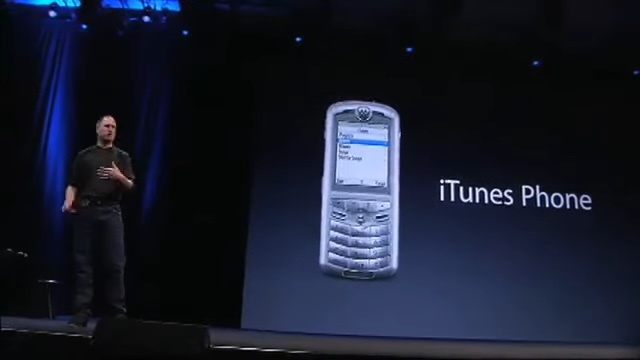 |
Steve Jobs introduced the Motorola Rokr E1 in 2005. Photo: Apple . |
This choice is considered reasonable because Mac computers have been equipped with Motorola processors for many years, while the Razr flip phone has generated significant appeal.
Both agreed to add iPod software to a phone designed by Motorola. This would be the first phone to support music playback from the iTunes Store, the primary source of music for 80% of online music downloaders.
Rumors that Apple was developing a new phone caused the company's stock to skyrocket, and rendered images circulated on the internet. Tech enthusiasts debated the product's design, wondering if it would have a scroll wheel like the iPod, the ability to store thousands of songs, or the ability to customize ringtones.
However, the final product lacked those features. The result of the collaboration was the Motorola Rokr E1, a plastic-cased, unsightly model that could only store 100 songs despite its memory card capacity. Copying music was time-consuming due to the lack of a FireWire or USB2 port. The device also couldn't download music despite having internet connectivity.
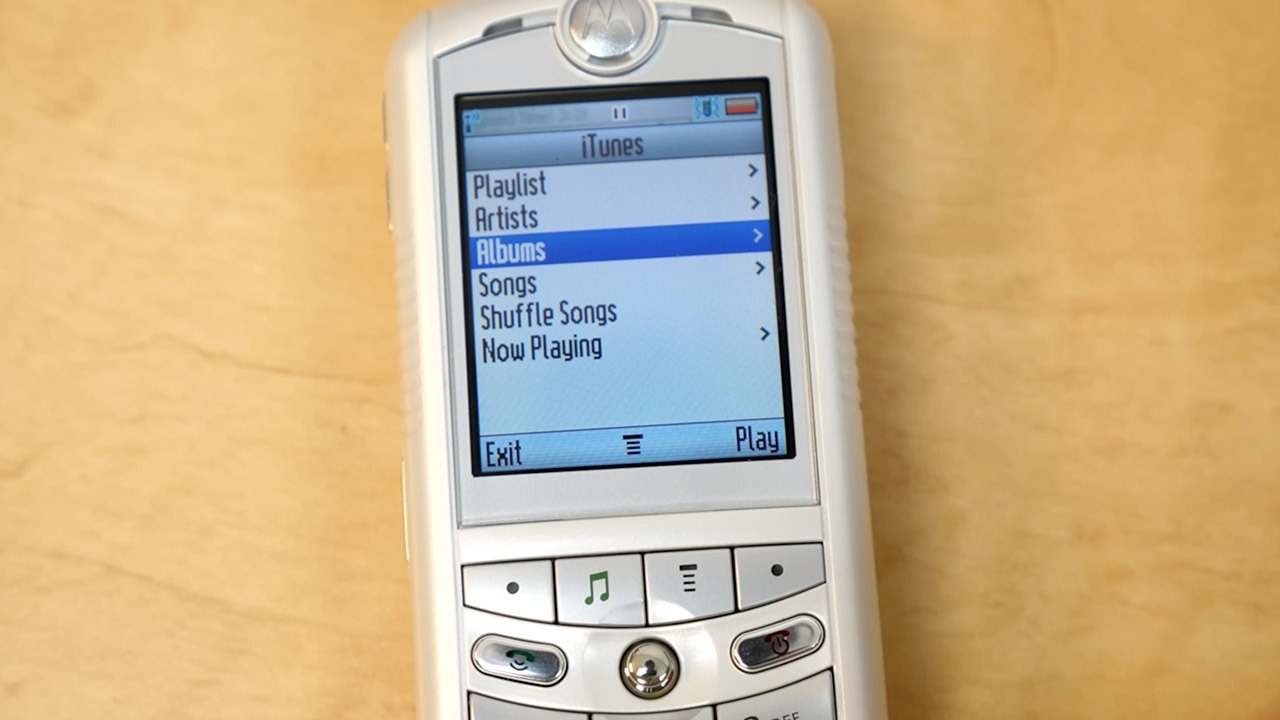 |
iTunes interface on Motorola Rokr E1. Photo: TechEBlog . |
"The annoying thing is that people keep calling it an Apple phone or an iTunes phone. Believe me, we have nothing to do with this. We created iTunes, they (Motorola) created the phone," said Greg Joswiak, Apple's current Global Marketing Director.
When introducing the Rokr E1 in September 2005, Jobs couldn't hide his disgust. In an interview with Fortune , he declared that all phones at the time were too difficult to use, and that Apple needed to create a product people would love.
Jobs decided to abandon the tablet project and focus on developing phones. Of course, music-enabled phones would directly impact the iPod business, but Jobs believed that "it's better to have Apple than a competitor."
Final decision
Apple divided its research into two groups to find the optimal phone design. One group, led by Tony Fadell and called P1, attempted to turn the iPod into a phone by adding a dialing function to the rotating wheel. However, typing on the wheel was deemed a "nightmare."
Another group, called P2, recalled a project a few years ago that tested a touch-sensitive trackpad that could be miniaturized to fit the phone's interface. From that, the team came up with the idea of creating a phone with only a touch screen, without physical buttons.
The multi-touch team, consisting of Duncan Kerr, interface designer Bas Ording, and Imran Chaudhri, developed independent hardware including a 12-inch multi-touch screen for the iBook, which at the time still required a connection to a Power Mac computer. To mimic a phone screen, the interface was limited to a small rectangular size.



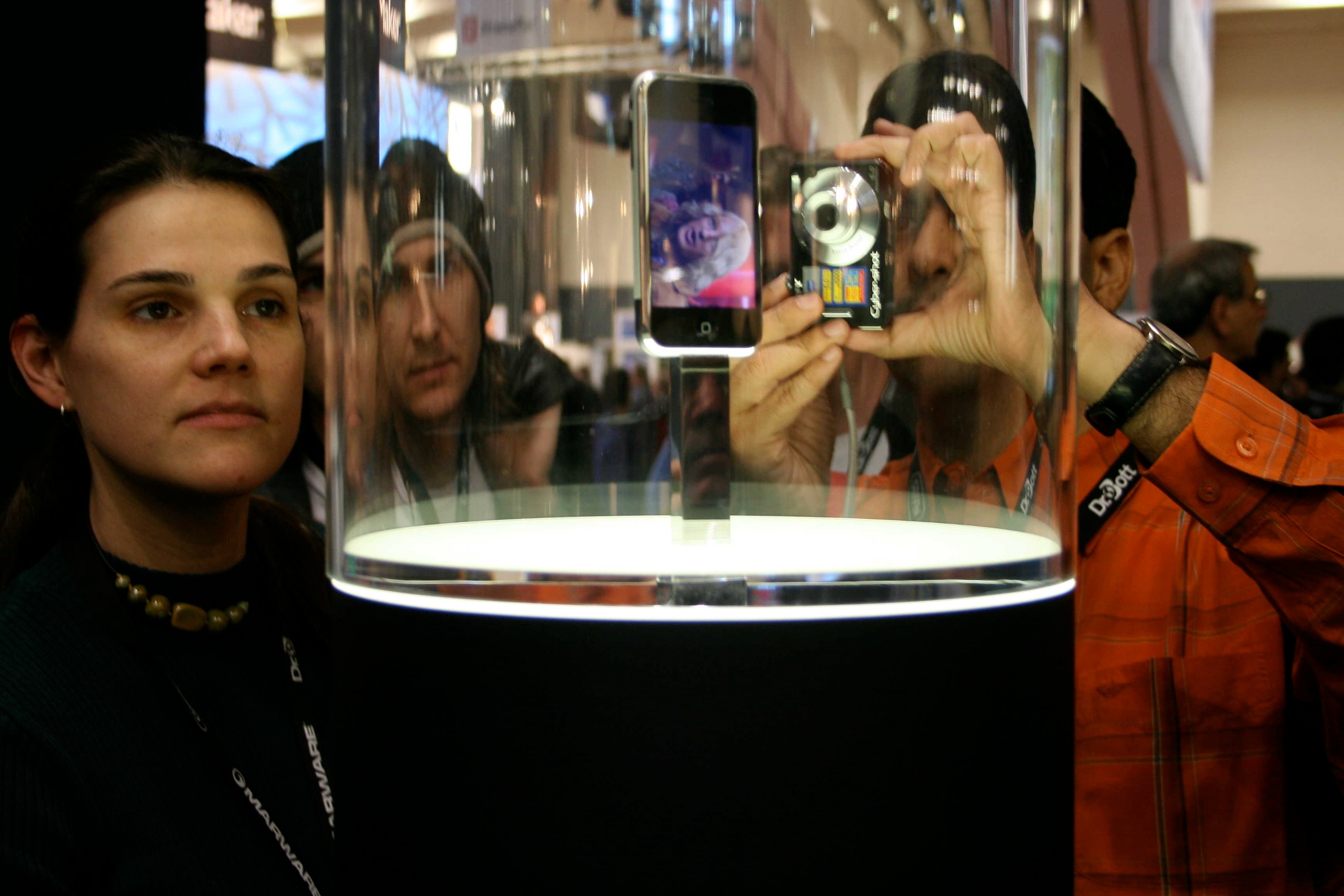 |
Users admire the first iPhone. Photo: Cult of Mac . |
In the Macromedia Director program, Ording impressed viewers by demonstrating a contact list application with 200 numbers. Users could swipe to scroll the list, tap a name to view details, and then make a call by tapping the phone number again.
The most notable feature is the inertial scrolling. For example, the screen continues to scroll after you swipe your finger. If you swipe quickly, the screen scrolls faster and stops slowly, mimicking the laws of physics. At the end of the list, the screen will bounce slightly.
Jobs encouraged both teams to put in their full effort for six months. After reviewing the latest demos, he decided on P2, acknowledging it was more complex but it was something "we all wanted to do." The project officially received the codename Purple, laying the foundation for the first iPhone.
Source: https://znews.vn/chuyen-chua-ke-ve-chiec-iphone-dau-tien-post1633158.html

![[Photo] "Hanoi Lotus Festival" honors the lotus flower that has been associated with Vietnam for thousands of years.](https://vphoto.vietnam.vn/thumb/1200x675/vietnam/resource/IMAGE/2026/06/27/1782516943048_sen-ha-noi-2026-minh-duy-1-jpg.webp)