

Expanding the learning environment from the ground up.
From a specific model in Hung Long commune, the approach of Ho Chi Minh City is clearly evident: bringing technology closer to learners, starting from small but practical spaces. The "Container Library" project at Nguyen Van Tran Primary School, implemented from the end of 2025, is not only a place for reading but also a learning space integrating tradition and technology.

With its modern modular design, open space, and a system of internet-connected computers, tablets, smart TVs, etc., the library facilitates students' access to knowledge in various forms, from paper books to digital resources. More importantly, this model shows a clear direction: Digital transformation does not begin with large systems, but with the familiar learning spaces at the school level.
According to Mr. Huynh Vu Long, Deputy Head of the Culture and Social Affairs Department of Hung Long Commune, the combination of in-person and online learning is contributing to spreading a learning culture beyond the classroom. Not only serving students within the school, this model is also expected to become a hub for intellectual activities for children in the area, contributing to the formation of self-learning habits and early access to technology.
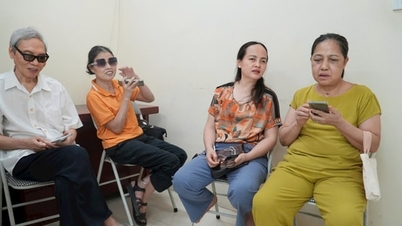
At the level of social organizations, this approach continues to expand to more diverse target groups. According to Ms. Trinh Thi Thanh, Permanent Vice President of the Ho Chi Minh City Women's Union, building a digital education ecosystem for women not only enhances technological skills but also opens up opportunities for access to knowledge for disadvantaged groups. The "Digital Literacy Movement" is considered a key solution to eliminate technological illiteracy in the new context. In addition, scholarship programs such as the Nguyen Thi Minh Khai Scholarship, which provides online learning equipment for disadvantaged girls, contribute to narrowing the digital divide from an early age.
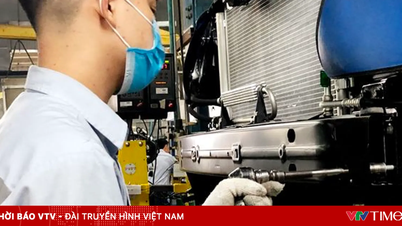
Similarly, in the labor sector, digital transformation is becoming a practical tool to expand learning opportunities and access to social security. Mr. Vo Khac Binh, a member of the Standing Committee of the Ho Chi Minh City Federation of Labor, stated that tens of thousands of workers, especially in the informal sector, have been guided on using technology to look up insurance information, receive benefits, and make cashless payments. This has given workers more equal access to information and services. Models such as the "Trade Union AI Assistant" or the "Stopover Point" for technology workers demonstrate efforts to bring learning beyond traditional education and directly connect it to real-life needs.
Towards a holistic learning ecosystem.
Building upon existing models, Ho Chi Minh City is gradually establishing a common foundation for a "Learning City," with a focus on policy synchronization, resource investment, and the development of a digital ecosystem.

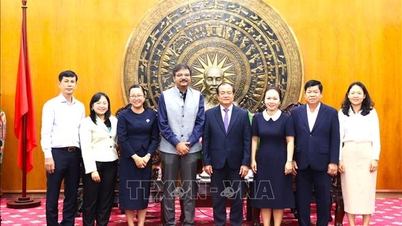
According to Jonathan Wallace Baker, UNESCO Representative in Vietnam, a noteworthy aspect is the integrated approach taken by the city, mobilizing the entire government and society to participate. These efforts are contributing to building an inclusive, dynamic, and forward-looking learning city. In particular, expanding learning opportunities for vulnerable groups through tuition support policies, social protection, and flexible learning pathways clearly demonstrates a commitment to equity.
The practical implementation also shows that digital transformation is not just a guideline but has been concretized through resources and action programs. According to the Ho Chi Minh City Department of Education and Training, in 2025, the city allocated more than 95 billion VND to implement policies for developing preschool education in industrial zones and export processing zones; at the same time, more than 5,000 training courses and specialized workshops on digital transformation were organized, attracting a large number of participants.
The "Digital Literacy Movement" continues to be promoted, with nearly 19,000 members participating in community digital technology groups, contributing to the dissemination of digital skills to every residential area. Simultaneously, "digital library" and "digital bookshelf" models have been implemented in 158 educational institutions, expanding the learning space in the digital environment.
From a social perspective, the city continues to maintain a high level of universal education, with 100% of localities achieving Level 3 standards for universal primary and lower secondary education, while also developing inclusive education models to ensure the right to education for all.
However, according to Jonathan Wallace Baker, digital transformation, if not properly guided, can widen the gap due to disparities in infrastructure and digital capabilities. Therefore, the application of technology needs to be guided by ethical principles, responsibility, and a people-centered approach.
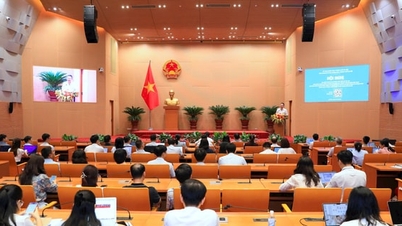
Ho Chi Minh City People's Committee Vice Chairman Nguyen Manh Cuong emphasized that building a "Learning City" in the new context requires consistent, synchronized, and effective guidance to form a solid foundation for a learning society and spread the spirit of lifelong learning to all levels of the population.
In the coming period, Ho Chi Minh City will focus on key solutions such as raising awareness about lifelong learning; improving policies to support disadvantaged groups; promoting digital transformation associated with movements such as "Digital Literacy for the People"; and simultaneously enhancing the capacity of the workforce and expanding international cooperation in the field of education.
These directions show that Ho Chi Minh City is not just expanding the scale of learning, but is aiming to build a comprehensive learning ecosystem where technology, policies, and people work together in synergy. From practical implementation, digital transformation is becoming a crucial lever, helping Ho Chi Minh City move closer to the goal of becoming a "Learning City," with the core requirement that all citizens, in all circumstances, have the opportunity to participate in and benefit from lifelong learning.
Source: https://baotintuc.vn/giao-duc/chuyen-doi-so-mo-loi-thanh-pho-hoc-tap-20260416142846946.htm















































![[Video] Sunset at Lap An Lagoon – Where the sun sets over the fishing nets](https://vphoto.vietnam.vn/thumb/1200x675/vietnam/resource/IMAGE/2026/05/31/1780192137701_beach-landscape-sea-water-nature-grass-745871-pxhere-com.jpeg)



































Comment (0)