

Each school becomes a "nursery" of innovation, fostering digital thinking and nurturing the aspirations for integration in a generation of global citizens.
Digital transformation in education management

In the context of the Fourth Industrial Revolution, digital transformation in education is not just a trend but has become an urgent requirement and one of the key tasks.
To realize this goal, over the years, the Ministry of Education and Training (MOET) has implemented many comprehensive solutions, thereby making significant progress: building a nationwide database, deploying platforms to support teaching, assessment, and school management; providing online public services, promoting cashless payments, and developing digital human resources.
Deputy Minister of Education and Training Nguyen Van Phuc emphasized: "Digital transformation is no longer an option but has become an inevitable requirement, an irreversible trend that determines national competitiveness and the sustainable development of the country."
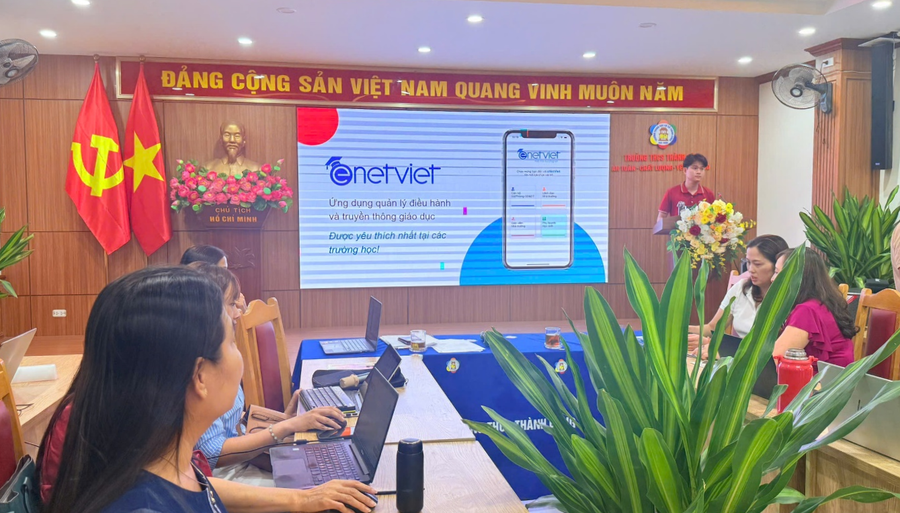
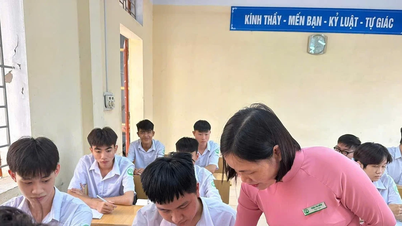
At Quang Trung Secondary School (Dong Da District, Hanoi) - one of the schools that has implemented the digital transformation model since 2021, Ms. Nguyen Minh Hoai - Vice Principal, shared: “The school's system for managing records, gradebooks, timetables, and professional activities is entirely electronic, helping to reduce the workload for teachers and enhance transparency in management. The application of eNetViet software and the internal operating system has helped the school synchronize processes from student admission and attendance tracking to asset management.”
According to a report by the Department of Information Technology (Ministry of Education and Training), systems such as the education sector's database, electronic student records, and electronic communication logs are being uniformly implemented nationwide. This is an important step in forming an "open data ecosystem" for the sector, aiming towards smart education in line with Resolution 52-NQ/TW.
“We are implementing a facial recognition attendance system. When students arrive at school, they simply check in using the device installed at the school, and parents will immediately receive a message on the system notifying them that their child has arrived. The same process applies when school ends. Parents can also submit leave requests for their children.”
"The online system allows homeroom teachers to access the application for review. This saves a lot of time and costs and helps to closely monitor students' progress," shared Mr. Ha Tien Vien, a computer science teacher and head of digital education management at Quang Trung Secondary School.
When technology opens up new spaces of knowledge
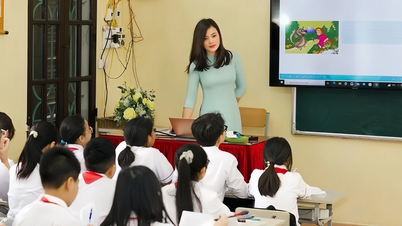
If management is the "backbone" of digital transformation, then teaching and learning are the "heart" of this process. In the context of rapid technological development, the application of technology to teaching and learning has changed the way students approach, interact with, and evaluate their learning outcomes.
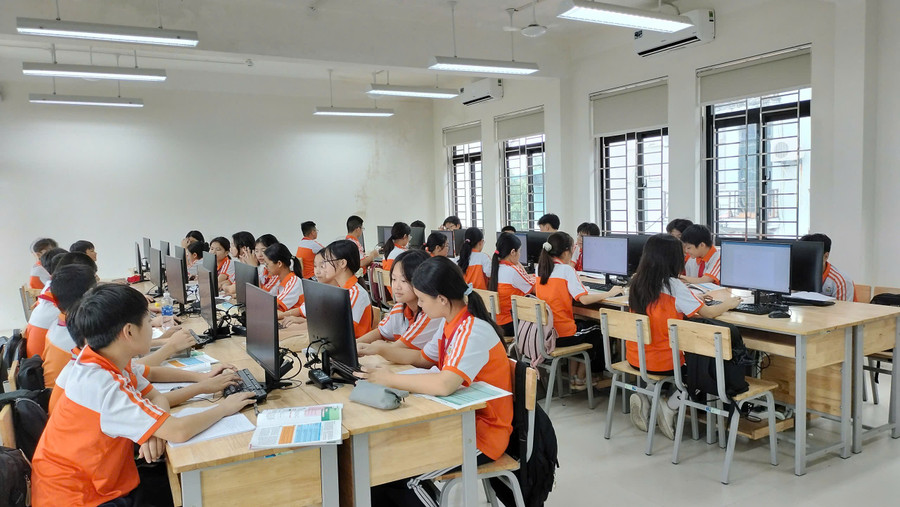
Currently, the digital classroom model has been implemented in most subjects at the majority of secondary and high schools in Hanoi.
Ms. Nguyen Thi Thuy An, a math and computer science teacher at Quang Trung Secondary School, shared: “Applying software like Plickers or Wordwall in warm-up activities or end-of-lesson reinforcement activities helps students become more proactive and interested in the subject.” Furthermore, the school organizes creative technology competitions, encouraging students to design applications to support their learning.
In addition, participation in STEM (Science, Technology, Engineering, and Mathematics) classes is becoming one of the activities that sparks students' interest and attracts their enthusiastic participation.
"I find STEM lessons always very interesting, allowing us to apply our knowledge of chemistry, physics, technology, etc., to create real-world products," said Van Anh, a student in class 8D at Quang Trung Secondary School.
At Hanoi - Amsterdam High School for Gifted Students, blended learning has become widespread. Teachers use platforms like Google Classroom, Microsoft Teams, and digital learning materials developed by the students themselves. Assessment and evaluation have therefore become more flexible, reducing the pressure of high grades.
According to the Ministry of Education and Training, currently over 60% of secondary schools use online learning platforms, and 40% of teachers have developed their own digital learning materials. The "National Open Educational Resources" program, launched in 2023, is attracting thousands of high-quality electronic lectures and learning videos, serving students in remote and disadvantaged areas.
At the conference on promoting digital transformation in the education sector held in mid-October, Deputy Minister of Education and Training Nguyen Van Phuc emphasized: "Digital transformation not only helps students learn better, but also helps teachers become knowledge designers. Each digital lesson is a creative product, demonstrating pedagogical competence in the new era."
The application of technology in teaching also helps students develop skills such as critical thinking, creativity, collaboration, and communication. Online learning platforms provide students with a flexible learning environment, allowing them to learn at their own pace and access a wealth of learning resources from around the world.
Solutions towards a comprehensive digital education system.
Despite achieving many positive results, digital transformation in education still faces numerous challenges. According to statistics from the Ministry of Education and Training, approximately 25% of educational institutions lack stable technological infrastructure; 30% of teachers have not received systematic training in digital skills. In many places, especially in rural areas, weak internet connections and a shortage of equipment make the implementation of online teaching and learning largely superficial.
Another major issue is financial resources. A smart school system requires significant investment in equipment, software, security, and network infrastructure – which is currently beyond the capabilities of many public schools. Therefore, many experts suggest public-private partnerships (PPP) in investing in digital transformation of education.
According to Mr. Nguyen Huy Dung, a full-time member of the Central Steering Committee on Science, Technology, Innovation and Digital Transformation: "Digital transformation in education is a potential market. The State needs to create mechanisms for technology companies to participate in developing platforms and providing digital education services, creating an ecosystem for mutual development."
Another approach is developing digital human resources in the education sector. The Ministry of Education and Training aims to ensure that by 2030, 100% of administrators and teachers receive basic digital skills training, and 50% achieve advanced levels. Courses on AI, big data, and information security are being widely implemented on the education sector's digital learning resource platform.
At the grassroots level, such as at Quang Trung Secondary School, the school administration has established an IT team to support teachers in using software, designing lesson plans, and managing students through applications. This "teacher-to-teacher" model helps to genuinely spread the spirit of digital transformation.
At the same time, according to experts, it is necessary to encourage innovation in education, considering it as the driving force of digital transformation.
Ms. Thuy An, a teacher at Quang Trung Secondary School, shared: “If teachers only teach in the old way, technology will only be a tool. But if we consider it a new language for communication, then that is innovation.” This is the spirit that many schools across the country are striving for: using technology not only for management, but also to open up completely new methods of learning and teaching, stimulating creativity and critical thinking in students.
From a management perspective, the Ministry of Education and Training has identified three strategic pillars for the digital transformation of education: Smart management; Digitalized teaching and learning; and open educational resources and digital citizenship. These three pillars not only serve as a guiding principle for educational institutions but also shape the legal framework and policies supporting investment in physical infrastructure, digital infrastructure development, human resource training, and the construction of a smart education ecosystem.
Schools from middle to high school are gradually adopting a centralized student data management model, e-learning materials, and online learning platforms, aiming for a synchronized, transparent, and effective education system.
Besides developing technological infrastructure and teacher skills, ensuring that all students have access to technology is a key factor. As General Secretary To Lam emphasized during his visit to high-quality educational institutions in Hanoi: "Under any circumstances, no student should be left behind."
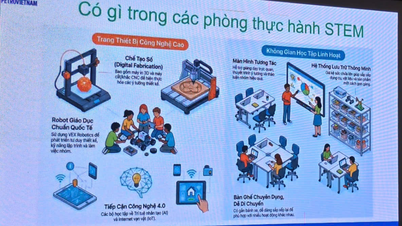
Some schools have focused on building modern STEM classrooms, technology labs integrating programming and robotics, using interactive whiteboards, online learning software, and electronic student management platforms. Alongside this, they encourage innovation in teaching content and methods.
Student innovation competitions, science and technology projects, and collaborative programs with technology companies are also receiving increasing attention. All of these aim to cultivate a well-rounded generation of students who not only excel academically but are also prepared to face the challenges of a globalized environment.
Looking to the future, building a comprehensive digital education system requires close coordination among state management levels, educational institutions, and technology companies. Thanks to synchronized efforts from the central to local levels, many schools across the country are undergoing significant transformation in their digitalization journey.
Exemplary models such as Hanoi - Amsterdam High School for Gifted Students and Quang Trung Junior High School are testaments to the spirit of innovation, as they gradually create a digital education environment, foster creativity, and improve the quality of teaching and learning.
Ultimately, the goal of digital transformation is not just technology, but a humane, creative, and comprehensive education where students' potential is unleashed, their intellect nurtured, and their physical, moral, and digital skills developed. As affirmed by Deputy Minister of Education and Training Nguyen Van Phuc: "Digital transformation is not a technology race, but a journey of innovation in thinking and educational models."
Source: https://giaoducthoidai.vn/chuyen-doi-so-trong-giao-duc-hanh-trinh-kien-tao-tuong-lai-hoc-duong-post761170.html
![[Photo] Closing Ceremony of the 15th Conference of the Central Committee of the 13th Party Congress](/_next/image?url=https%3A%2F%2Fvphoto.vietnam.vn%2Fthumb%2F1200x675%2Fvietnam%2Fresource%2FIMAGE%2F2025%2F12%2F23%2F1766462841764_a1-bnd-3731-1647-jpg.webp&w=3840&q=75)


























































































Comment (0)