

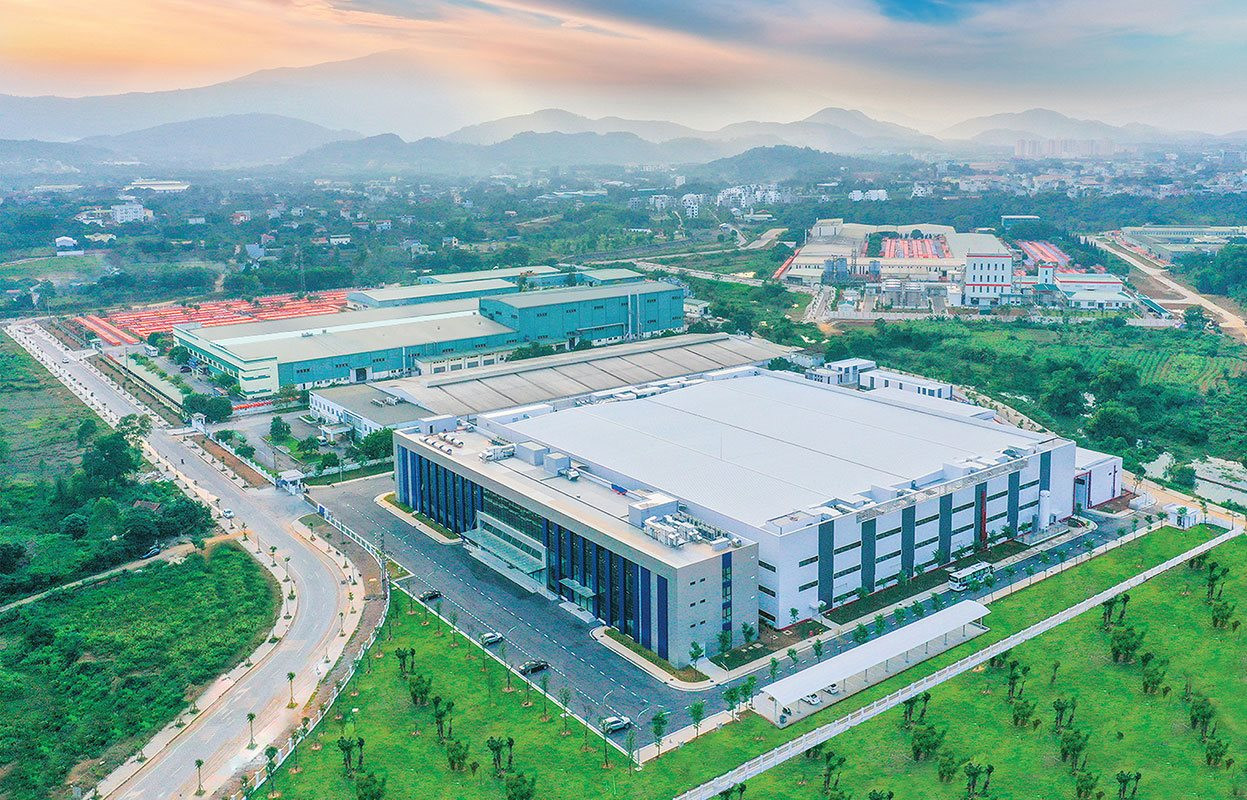
The government has just issued Decree No. 10 regulating high-tech zones. This is considered a policy for high-tech research and development activities, high-tech enterprise incubation, and high-tech human resource training.
Accordingly, the State prioritizes the use of official development assistance (ODA), preferential credit, and other technical assistance as prescribed by law, resources from national programs on science and technology development, high technology, support funds, and other legitimate sources of capital to invest in the construction of high-tech research and development facilities, high-tech incubation centers, and high-tech human resource training facilities; and to support high-tech research and development projects and activities...
As for export processing enterprises in high-tech zones, when they meet the conditions regarding customs inspection and supervision, regulations applicable to non-tariff zones, and regulations in the law on import and export taxes, they are subject to separate regulations applicable to export processing enterprises operating in industrial parks and economic zones as stipulated by the law on industrial parks and economic zones.
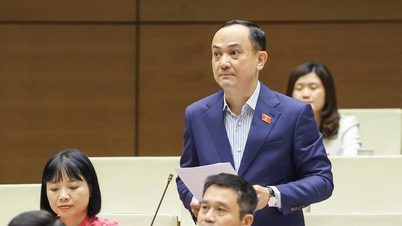
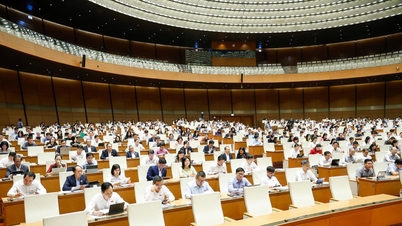
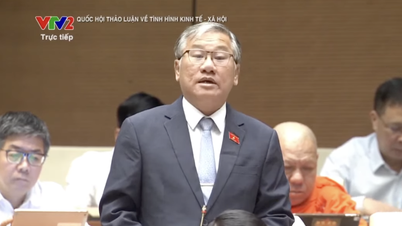
However, reality demands a "special mechanism" for export processing enterprises in high-tech zones. These enterprises are considered the "backbone" in the production of high-tech products. Mr. Tran Van Lam, Standing Member of the National Assembly's Finance and Budget Committee, stated that we already have preferential policies for enterprises investing in high-tech zones. Therefore, to have stronger preferential mechanisms, attention needs to be paid to preferential treatment regarding land, access to land, and land lease prices for high-tech zones...
According to Mr. Lam, currently, high-tech businesses are enjoying preferential tax policies, but once the global minimum tax rate is implemented, there will be a need for alternative support policies to replace the global minimum tax rate for businesses investing in high-tech zones.
“Recently, when issuing the resolution on the global minimum tax, the National Assembly assigned the Government to study the establishment of a fund to support strategic investors and businesses, including high-tech businesses, to attract investment. These funds could support businesses in the initial stages of project implementation, especially in human resource training, and even support services for the workforce in businesses within high-tech zones,” Mr. Lam suggested, adding that this is an issue that needs specific research, as the National Assembly is also requesting the Government to study the establishment of a fund to support strategically important businesses, including those in high technology.
Furthermore, according to Mr. Lam, in addition to direct support policies for businesses, attention should also be paid to indirect policies such as: increasing the attractiveness of the investment environment; streamlining administrative procedures; developing industrial and service support planning, and social services for workers, employees, and experts. These indirect support policies aim to create an attractive environment for investors to implement their projects, as part of the overall national investment attraction strategy.
Dr. To Hoai Nam, Permanent Vice President and General Secretary of the Vietnam Association of Small and Medium Enterprises, believes that policies supporting businesses investing in high-tech zones are urgently needed. This is because the transformation and restructuring of global production and business demand products of very high standards. For high-tech products, in addition to product quality, they must also meet clean and safe production standards. Production within high-tech zones itself requires stricter standards for solid waste, wastewater, and air emissions.
Therefore, according to Mr. Nam, if businesses can meet those requirements, they can overcome market "barriers" in developed countries in exports. This is especially important for building a brand for Vietnam, so policies to encourage and support high-tech businesses are essential.
Mr. Nam emphasized that businesses need access to capital because investing in next-generation production requires higher costs. Therefore, in addition to commercial banks, state funds are needed to provide maximum support for innovation so that businesses can organize production in high-tech zones.
“The State uses the budget to support businesses. But when businesses export goods and create jobs, they indirectly contribute to the State by paying taxes. In the current situation, while innovation may be prevalent domestically, they are already ahead of the international community. However, we must prioritize encouraging the use of products from domestic businesses because, in the long run, it is the foundation for achieving economic self-reliance and technological independence,” Mr. Nam said.
Source


![[Photo] General Secretary and President To Lam meets with National Assembly delegates from ethnic minorities.](https://vphoto.vietnam.vn/thumb/1200x675/vietnam/resource/IMAGE/2026/04/20/1776696701056_a1-bnd-8331-3342-jpg.webp)

![[Image] National Assembly discusses the implementation of the socio-economic development plan.](https://vphoto.vietnam.vn/thumb/1200x675/vietnam/resource/IMAGE/2026/04/20/1776696707422_ndo_br_img-20260420-185419-jpg.webp)



![[Infographics] Information on the 34 Chairpersons of Provincial and City People's Councils for the 2026-2031 term](https://vphoto.vietnam.vn/thumb/402x226/vietnam/resource/IMAGE/2026/04/21/1776727949303_package-media-53613504261372558961610-84744387961269657917369.png)


































































Comment (0)