Hanoi begins construction on 3 rental housing projects.
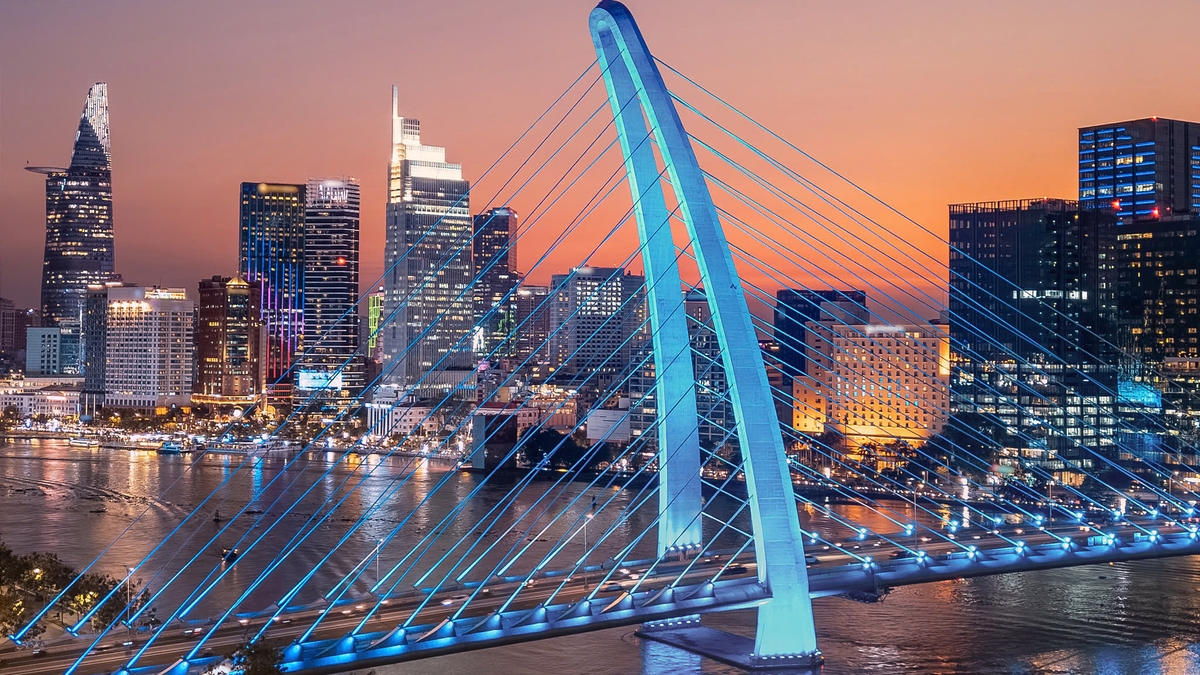
On the morning of June 22nd, Prime Minister Le Minh Hung attended the groundbreaking ceremony for five urban railway lines and three rental housing projects in Hanoi. These are the largest infrastructure and social welfare projects ever undertaken in the capital city, creating new momentum for socio-economic growth.
The simultaneous commencement of three rental housing projects not only adds thousands of apartments for residents but also marks a shift in mindset, viewing rental housing as a strategic and long-term segment.
Three rental housing projects are: the Him Lam Long Bien mixed-use residential area; the residential area on plots A2, A3, and A4 in the Phap Van - Tu Hiep area; and the project on the land allocated for the relocation of residents from the Old Quarter in Viet Hung ward. These three projects have a total estimated investment of over 30,000 billion VND, of which two projects utilize public resources to create a rental housing fund for the city, and one project is proposed for investment by a private enterprise. Upon completion, they will contribute more than 8,000 apartments to Hanoi's rental housing stock.
Mr. Vu Dai Thang, Chairman of the Hanoi People's Committee, stated: "We believe that, with the close guidance from the Central Government, and especially the creativity of the departments and agencies in providing advice, in the near future, a housing fund will be formed in the city, including both commercial rental housing and social rental housing, to serve the diverse and abundant needs of the people in this field."
The projects are expected to meet the housing needs of workers, laborers, students, officials, civil servants, members of the armed forces, and other groups of people in need of rental housing; while also contributing to the healthy and sustainable development of the real estate market. According to city leaders, in the future, rental housing areas will be planned in conjunction with urban railways, employment centers, education , healthcare, and public services, creating favorable conditions for people to live and work.
Supporting businesses to participate in the rental housing segment.
The simultaneous commencement of rental housing projects in the capital city took place just one week after the City People's Council approved a Resolution stipulating mechanisms and policies on investment, development, and housing support in the area.
Mr. Luyen Van Phuong - Deputy Director of the Department of Construction of Ho Chi Minh City. Hanoi shared: "The commencement of these three projects is of paramount importance to the development of housing in the city. Firstly, these are the first steps in implementing the directives of General Secretary and President To Lam in Notice No. 64, as well as the directives of the Prime Minister in Notice No. 262, regarding the orientation of rental housing development in the capital. These projects fundamentally change the direction of housing development in the city, gradually shifting people's mindset from owning a home to using it, and using a home as a place of living, only as a part of real estate business. The implementation details demonstrate Hanoi's strong commitment to developing rental housing, a long-term strategic segment, creating conditions for people, especially officials, civil servants, armed forces personnel, workers, and laborers, to have stable, long-term rental housing at reasonable prices."
Regarding rental prices, Mr. Phuong shared that there will be differences between state-owned and private rental housing projects. Previously invested state-owned projects, such as the CT19A project, had prices around 35,000 VND/m²/month. Meanwhile, social housing projects, including current projects like the Kim Chung project, are priced at around 85,000 VND/m²/month. "For Hanoi, we are also creating a mechanism to ensure that rental housing prices remain stable. The city will later issue a price framework to control rental rates for rental housing projects in the city that are initiated by Hanoi. This price is expected to change every five years, and the rental period may extend throughout the project's lifespan."
For businesses, the city is developing mechanisms to attract investment and provide incentives regarding capital and land use fees to support businesses participating in this segment. Mr. Phuong added: "To attract investment, Hanoi City has just issued a Resolution on housing policy, including rental housing. For rental housing, we have developed policies with very significant incentives for investors. The city will exempt land use fees. To recover capital for investors, we also allocate land for the project for investors to sell to generate profit at commercial prices, and transfer the profits from that commercial housing project to the rental project to reduce rental prices. And in the area of rental housing, we stipulate that 70% must be allocated to policy beneficiaries for rental, and 30% for regular tenants. Therefore, investors also benefit from the profits."
Furthermore, Hanoi City also applies the mechanisms of Resolutions 201 and 192 to the development of social housing, which include many preferential provisions for investors, creating favorable conditions for investors to participate in social housing projects in the city. The city allows rental housing to also apply the same investment mechanisms and procedures as social housing projects in the city. In addition, we propose to the Prime Minister and competent authorities to issue further provisions such as allowing investors to borrow at low interest rates similar to social housing through policy banks and credit institutions, possibly allowing long-term loans of 20-30 years. Simultaneously, the credit limit should be up to 80% of the total investment of the project. We also recommend that there be a land acquisition mechanism for these projects to create the most favorable conditions for investors to participate in rental housing projects in the city."

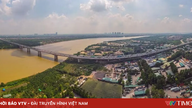

Prime Minister Le Minh Hung and delegates press the button to officially launch the construction of 5 urban railway lines and 3 rental housing projects in Hanoi - Photo: VGP/Nhat Bac
Boosting the supply of rental housing.
Rental housing has been identified as a strategic pillar in the direction of social housing and the orientation of housing development in the coming period. General Secretary and President To Lam emphasized that, in addition to housing for sale, priority should be given to developing rental housing, especially the model of rental apartments in large cities, industrial zones, economic zones, dynamic regions and important economic corridors.
According to the Ministry of Construction, the number of social housing units currently available for rent nationwide is over 42,000. Da Nang leads with over 12,400 units, followed by Bac Ninh with approximately 9,800 units and Ho Chi Minh City with about 5,700 units. These are also the localities that have developed and implemented housing models for workers and laborers, creating many opportunities for workers to settle down and build a stable life.
Prime Minister Le Minh Hung has worked with provinces and cities with large concentrations of workers and requested that localities proactively review and adjust planning, striving to start at least one rental housing project in June. He also urged the implementation of large-scale rental housing projects in the third and fourth quarters of this year. Currently, many localities are accelerating policies to develop rental housing to meet the real housing needs of workers.
As a locality with a high concentration of industrial zones and clusters, Dong Nai has just launched its first social housing rental project, using city budget funds, with a scale of approximately 10,000 units. Phase 1, with 1,000 units, aims to be completed within one year.
Mr. Nguyen Anh Tuan, Deputy Director of the Investment and Construction Project Management Board of Dong Nai City, shared: "Designed according to needs, with 1 or 2 bedrooms, we maximize the usable space, so that not only one worker or laborer can live there, but a small family can also fit."
Following the Long Binh social housing project, the city announced that it will continue to review planning, prepare land funds, and implement social housing projects for rent in other areas with a high concentration of industrial zones, with an estimated scale of approximately 10,000 apartments in each location.
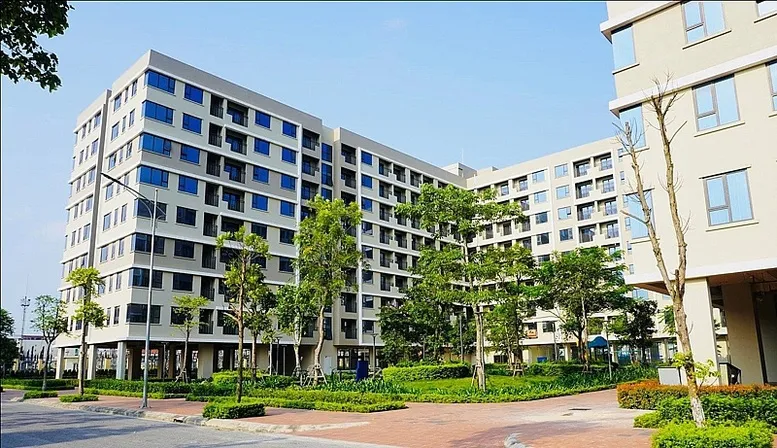
Amidst a continuously growing urban population, the demand for quality, affordable housing is increasing - Photo: Government Newspaper
A groundbreaking mechanism to boost the development of rental housing.



To achieve the goal of developing 181,000 social housing units, including 50,000 social housing units for rent, from now until 2030, Ho Chi Minh City leaders emphasized that they will create additional conditions such as adjusting planning to convert agricultural land, business and production land, and relocated factory land for social housing.
Initially, 64 projects will be put into the green channel for early implementation. With a profit margin of only 10%, the city is also aiming for a longer-term goal: developing social housing and rental housing linked to the Transport-Oriented Development (TOD) model.
Regarding bottlenecks, Mr. Luyen Van Phuong, Deputy Director of the Hanoi Department of Construction, stated: "Investors are most concerned about profit. Therefore, we must create conditions for investors to make a profit. Next, administrative procedures must be streamlined. In Hanoi, the Chairman of the City People's Committee has directed that administrative procedures be reduced by 50%, urging investors to implement projects as quickly as possible."
In addition to removing administrative bottlenecks, some localities are developing rental housing types that must be linked to the Transport-Oriented Development (TOD) model. According to Mr. Phuong, this is an inevitable trend. Rental housing projects must be located in the most convenient locations for residents. Therefore, in the Resolution on housing policy, Hanoi has determined that rental housing areas must be located in TOD areas, export processing zones, and other convenient locations for people who need to rent in these areas.
With the urban population continuing to grow, the demand for quality, affordable housing is increasing. Therefore, developing large-scale, well-planned rental housing projects is considered one of the important solutions to diversify housing supply, contribute to ensuring social welfare, and develop the real estate market in a sustainable direction.
Source: https://vtv.vn/co-che-dot-pha-thuc-day-phat-trien-nha-o-cho-thue-100260623133734478.htm