"Stop the car!" flooded online forums.
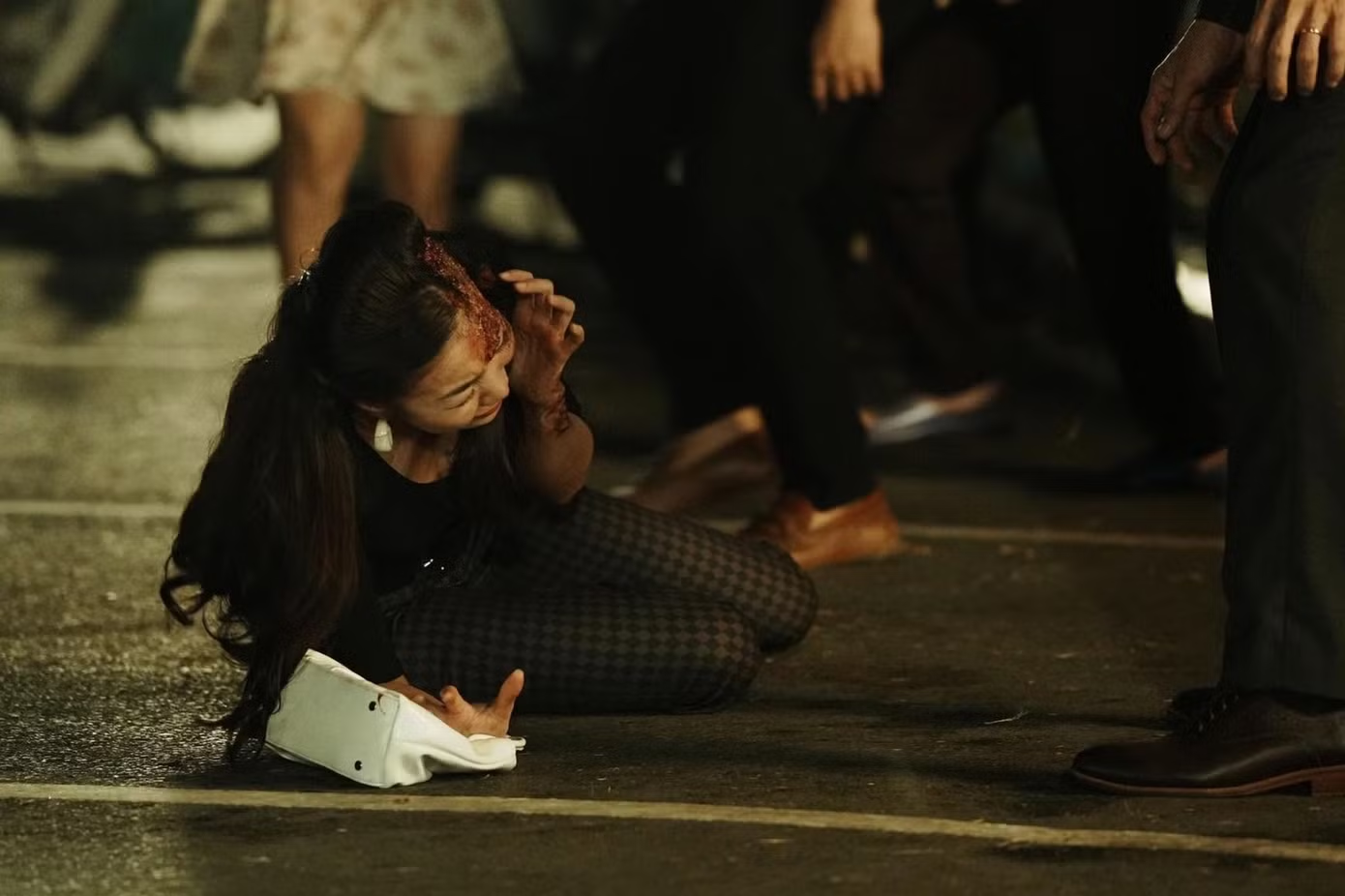
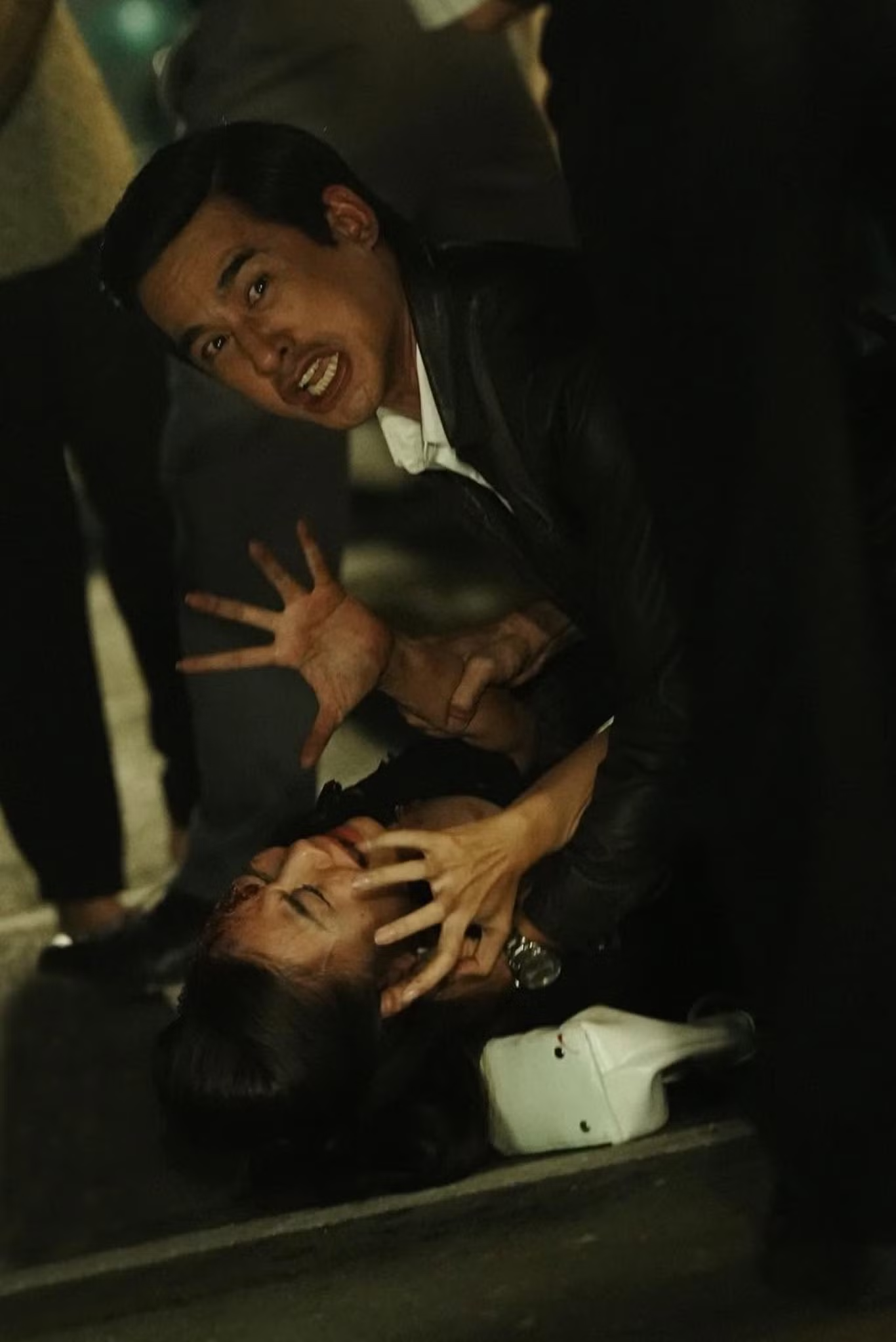
After Mesdames Thanh Sac was released in theaters, while browsing TikTok, Facebook Reels, or online groups discussing Vietnamese cinema, it's not difficult to come across videos showing the scene where Dung (played by Luong The Thanh) is driving and carrying Cam Thanh (Thanh Hang).
The character played by Thanh Hang repeatedly cries and says, "Stop the car!" Lasting only a few dozen seconds, the scene became a viral phenomenon on social media. Numerous parody videos, dubbed versions, edited clips, and trend-following videos appeared. Many people who hadn't seen The Muses of Thanh Sac still recognized this line.
On many film forums, the scene has been dissected from various angles. Some viewers argue that the character's emotional expression is unconvincing, detached from the overall story. Others see it simply as a new meme in Vietnamese cinema.
Many viewers also drew parallels between the line "Stop the car" and Quỳnh Thy's line "It's very dangerous" from the hit movie "Once Upon a Time We Loved " which went viral in May.
At the time, Quỳnh Thy's line became a long-running topic of discussion on online forums, with many arguing that her intonation and character expressions created unintentional humor. A plethora of parody videos and memes appeared, making viewers remember the line more than the film's content.
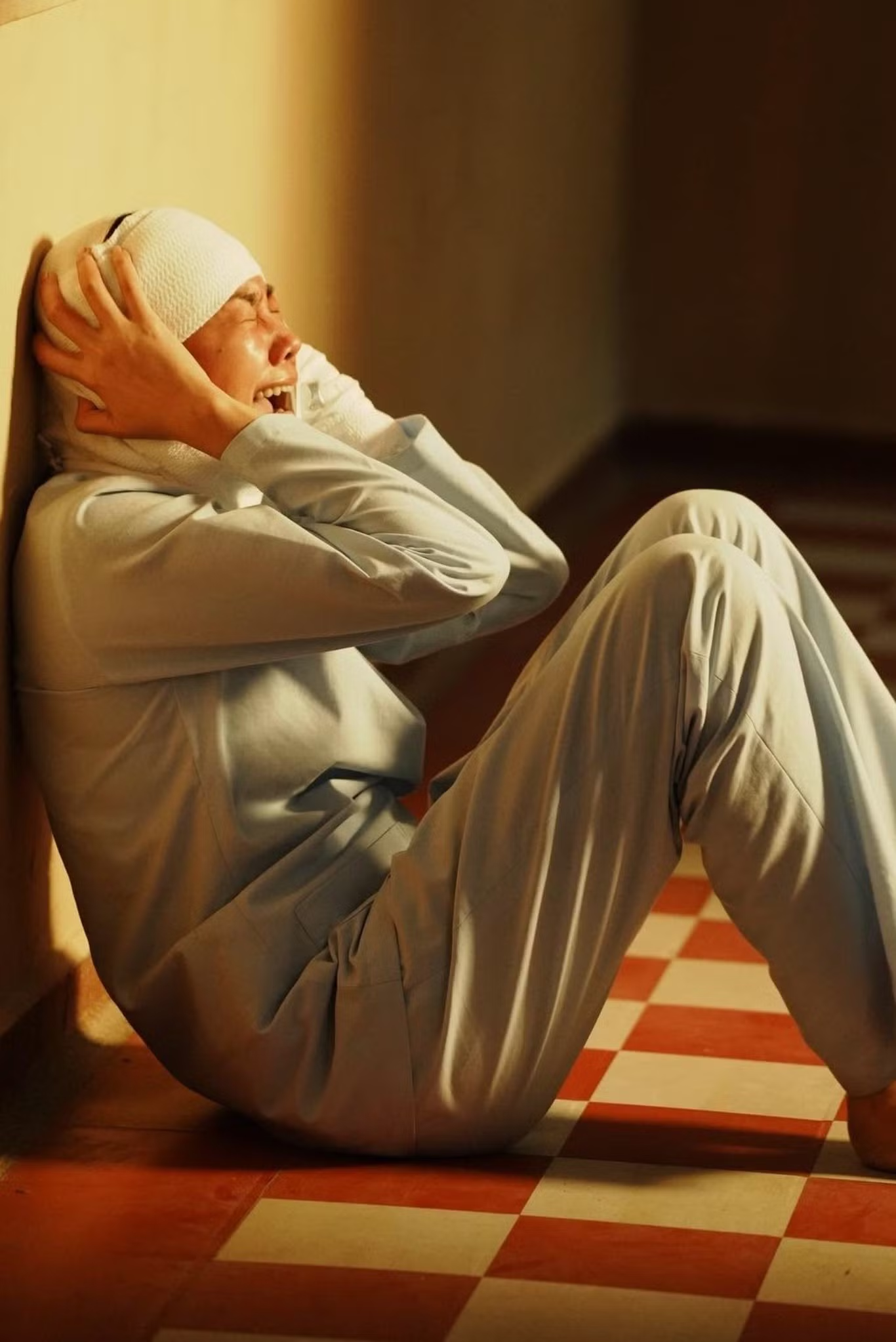
The common point between the two cases is that the segment is built as an emotional climax for the character. However, when cut separately and distributed as a short clip, the emotions that the filmmaker intended to convey are interpreted differently by some viewers.
The gap between artistic intent and public perception is not uncommon. But amidst the boom in short videos, a line of dialogue, an expression, or a moment of acting cut out of its original context can be misinterpreted as representing the entire film.
Currently, the video's reach far surpasses the level of interest directed at The Blue and White Messiah itself. Instead of discussing the story, setting, or characters, most of the online conversations in recent days have revolved around the line "Stop the car." This also reflects the worrying fact that a two-hour film can be defined by a few dozen seconds selected and widely disseminated by an algorithm.



Mesdames Thanh Sắc was released amidst a market dominated by horror films. Vietnamese and Korean horror films consistently topped box office charts, attracting a large portion of the attention of young audiences.
The 1960s-themed psychological drama faced significant challenges in reaching a wider audience. With social media attention focused solely on controversial dialogue, the film nearly lost the opportunity to generate deeper discussions about its content.
Is that fair to the film?
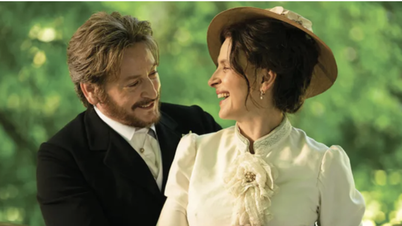
Beneath the online debate surrounding the controversial line, Mesdames Thanh Sac ambitiously portrays a slice of Saigon in the 1960s, inspired by the acid attack on a love rival that once shocked public opinion. Instead of pursuing investigative or sensationalist approaches, the film focuses on complex relationships revolving around love, ambition, power, and consequences.
The story centers on the world of upper-class women, where outward glamour conceals many secrets and hidden struggles.
One of the film's highlights lies in its art direction. Recreating Saigon before 1975 was a significant challenge for Vietnamese cinema, requiring substantial production costs and thorough research into the setting.
In the film, spaces such as tea rooms, dance halls, performance stages, and luxurious villas are relatively elaborately designed. The urban atmosphere of Southern Vietnam in the 1960s is depicted through a system of sets, props, and costumes that are meticulously constructed.
Fashion plays a crucial role. The ao dai (traditional Vietnamese dress), evening gowns, performance costumes, and the beauty styles of Saigon women appear throughout, contributing to the unique visual identity of the work.
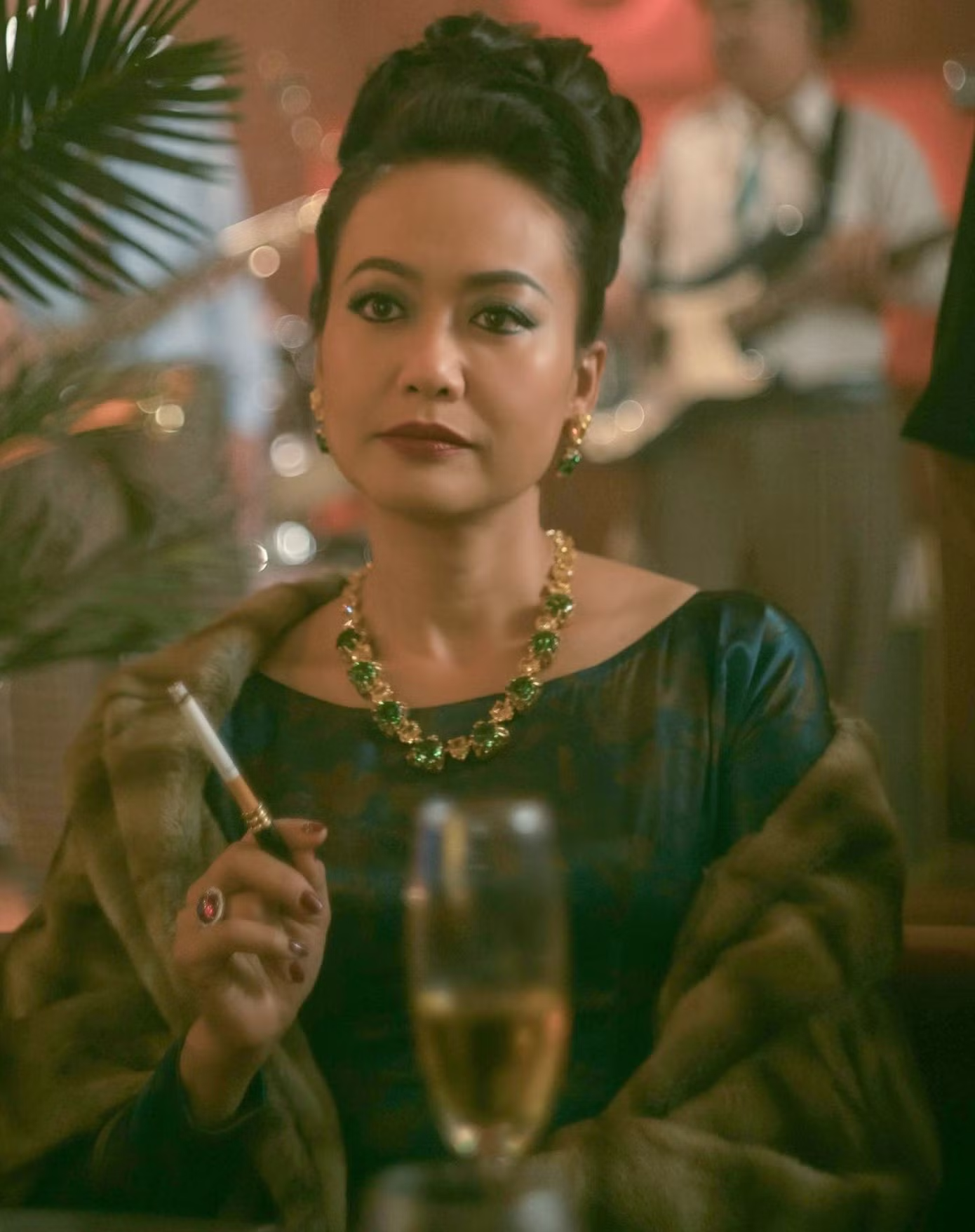
The film also explores the nightlife of Southern cities – a topic rarely explored in Vietnamese cinema. Music venues, tea houses, and the relationships between artists, businessmen, and the underworld are extensively depicted.
Regarding her acting, Hong Anh received many positive reviews. Her role as Madame Sac was developed with multiple layers of psychology, portraying power but also deep-seated trauma.
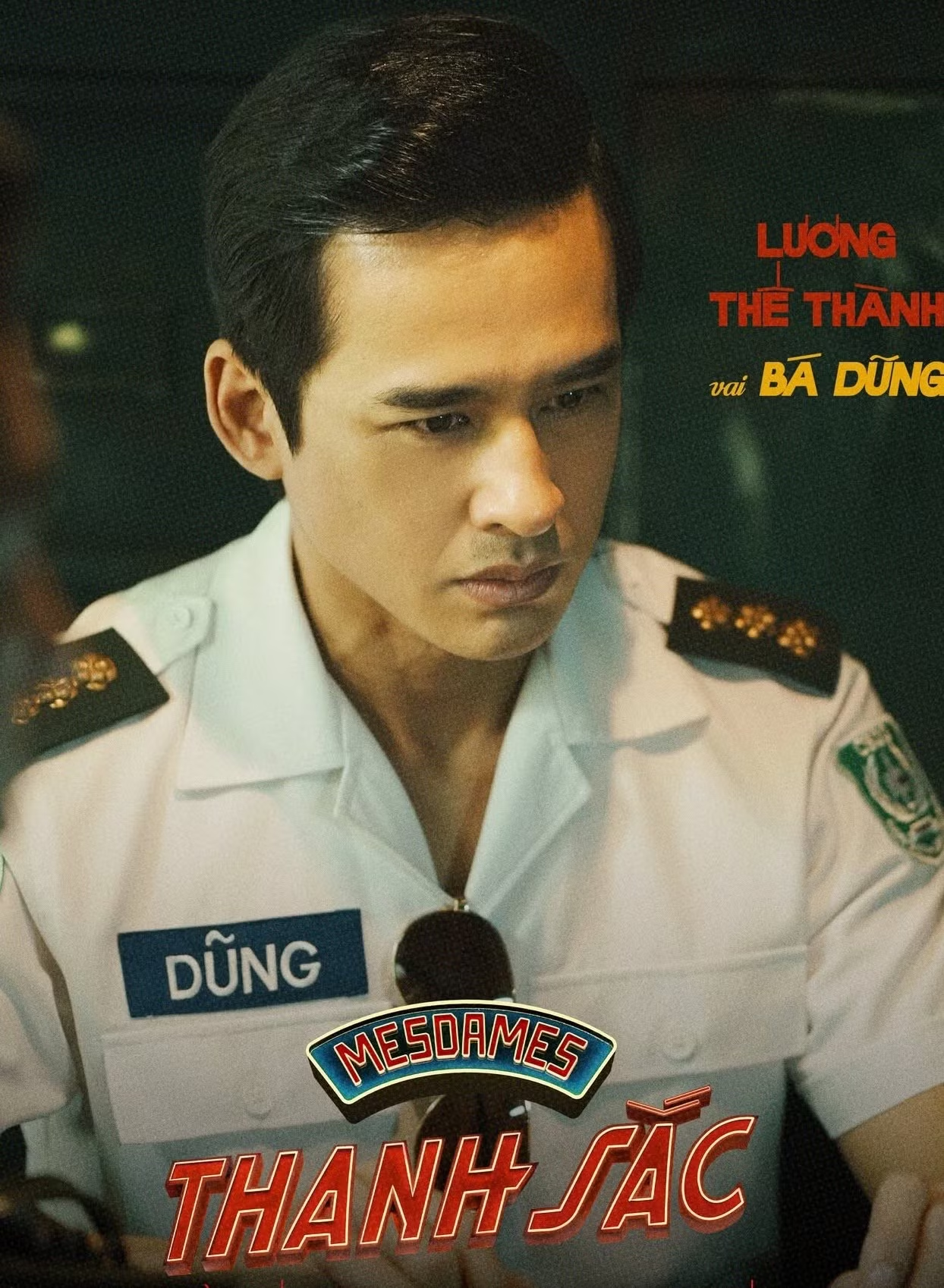
Luong The Thanh made a strong impression with his portrayal of police officer Ba Dung. The character was developed in an introspective way, grappling with conflicts between responsibility, power, and personal emotions.



Thanh Hằng is the most debated case after the film's release. Her character, Cầm Thanh, undergoes a long and complex development throughout the film, from a young girl full of aspirations to a woman facing major life events.
The fact that the character wasn't developed in a way that would evoke positive feelings from the start led to a divided audience reaction. Some praised Thanh Hằng's efforts to change her image, while others felt that some emotional scenes were unconvincing.
The debates surrounding the role suggest that The Blue Mesdames is not the kind of film that's easy to watch or agree on. The film devotes more time to building atmosphere, setting, and character relationships than to constant twists or a fast-paced narrative.
That's also why the film received mixed reviews after its release. Some viewers felt the pacing was slow in certain scenes, and the development of some storylines wasn't very sharp. These comments were quite common in discussions about the film.
Conversely, many viewers appreciate the effort put into creating a period drama with significant investment in art direction, costumes, and settings—elements not easily achieved in the production conditions of Vietnamese cinema.
Source: https://tienphong.vn/co-cong-bang-cho-mesdames-thanh-sac-post1853876.tpo