

2025 is predicted to be a "stormy" year for Vietnam's textile and garment industry, facing a series of challenges from trade fluctuations, inflation, monetary policy, and more.
Opportunities and risks are still locked in a fierce struggle.
2024 ended with many positive signs for the textile and garment industry. Vietnam's export turnover recovered strongly, increasing by more than 11% to $44 billion, with the growth focus on two key sectors: yarn and textile products.
However, macroeconomic uncertainties continue to cast a dark shadow over growth prospects, placing the industry at a critical juncture in 2025. Against this backdrop, economists maintain a neutral stance on the textile and garment industry's outlook this year, as opportunities and risks remain intensely contested.
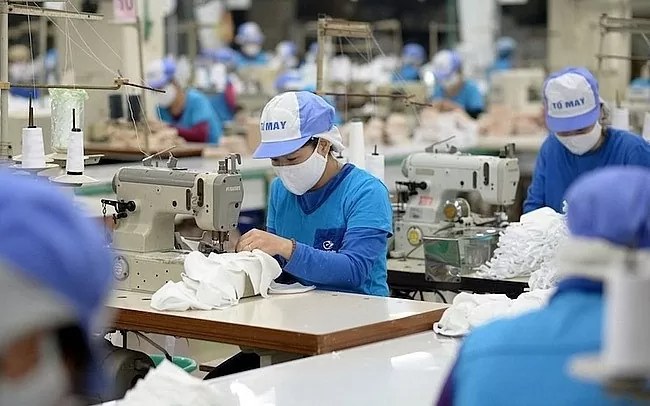 |
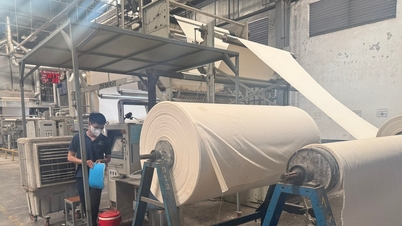
| Amidst opportunities and challenges, Vietnam's textile and garment industry will need to flexibly adjust its strategy to maintain its competitive advantage, optimize the supply chain, and ensure growth momentum in a volatile environment. (Illustrative image) |
Regarding the outlook, citing statistics from the World Bank, the analysis team of Mirae Asset Vietnam Securities Company (MASVN) stated that key markets for Vietnam's textile and garment industry are likely to continue their growth momentum in 2025, with the US GDP projected to increase by 2.3%; Europe (EU) by 1%; Japan by 1.2%; and China by 4.5%. This is a supporting factor for the demand for textile and garment products in Vietnam.
However, the textile and garment industry will also face many difficulties and challenges because macroeconomic variables are extremely unpredictable. Alongside geopolitical instability surrounding the Russia-Ukraine and Israel-Hamas conflicts, one of the biggest risks is the US-China trade war 2.0. Immediately after taking office, the Trump administration announced a series of new tariffs targeting China, Canada, and Mexico, and also plans to apply reciprocal tariffs to many other countries.
It is not unlikely that Vietnam will be included in this list of "reciprocal tariffs," threatening the competitive advantage of the textile and garment industry. Fortunately, the Trump administration has left negotiation channels open, with a 180-day preparation period, creating opportunities for Vietnamese businesses to take advantage of policy space, adjust export strategies accordingly, and even avoid high tariffs.
 |
| One of the biggest risks for the textile industry is the US-China trade war 2.0 (Illustrative image). |
Pressure from monetary policy and inventories.
Furthermore, global monetary policy is creating conflicting impacts, posing significant challenges. At the beginning of 2025, several central banks around the world began lowering interest rates, but the US Federal Reserve (Fed) slowed this pace, only planning a maximum cut of 0.5 percentage points in 2025 due to concerns about rising inflation.
It can be seen that the Fed is putting pressure on other central banks that want to continue lowering interest rates, especially in Asia, impacting currencies such as the Japanese Yen and the South Korean Won. This, in turn, affects the purchasing power of these countries and indirectly reduces the value of orders for Vietnamese textile and garment businesses.
Furthermore, Vietnam's textile and garment industry is facing a shortage of orders in 2025, as inventory levels at major brands such as Nike, Inditex, GAP, H&M, and Puma have shown signs of increasing since the end of 2024. This indicates that a significant increase in orders in 2025 is unlikely, due to the prevailing cautious trend among major fashion brands.
In the long term, labor cost pressure will continue to weigh heavily on textile and garment businesses. Vietnam is attracting increasing FDI, leading to increased labor demand and increasingly fierce wage competition. At the same time, the trend of Vietnamese workers seeking employment abroad is also driving up domestic wages, posing a cost challenge for manufacturing businesses.
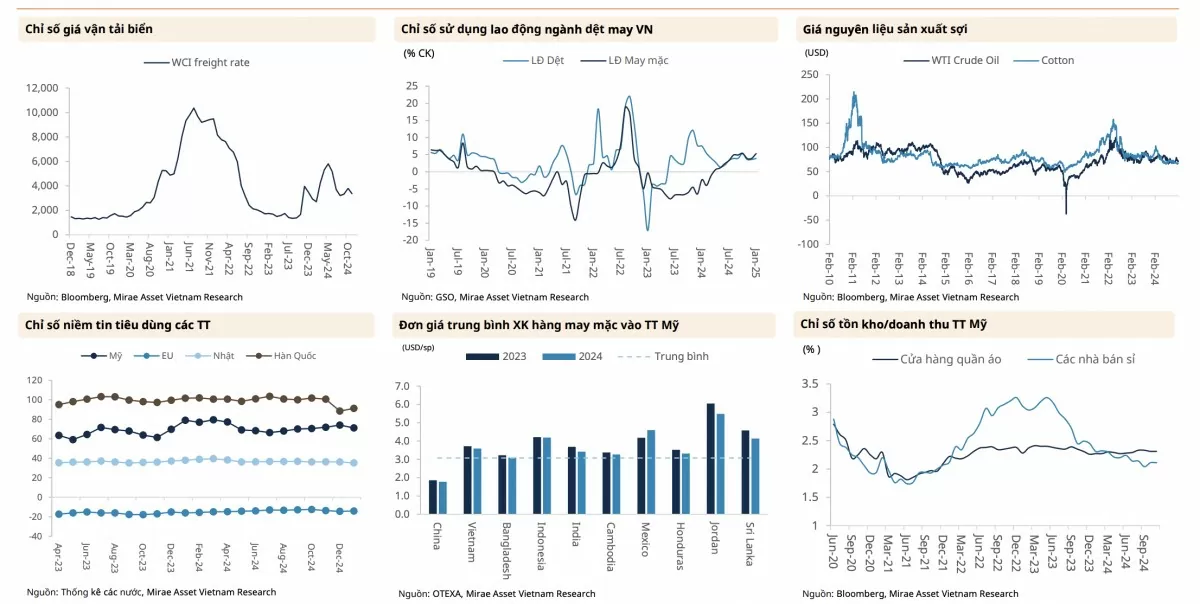 |
| Opportunities and challenges are intertwined (Source: MASVN) |
According to MASVN, despite facing many fluctuations and challenges, some Vietnamese textile and garment businesses are still demonstrating flexible adaptability, creating a solid foundation for breakthroughs in 2025. A prime example is Phong Phu Joint Stock Company (UPCoM: PPH), with revenue reaching VND 2,240 billion in 2024, an increase of nearly 28% compared to the previous year. Gross profit margin remained stable above 19%, while after-tax profit reached VND 372 billion, a 17% increase compared to 2023. Similarly, Song Hong Garment Joint Stock Company (HOSE: MSH) is also considered a bright spot in the textile and garment industry in 2025. This company closed 2024 with an impressive after-tax profit of VND 440 billion, a surge of 80% compared to the same period, even though revenue only increased by 16% to VND 5,280 billion – reflecting its effective cost optimization capabilities.
| Amidst opportunities and challenges, Vietnam's textile and garment industry will need to flexibly adjust its strategy to maintain its competitive advantage, optimize the supply chain, and ensure growth momentum in a volatile environment. Leveraging advantages and tightly controlling risks will be key to the industry's sustainable development. |
Source: https://congthuong.vn/nganh-det-may-2025-co-hoi-an-sau-nhung-thach-thuc-374732.html


![[Image] Hanoi Police officially crowned champions of V-League 2025/2026](https://vphoto.vietnam.vn/thumb/1200x675/vietnam/resource/IMAGE/2026/05/31/1780244769054_ndo_br_039d561b692be875b13a-jpg.webp)
![[Photo] The General Secretary, President and his wife begin their state visit to the Philippines.](https://vphoto.vietnam.vn/thumb/1200x675/vietnam/resource/IMAGE/2026/05/31/1780230559452_anh-man-hinh-2026-05-31-luc-19-28-11.png)



















![[Video] Sunset at Lap An Lagoon – Where the sun sets over the fishing nets](https://vphoto.vietnam.vn/thumb/340x192/vietnam/resource/IMAGE/2026/05/31/1780192137701_beach-landscape-sea-water-nature-grass-745871-pxhere-com.jpeg)




![[Photo] Solemn bathing ceremony and Buddha procession in Hue](https://vphoto.vietnam.vn/thumb/1200x675/vietnam/resource/IMAGE/2026/05/31/1780228263543_1-jpg.webp)
![[Photo] Admire the coral "masterpiece" amidst the million-year-old heritage of Dak Lak province.](https://vphoto.vietnam.vn/thumb/1200x675/vietnam/resource/IMAGE/2026/05/31/1780221235105_anh-man-hinh-2026-05-31-luc-16-53-27.png)





























































Comment (0)