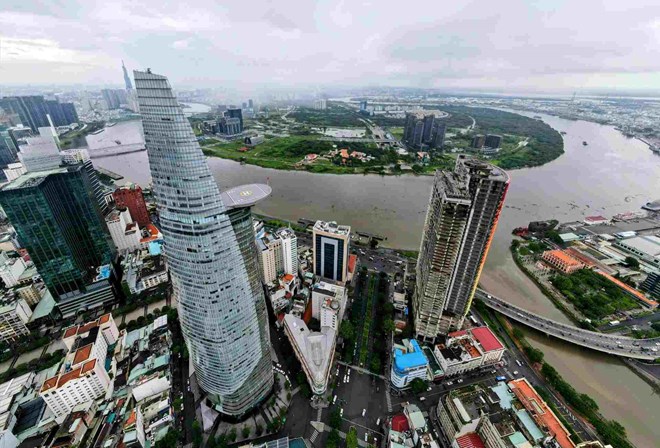
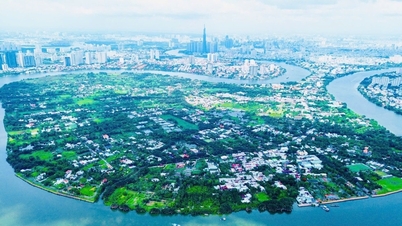
Ho Chi Minh City makes major adjustments to the planning of the Thu Thiem New Urban Area. Photo: Anh Tu.
The Thu Thiem New Urban Area, approved by the Prime Minister in 1996, covers an area of 930 hectares (including 770 hectares for the urban area and 160 hectares for resettlement), located on the eastern bank of the Saigon River, opposite the existing center of Ho Chi Minh City. However, after decades of implementation, this urban area has not developed in proportion to expectations.
In response to the city's new development requirements, especially in the context of expanding urban space after the merger with Binh Duong and Ba Ria - Vung Tau, Ho Chi Minh City is urgently adjusting its planning to create momentum for breakthroughs.
The Ho Chi Minh City People's Committee has just approved a partial adjustment to the General Planning of Thu Duc City until 2040 in the Thu Thiem New Urban Area. The adjustment aims to concretize priority projects according to Resolution 260/2025/QH15 dated December 11, 2025, of the National Assembly, including the project to build the City's Central Square and the Political -Administrative Center.
Ho Chi Minh City has determined that it needs to urgently implement the Political-Administrative Center project on a scale commensurate with the city's development requirements after its merger with Binh Duong and Ba Ria - Vung Tau provinces.
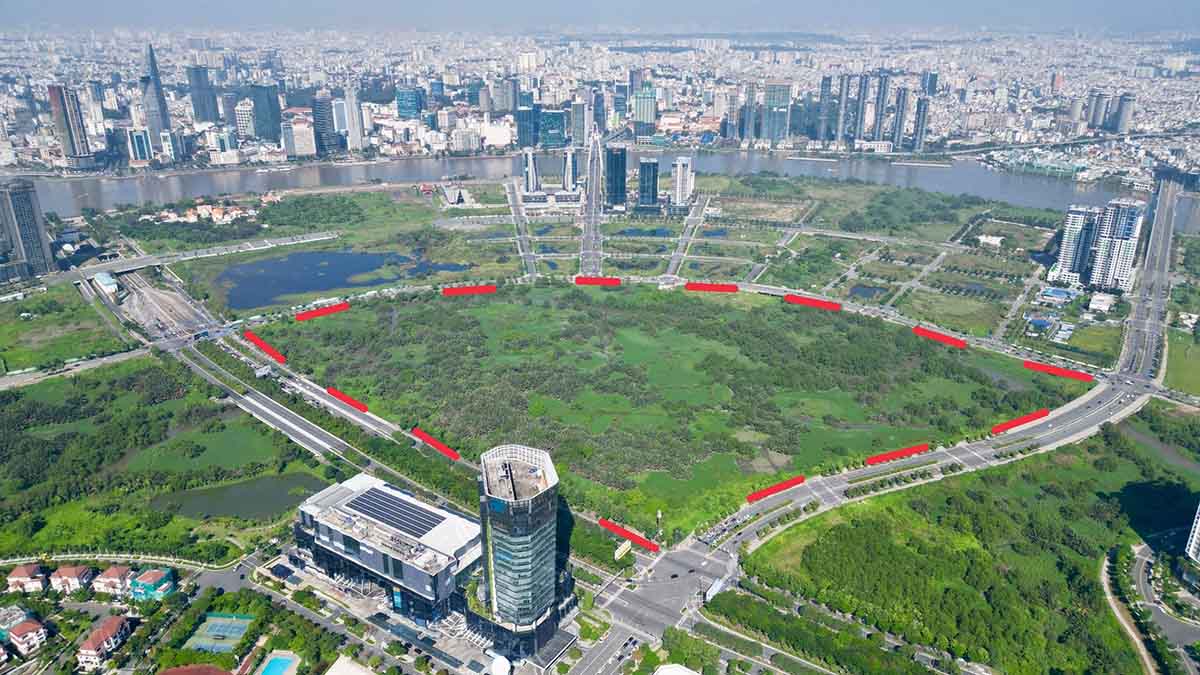
The plot of land covers more than 33 hectares, of which the Political and Administrative Center occupies 7.84 hectares. Photo: Anh Tú
An Khánh Ward is currently soliciting feedback to finalize the detailed planning at a scale of 1/500 for the Political - Administrative - Cultural Center and Central Lake Park.
The planned area covers more than 33 hectares, located in the core of Thu Thiem. This includes: the Political-Administrative Center occupying 7.84 hectares, with a maximum height of 30 floors; the Symphony, Opera, and Ballet Theatre covering 3.18 hectares; a wetland park of approximately 10 hectares; and a central lake of approximately 12 hectares.
This complex is envisioned as a large-scale public space, combining administrative, cultural, and ecological functions, creating a new landmark on the banks of the Saigon River.
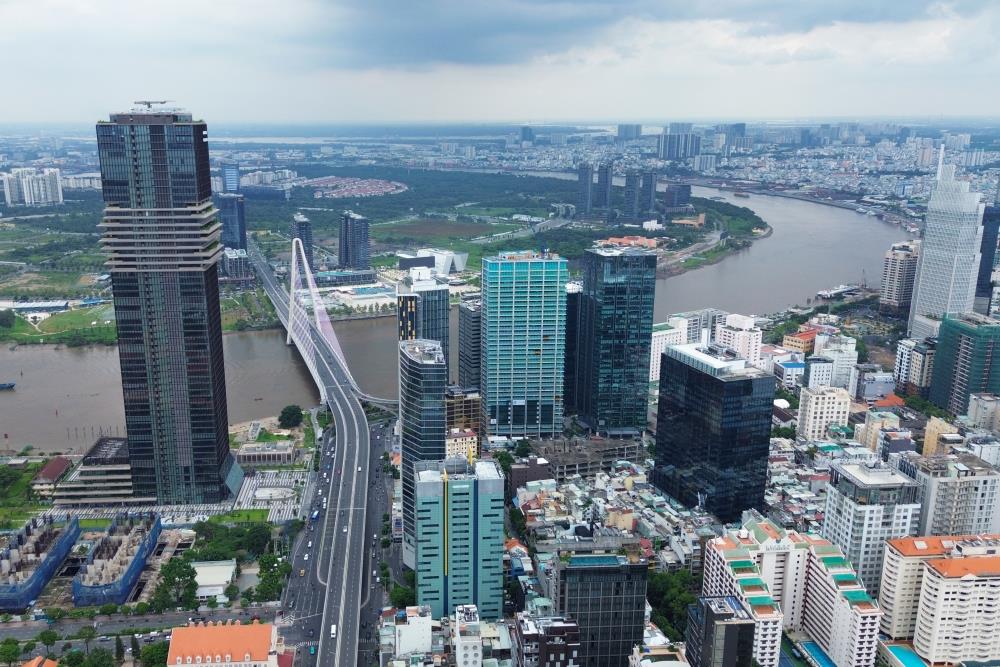
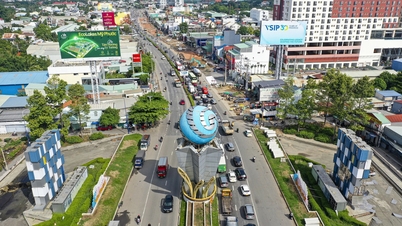
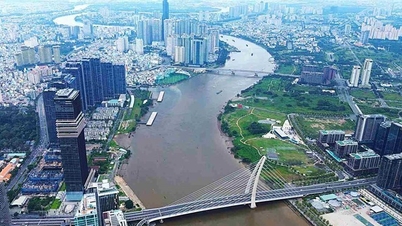
The Ba Son Bridge connects the central area of Ho Chi Minh City with the Thu Thiem New Urban Area. Photo: Anh Tu.
In parallel with the administrative center, Ho Chi Minh City is also making localized adjustments to the 1/2000 scale zoning plan for Zone 1 to build the Vietnam International Finance Center in Ho Chi Minh City.
Nine plots of land designated for the construction of the International Financial Center (designated from 1.K1.2.HH to 1.K1.10.HH) have been proposed to have their maximum building height increased.
Most notably, plot 1.K1.8.HH, with an area of approximately 1.26 hectares, is proposed to have its building height increased from 30 floors to 99 floors, equivalent to 500 meters (compared to the previous 120 meters).
If approved, this would be one of the tallest buildings in Vietnam, serving as a symbol of the ambition to build a regional and international financial center in Thu Thiem.
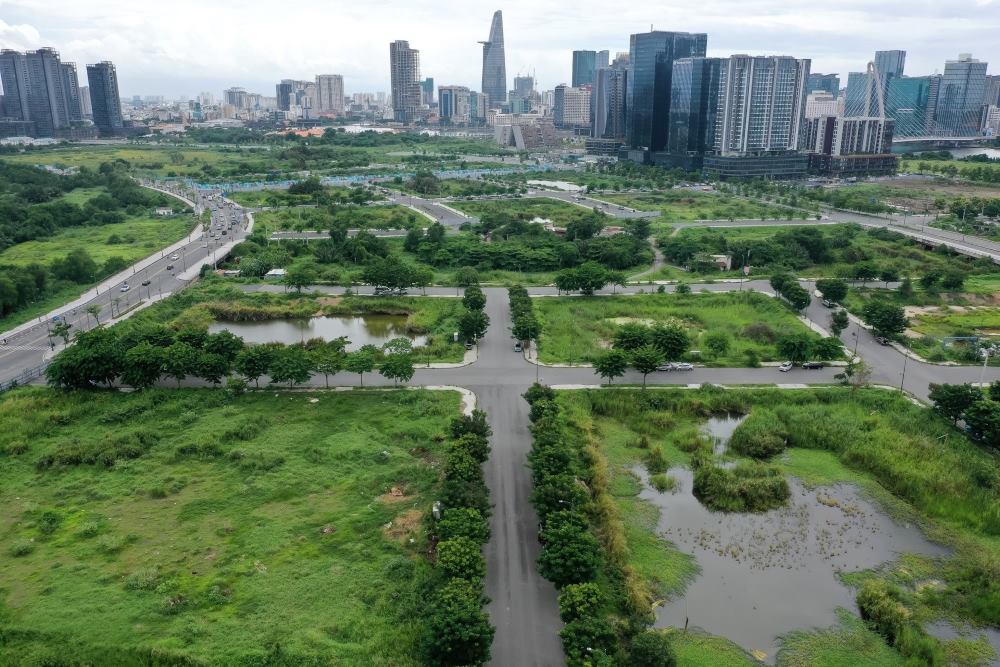
The land plots in Thu Thiem are being used to build the Vietnam International Finance Centre in Ho Chi Minh City. Photo: Anh Tu.
The Binh Khanh resettlement area (38.4 ha) has also been adjusted to attract investors through auction.
In the 5 blocks from 1.K7.5.HH to 1.K7.9.HH (total area 11.5 ha), it is proposed to increase the building height from 25-27 floors to a maximum of 45 above-ground floors and 3 basement floors; the land use coefficient for residential areas will increase from 5-6 times to 10 times.
The adjustments aim to facilitate the participation of investors in the auction of 3,790 apartments in this area. These apartments were built and completed in 2015, but have remained vacant and undeveloped for many years.
Regarding transportation infrastructure, Ho Chi Minh City is adjusting the route of Metro Line 7, specifically the section passing through Thu Thiem, to directly connect with the new Political and Administrative Center.
According to the new plan, Metro Line 7, starting from Thu Thiem 4 Bridge, will follow Bui Thien Ngo Street, along the To Huu axis, instead of the Tran Bach Dang route as previously planned, and then merge with Tran Nao Street. Some station locations have also been adjusted accordingly to ensure consistency.
Laodong.vn
Source: https://laodong.vn/bat-dong-san/tphcm-ve-lai-quy-hoach-khu-do-thi-moi-thu-thiem-1661484.ldo




![[Photo] General Secretary and President To Lam presides over a meeting on preparations for the review of one year of operation of the three-tiered government system.](https://vphoto.vietnam.vn/thumb/1200x675/vietnam/resource/IMAGE/2026/06/02/1780391821195_a1-bnd-4595-9717-jpg.webp)






















































Comment (0)