

More than 12 weeks after the US and Iran agreed to a ceasefire, the two sides have yet to reach a final agreement to end the fighting. Recent heated exchanges between the two sides have raised concerns worldwide about the risk of renewed conflict, negatively impacting Middle Eastern security and exacerbating the global energy crisis.
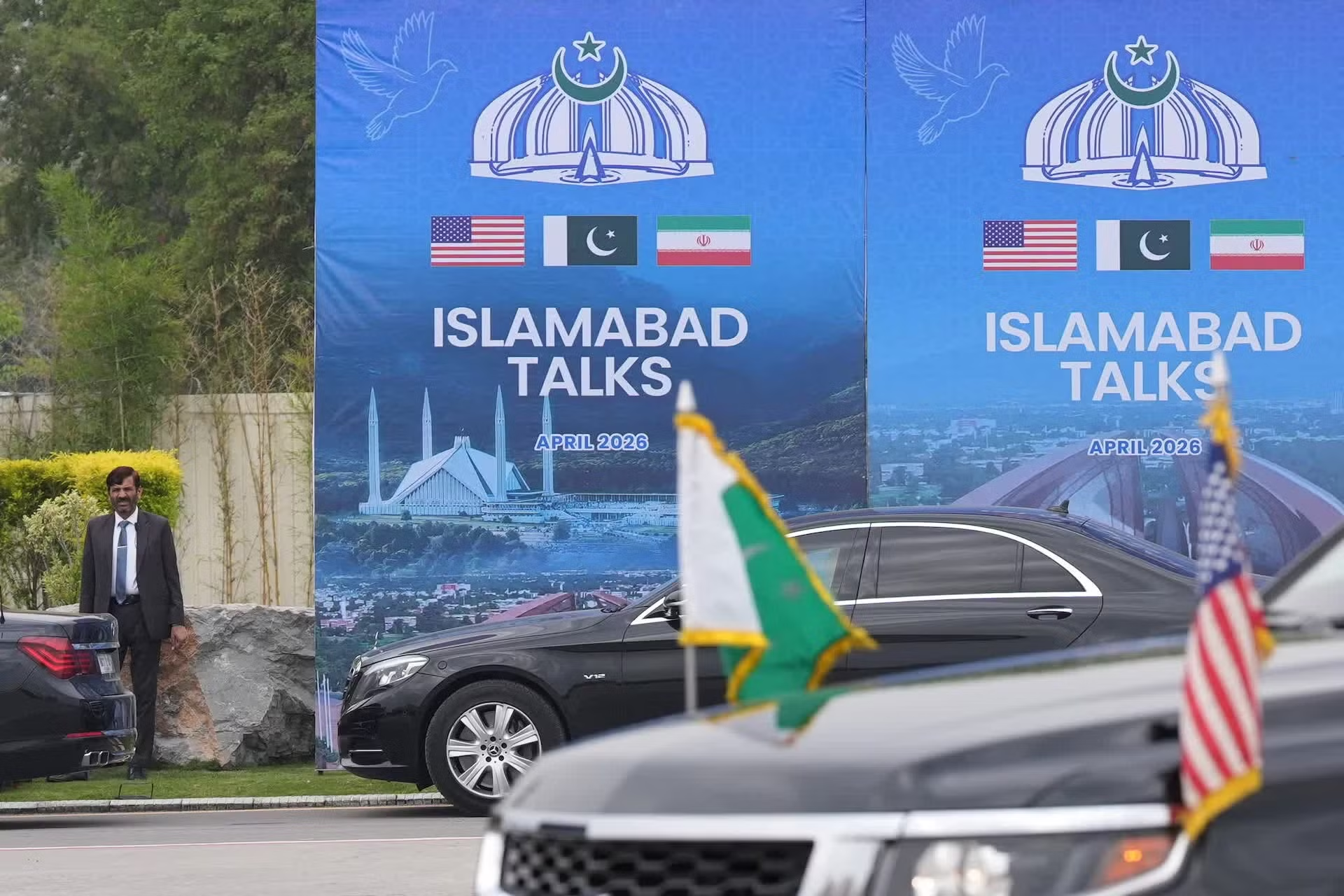
However, al-Arabiya reported on May 22nd that Pakistan's mediation efforts, with the support of Qatar, are reopening the prospect of reaching an agreement between the US and Iran, following the emergence of a nine-point draft described as the "final draft".
Sources cited by the newspaper describe this as a temporary agreement aimed at preventing the risk of renewed conflict in the short term, and that "some outstanding issues" will be negotiated after the agreement takes effect.
According to leaked documents, the draft consists of nine main articles, the most notable of which is the proposal for a comprehensive and unconditional ceasefire on all fronts, including land, sea, and air. The text includes a commitment not to target each other's military , civilian, and economic infrastructure.
One particularly important provision is the guarantee of freedom of navigation in the Persian Gulf, the Gulf of Oman, and the Strait of Hormuz – a vital energy shipping route for the world. The Strait of Hormuz is currently subject to two blockades, one imposed by the US and the other by Iran, which is restricting global energy supplies.
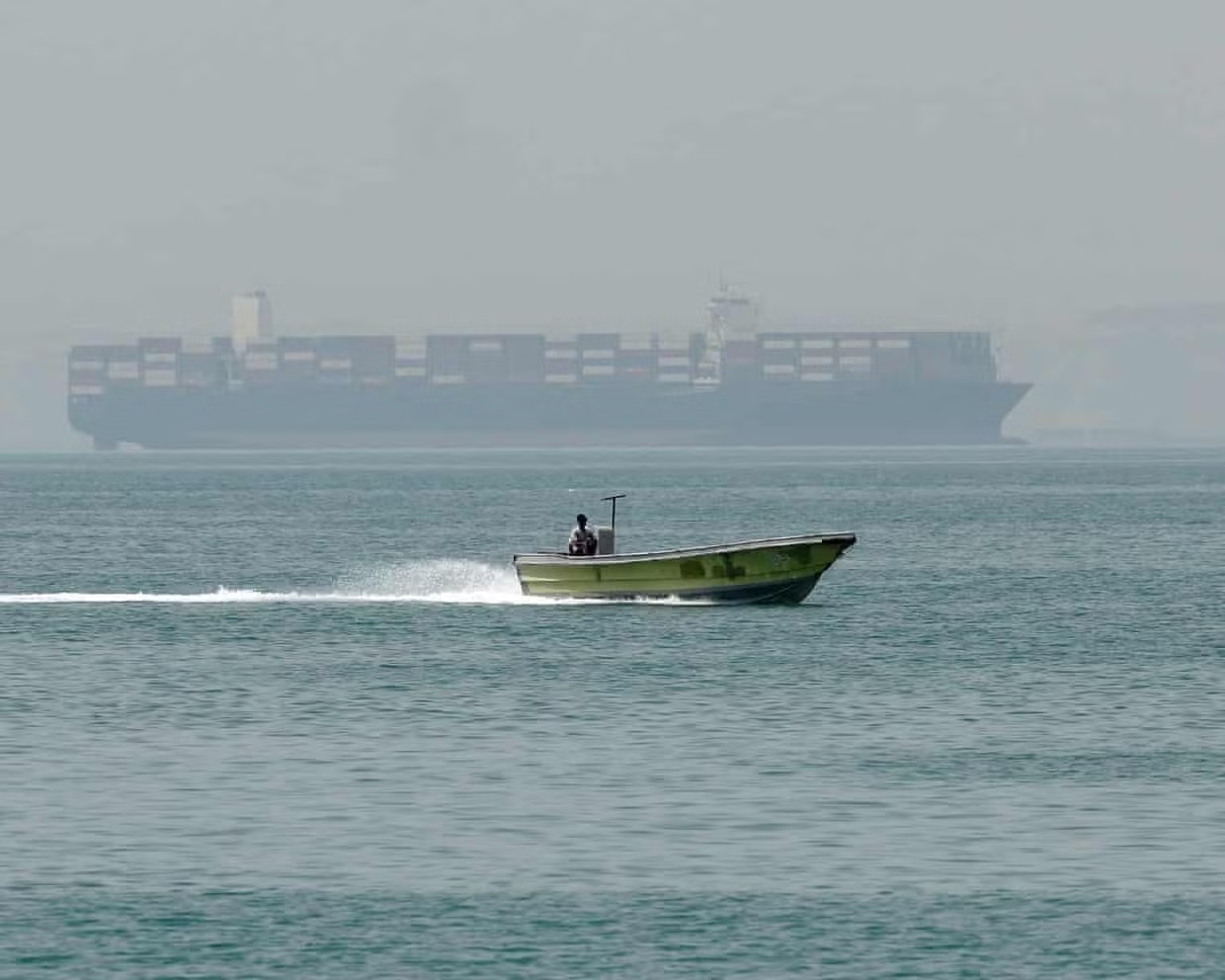
The draft also addresses a joint monitoring mechanism to track the implementation of the agreement and resolve any disputes that may arise. Furthermore, both parties are responsible for initiating negotiations within seven days of reaching an agreement to address any outstanding issues.
Notably, the document does not directly address key demands that the U.S. has long made of Iran, such as handing over highly enriched uranium to the U.S. or cutting support for Tehran's allied forces in the Middle East.
Reuters reported on May 22nd, citing a senior Iranian official, that although Iran and the US have not yet signed an agreement, they have narrowed their differences.
Alongside the emergence of the draft, diplomatic mediation efforts are underway. Reuters, citing its own sources, reported that a Qatari delegation has arrived in Tehran to promote dialogue and resolve outstanding disagreements.
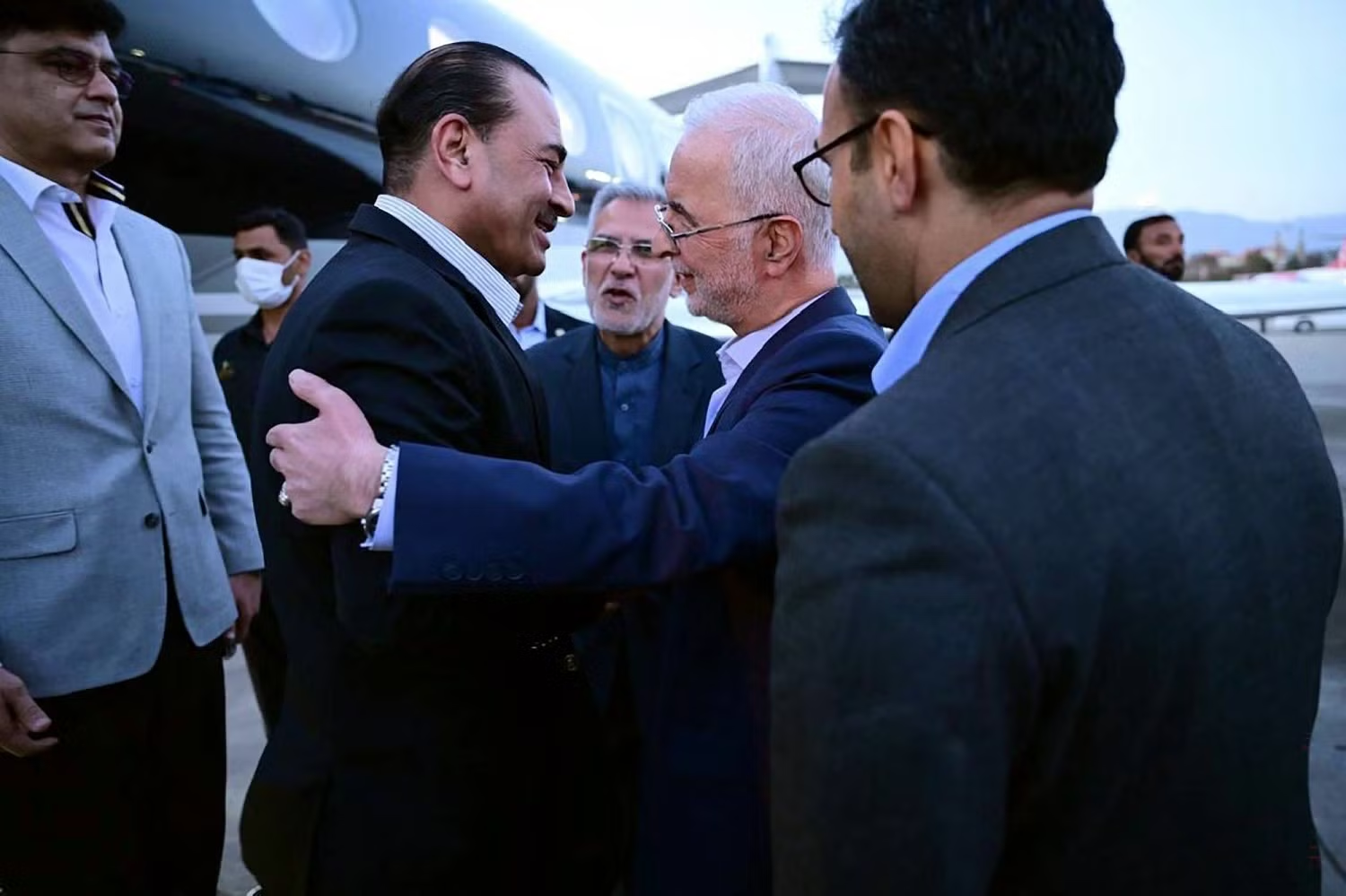
Additionally, General Asim Munir, the commander of the Pakistani army, traveled to Tehran to meet with senior Iranian officials; while Pakistani Interior Minister Syed Mohsin Naqvi participated in the ongoing negotiations in Tehran since May 20th. Pakistan has played a key role in the efforts to broker the US-Iran agreement in recent months.
From Tehran, while not commenting on the nine-point draft, Iranian Foreign Ministry spokesman Esmaeil Baghaei affirmed that Iran does not want to prolong the conflict. "Our focus is on ending hostilities," he said.
However, Iranian officials continued to show a hardline stance, declaring that any demand forcing Tehran to hand over highly enriched uranium to the US was "unfeasible." He argued that negotiations would be fruitless if they became bogged down in detailed disputes concerning enriched uranium.
Meanwhile, the US side appeared more optimistic. In a speech at a rally in New York on the morning of May 23 (Hanoi time), US President Donald Trump declared that the conflict with Iran "will soon be over." "We have dealt them a great blow. We did so because Iran cannot have nuclear weapons," he stated.
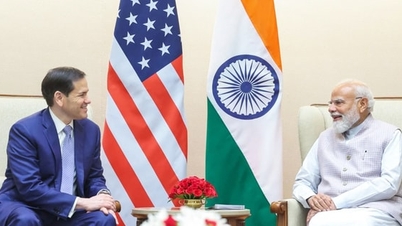
Earlier, US Secretary of State Marco Rubio confirmed that Washington was in "regular contact" with Pakistani General Munir. He also said that progress had been made in negotiations with Iran, but the final outcome was not yet complete.
“There has been some progress. I don’t want to exaggerate, nor do I want to underestimate it. There is still a lot of work to be done. We haven’t reached our ultimate goal yet, and I hope we will,” Rubio stated.
According to observers, while the US has not ruled out the possibility of using force again, Washington is also under considerable pressure to reach an agreement with Iran soon to reopen the Strait of Hormuz, thereby lowering energy prices.
Politico reports that rising energy prices are impacting the US economy and could further disadvantage the Republican Party as the election season approaches. In November 2026, American voters will re-elect the entire House of Representatives and approximately one-third of the Senate seats, both bodies where the Republican Party currently holds a narrow majority. If the Republicans lose control of either of these bodies, President Trump will face significant obstacles in implementing his agenda.
House Speaker Mike Johnson, an ally of President Trump, also stated last week that the Iran conflict has undermined the Republican Party's economic message. He argued that most of the current economic difficulties are directly related to the Strait of Hormuz and that once the issue is resolved, "gasoline and commodity prices will go down."
US Energy Secretary Chris Wright also stated that the Strait of Hormuz is a key factor for the global energy market. He predicted that the situation would improve in the coming weeks. “The flow of energy through the Strait of Hormuz will be restored as soon as possible, and certainly by summer,” Wright told CNBC.
Source: https://cand.vn/co-hoi-cho-my-iran-tu-ban-du-thao-9-diem-post811724.html





























































































Comment (0)