

In the accessories market, braided charging cables always command a significantly higher price than regular rubber cables, offering a more premium and robust appearance. But does the price difference truly reflect the quality, or is it just a marketing ploy? Even Apple has switched to braided cables for the iPhone 15 series, leading many users to question whether investing in this type of accessory is worthwhile.
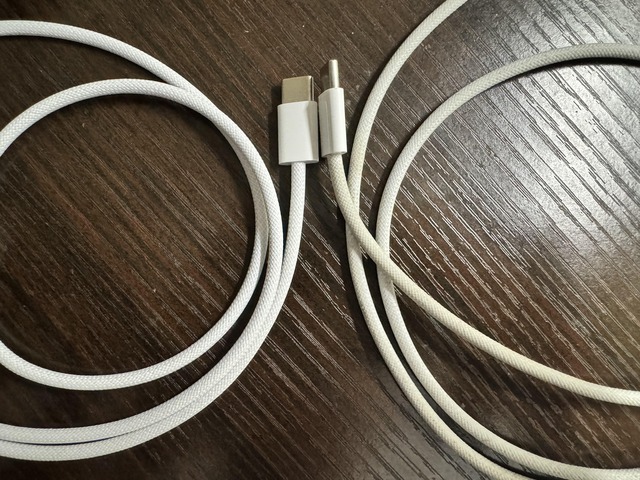
Durable parachute cords still have their own drawbacks.
PHOTO: SCREENSHOT FROM REDDIT
Is it worth investing in a braided charging cable?
The biggest and undeniable advantage of braided cables is their superior durability. The outer sheath, woven from nylon or similar materials, forms a strong armor, protecting the inner cable core from everyday physical stress. They withstand constant bending at the connection points – the weakest point of a regular charging cable – as well as resisting friction when crumpled up and stuffed into a bag or backpack.
Thanks to the aforementioned structural advantages, parachute cord is also significantly less prone to tangling than rubber cord. Their reliability has been proven, making them a preferred choice in applications requiring high durability, such as automotive wiring systems and aerospace.
However, this durability also comes with certain trade-offs. The biggest drawback of braided cables is their stiffness and tendency to 'remember the crease'. After a period of use, they retain creases, making it difficult to straighten or bend them as desired in tight spaces. This problem is particularly noticeable in cheaper braided cables. Additionally, because they are thicker and stiffer, they can put more pressure on the device's charging port if users are not careful when plugging and unplugging.
In terms of cost, braided cables can be 30-50% more expensive than rubber cables from the same brand. For example, a regular Anker or Belkin cable might cost around 150,000 VND, but the braided version will cost 230,000 VND or more.
So, should you invest in a braided charging cable? The answer depends on your priorities. If you're someone who travels frequently, tends to damage cables, and values long-term durability, then a braided cable is definitely worth the money. But if you primarily use it at home or in the office and prioritize flexibility, a good quality rubber cable is still a sensible choice.
Source: https://thanhnien.vn/co-nen-chon-su-dung-cap-sac-boc-du-18525060814175786.htm
































































































Comment (0)