

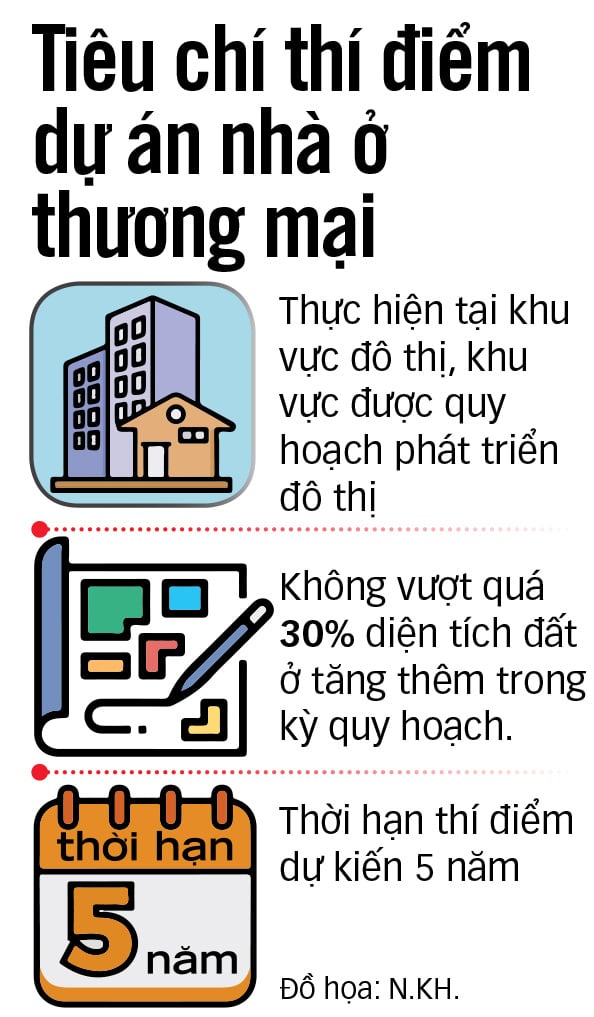
Many experts believe that the pilot mechanism allowing businesses to independently negotiate land use rights with citizens for commercial housing projects will free up projects, increase housing supply, and help address the housing shortage.
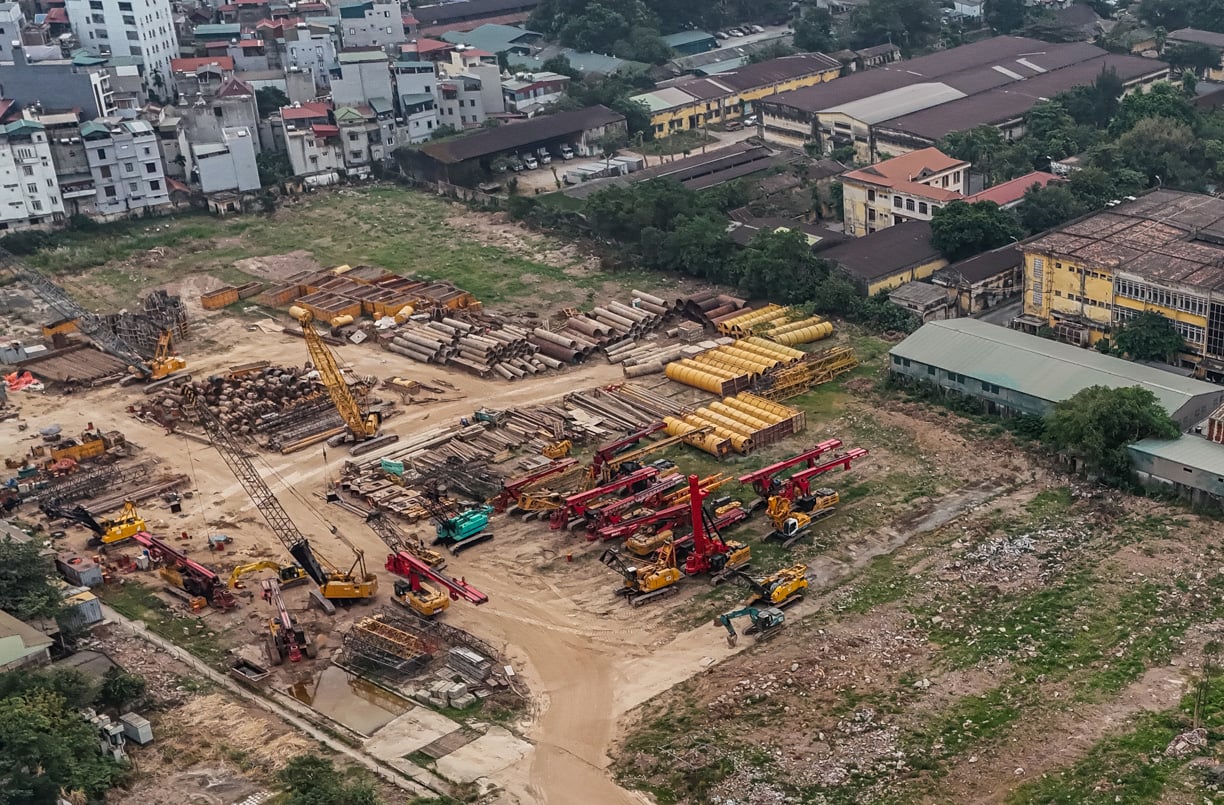
The government also proposed that the National Assembly agree to allow businesses to implement commercial housing projects on the land of facilities that must be relocated due to environmental pollution. In the photo: The prime land of the Hanoi Soap Factory, located in the Cao-Xa-La Industrial Cluster at 233, 233B, and 235 Nguyen Trai Street (Thanh Xuan District, Hanoi), remains unused for many years after relocation, resulting in a waste of land resources. - Photo: DANH KHANG
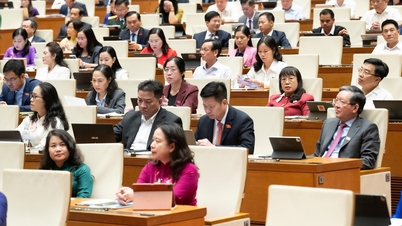
The draft resolution on this pilot mechanism has just been reviewed by the National Assembly and is expected to be passed at the session that will conclude at the end of November.
However, given the current situation where the housing supply on the market has focused on mid-range, high-end, and luxury apartment segments, some opinions suggest that the pilot mechanism should have a clear direction, prioritizing agreements on land use rights to develop affordable housing and budget-friendly apartments to meet the real housing needs of the majority of the population.
Hundreds of real estate projects are awaiting the removal of obstacles.
In March 2024, during a meeting of the Prime Minister's Task Force on reviewing, urging, and guiding the removal of difficulties and obstacles in the implementation of real estate projects, the Ministry of Construction reported that in Ho Chi Minh City there were 143 real estate projects, Hanoi 246 projects, Hai Phong 4 projects, Binh Dinh 16 projects, Can Tho 34 projects... awaiting the task force, ministries, sectors, and localities to resolve the issues.
Across the country, hundreds of real estate projects remain stalled.
Many of these projects cannot be implemented because they lack residential land. Even investors who buy land that conforms to the planning regulations cannot build their projects due to a shortage of just 1 square meter of residential land.
In addition, in the draft pilot resolution currently being submitted to the National Assembly for consideration, the Government also proposes that the National Assembly agree to allow businesses to implement commercial housing projects on land belonging to facilities that must be relocated due to environmental pollution, or facilities that must be relocated according to construction and urban planning.
Right here in Hanoi, many polluting factories in the inner city, after relocating to suburban districts or neighboring provinces, have revealed numerous plots of "prime land" left abandoned for decades.
A typical example is the cluster of three factories: Sao Vang rubber factory, Hanoi soap factory, and Thang Long tobacco factory, with a total area of approximately 150,000 m², which were left fallow for many years after being relocated to the outskirts of the city.
In particular, the prime location of the Hanoi Soap Factory, which was relocated many years ago, remains overgrown with weeds to this day due to the lack of a mechanism to convert it into land for commercial housing construction.
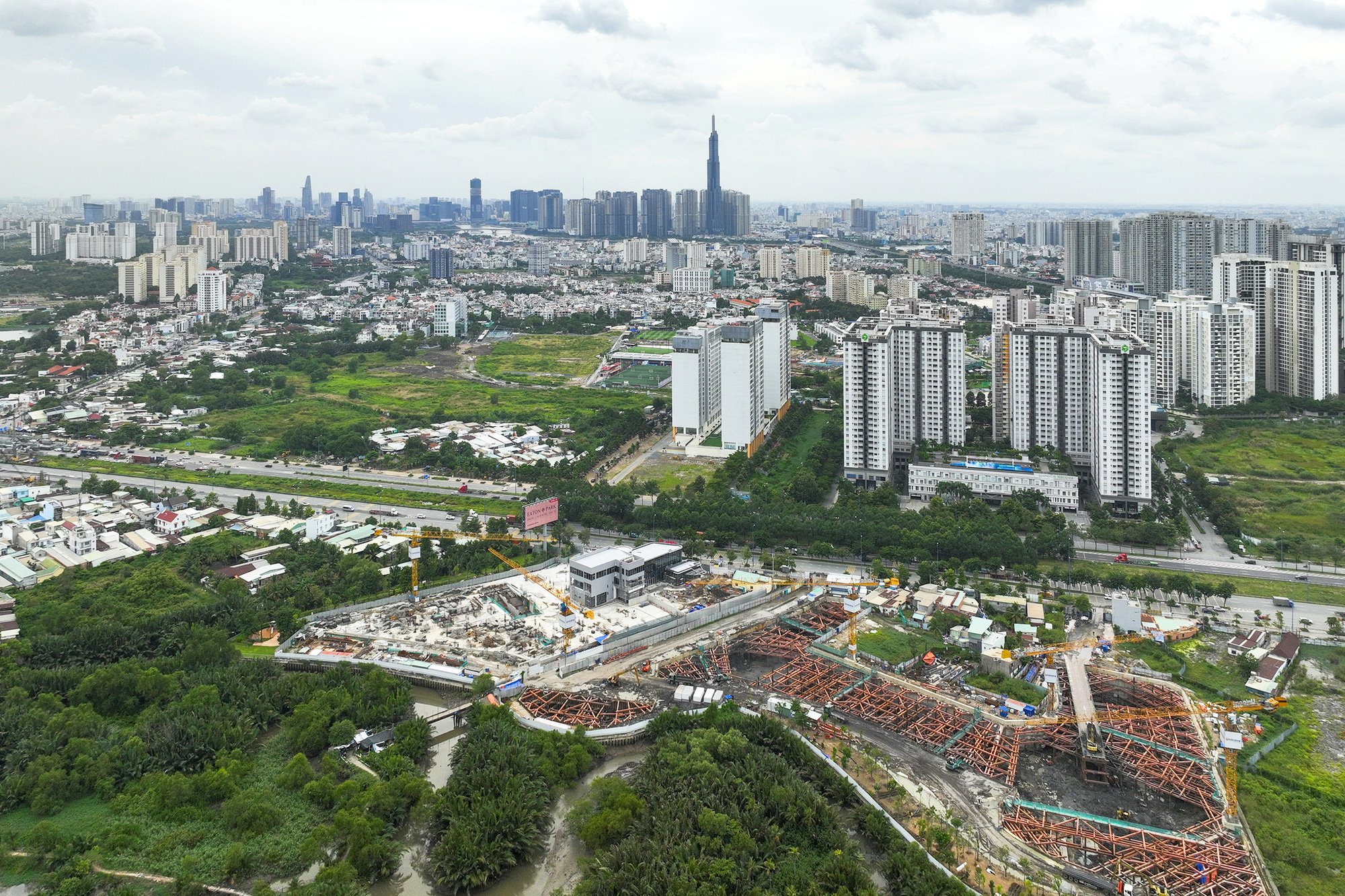
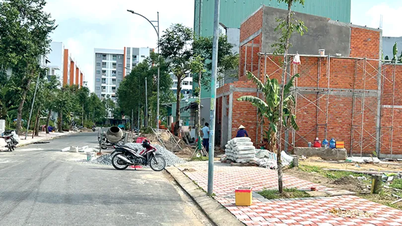
A project on Mai Chi Tho Street, An Phu Ward, Thu Duc City, Ho Chi Minh City - Photo: Nguyen Van Trung
Both businesses and landowners are happy.
Speaking to Tuoi Tre newspaper, Mr. Le Hoang Chau, chairman of the Ho Chi Minh City Real Estate Association, said that the pilot mechanism allowing businesses to independently negotiate and acquire land use rights for non-residential land from citizens for commercial housing projects adds another method of accessing land for real estate investment and business.
This mechanism also ensures the right of land users to negotiate, reducing disputes in land acquisition for project implementation.
"Although the current land acquisition mechanism is much better than before (more adequate and market-based compensation), it is not as good as the pilot mechanism that allows businesses and people with land use rights to negotiate land transfer themselves," Mr. Chau emphasized.
For example, in District 3, Ho Chi Minh City, there have been 48 old apartment complexes in recent years. To date, in 5 of these complexes, businesses have voluntarily agreed to buy back 100% of the old apartments from residents to carry out projects to build new commercial apartment buildings without any complaints, because this is a mutually beneficial transaction mechanism.
There are still 43 old apartment buildings that have not been renovated because we lack a mechanism to encourage investors to negotiate the purchase of old apartment buildings themselves.
According to Mr. Chau, many commercial housing projects are currently stalled because the land owned by the businesses is not designated for residential use, thus preventing construction.
While the housing market is experiencing a shortage of housing supply (due to a lack of housing projects), if the National Assembly pilots a program allowing businesses to independently negotiate the acquisition of non-residential land for commercial housing projects, it will increase the number of licensed commercial housing projects, thereby increasing the supply of housing products in the future.
Mr. Nguyen Huu Cuong, chairman of the Hanoi Real Estate Club, believes that the pilot program allowing businesses to independently negotiate the purchase of non-residential land from citizens for commercial housing projects is a promising direction for the development of the housing market.
This mechanism also allows real estate businesses to cooperate with land users through land use rights transfer and land contribution as equity to implement commercial housing projects.
This will increase the land available for housing construction, meeting the housing needs of the people. "Allowing businesses to directly negotiate and purchase land use rights from people will certainly be much cheaper than organizing bidding or auctions for land use rights to build commercial housing projects. Direct negotiation between the two parties will avoid 'inflated prices' in land auctions," Mr. Cuong commented.
Many real estate experts also believe that piloting a system allowing businesses to independently negotiate the purchase of agricultural land and other types of land from residents for commercial housing construction would prevent the current waste of urban land.
In reality, many undeveloped plots of land in Hanoi and Ho Chi Minh City have been left abandoned for years. Piloting buyback and conversion agreements will help to use land more efficiently, while the State continues to collect land use fees and taxes, and people have more options to buy houses.
Encourage the construction of low-cost commercial housing.
While supporting the pilot program allowing businesses to negotiate the right to use non-residential land for commercial housing projects, many experts believe that the pilot program should prioritize affordable housing projects that are suitable to the local context.
Mr. Dinh Minh Tuan, Southern Region Director of Batdongsan.com, recommended using this pilot mechanism to develop affordable housing and low-cost commercial apartments to increase the housing supply and meet the real housing needs of the majority of the population.
Mr. Tuan argued that increasing housing supply through pilot mechanisms must be aligned with practical needs. Without clear direction, if businesses, after agreeing to purchase land from residents, focus only on developing high-priced commercial housing, around over 50 million VND/ m² , to reap high profits as they have done in the past, then the goal of balancing housing supply and demand in the market will not be achieved.
Another point to note, according to Mr. Tuan, is that the pilot program allowing businesses to purchase non-residential land from individuals for commercial housing projects needs to avoid a situation where some financially strong investors take advantage of this regulation to buy up land and hold onto it, waiting for prices to increase before reselling it to other businesses.
Regulations should be added requiring businesses that negotiate and acquire land from residents to develop commercial housing projects within 2-3 years. Otherwise, the land must be transferred to another investor for development, and if left vacant, it will be reclaimed.
The two resolutions will remove obstacles for the real estate market.
In addition to the pilot resolution allowing businesses to independently negotiate the transfer of non-residential land from citizens for commercial housing projects, the Government is also planning to submit to the National Assembly for consideration and approval a specialized resolution addressing land-related issues, relocating polluting factories, reorganizing state agency headquarters, and resolving projects facing inspections, audits, investigations, and court rulings.
These two resolutions will "revive" the assets currently tied up in hundreds of stalled housing and urban development projects across the country. With the mechanisms established by these National Assembly resolutions, businesses will have a basis to complete investment procedures for projects, continue implementing housing construction projects, increase housing supply, and contribute to balancing supply and demand in the market.
Minister of Natural Resources and Environment DO DUC DUY:
"Projects that are mismanaged by local leaders will be rescued."
Regarding the thematic resolution, the guiding principle from the competent authority is that projects stalled due to mistakes made by local governments and leaders will be resolved so that businesses can continue implementing the projects. In most cases involving this type of project, local leaders who committed violations have been disciplined.
As for projects where businesses intentionally violate regulations, the land will be reclaimed to avoid wasting land resources.
There are still concerns about the terms and conditions.
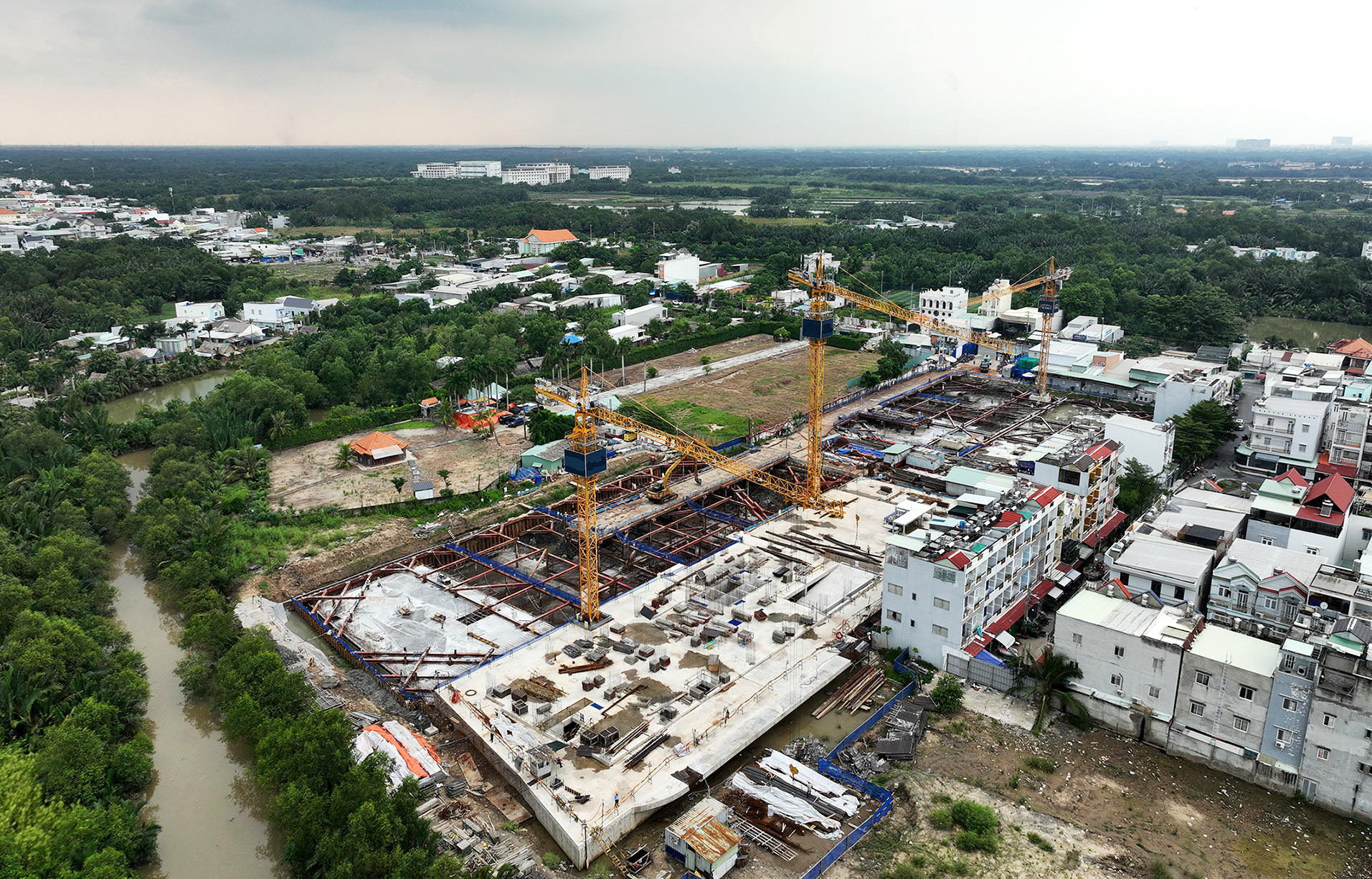
Apartment project on Le Van Luong Street, Nhon Duc Commune, Nha Be District, Ho Chi Minh City - Photo: Nguyen Van Trung
A real estate project developer in Ho Chi Minh City said that along with the government submitting a pilot resolution to the National Assembly for consideration and approval, Ho Chi Minh City is also reviewing the number of businesses with land plots that are currently facing regulatory obstacles preventing project implementation. According to this particular company's review, nearly 20 land plots in Binh Chanh District, District 8, Thu Duc District, etc., are facing these obstacles.
This person stated that most of the land plots are agricultural land or non-agricultural land (not residential land), which businesses have completed the transfer of ownership from the people, but due to legal restrictions, they cannot proceed with the projects.
Recently, the real estate market has been difficult, but businesses are unable to utilize their existing land resources to develop additional projects and generate sales to recoup their investment, making things very challenging. Meanwhile, businesses still have to pay interest on bank loans, compounding their difficulties.
After reading the draft resolution that is about to be considered for approval, this business believes that it is a necessary policy to alleviate difficulties for businesses and the market, and it is about to be considered for approval.
However, one point of concern for businesses is that the draft resolution stipulates the conditions for implementing commercial housing projects through agreements on land use rights or existing land use rights.
Accordingly, real estate businesses implementing commercial housing projects through agreements on land use rights or those already possessing land use rights as stipulated in this resolution may convert the land use purpose of one or more types of land for the project, including agricultural land; non-agricultural land other than residential land; and residential land and other land within the same plot, in cases where an agreement on land use rights has been reached.
Regulations like this could be interpreted as meaning that businesses that already own land can convert agricultural land or non-agricultural land (excluding residential land) for projects, while those acquiring land through transfer from the beginning must transfer plots containing both residential and other types of land within the same plot.
Therefore, if the resolution is passed and implemented exactly as businesses understand it, the removal of the problem will not be thorough.
This person further explained that currently, in addition to businesses that already have land under their ownership, there are cases where businesses previously allowed individuals within the company to purchase agricultural land but have not yet included it under the company's ownership due to legal obstacles; or there are businesses with sufficient resources that want to acquire land from people to develop projects.
If understood in this way, businesses would only be able to purchase areas with both residential and other types of land, which would limit their opportunities to access land resources.
"The Minister of Natural Resources and Environment recently pointed out before the National Assembly the inadequacy of the fact that most real estate projects are implemented on land that was initially not designated as residential land, and the detailed planning of the projects includes various types of land such as residential land, transportation land, green space, etc., so the regulations in the Land Law are not practical to implement. Therefore, the drafting agency needs to reconsider this," this official suggested.
A phrase should be removed.
Sharing this concern, Mr. Le Hoang Chau, chairman of the Ho Chi Minh City Real Estate Association, suggested that the phrase "for cases of agreement on receiving land use rights" should be removed from the regulation on residential land and other land within the same plot to avoid misinterpretations when implementing the resolution.
This means that businesses that already own land or have acquired it through transfer are allowed to use three types of land—agricultural land; non-agricultural land other than residential land; and residential land and other land within the same plot—for commercial housing projects, provided they comply with the land use plan, zoning regulations, and other criteria set forth in the resolution.
"Only in this way can we remove bottlenecks and free up land resources," Mr. Chau said.
Source: https://tuoitre.vn/coi-troi-cho-cac-du-an-bat-dong-san-20241125080112795.htm

![[Photo] General Secretary and President To Lam meets with National Assembly delegates from ethnic minorities.](https://vphoto.vietnam.vn/thumb/1200x675/vietnam/resource/IMAGE/2026/04/20/1776696701056_a1-bnd-8331-3342-jpg.webp)

![[Image] National Assembly discusses the implementation of the socio-economic development plan.](https://vphoto.vietnam.vn/thumb/1200x675/vietnam/resource/IMAGE/2026/04/20/1776696707422_ndo_br_img-20260420-185419-jpg.webp)




















































































Comment (0)