

Overcoming difficulties to learn to read and write.
Every evening, after finishing her work at Kim Dong Primary School (Tu Mo Rong, Quang Ngai ), Ms. Le Thi Ngoc goes to her literacy class for the Xo Dang people. The class has 18 students, aged from 20 to 50. Some were literate but have forgotten how to read and write, while others have never held a pen before.
For many who are used to handling hoes and plows, holding a pen was initially awkward. Some students were busy taking care of their children, so they had to bring their young children to class, studying while holding them.
"There are babies who are only a few months old who come to school with their parents. When they cry, the parents take them outside to soothe them, which affects their learning process. We prepare extra snacks and candies so that the older children can play outside, and the younger ones can sit quietly so that their parents can focus on learning," Ms. Ngoc explained.
According to Ms. Ngoc, the class was facilitated by the local government and the school. The students attended diligently, which eased the teachers' workload in promoting and encouraging participation. However, there were also many difficulties, as the villagers mainly worked in farming and often arrived late. Many older students also had difficulty absorbing the material and lacked initiative in their studies.
To help everyone integrate into the class, Ms. Ngoc organized additional cultural activities and games. As a result, the classroom atmosphere became more open, making it easier for the villagers to absorb the knowledge.
In addition to in-person classes, Ms. Ngoc guides the villagers to familiarize themselves with the "Popular Education" channel – which provides basic lessons. Those with smartphones are encouraged to self-study, taking advantage of opportunities to review lessons at home or in the fields, thus preventing them from forgetting how to read and write.
The initial results show remarkable progress. Mr. A De, an older student, was initially hesitant to communicate, only smiling when asked questions. But now he can read and write fluently and actively volunteers to go to the blackboard. Similarly, student A Khay, who was illiterate, can now spell and write.
In the evenings, she attends literacy classes, and during the day, she works in the fields, so Y De frequently watches the "Popular Education" channel to review her lessons and avoid forgetting what she has learned.
"I'm afraid that if I hold a hoe or plow too much, I'll forget how to read and write. In my free time, I review the lessons. The lessons are interesting, fun, and easy to understand, so I remember them. This makes it easier for the teachers in class, as they don't have to review the material again," said Y De.
Ms. Ngoc shared: “Volunteer teachers provide free literacy instruction to the local people. Our joy comes from seeing students learn to read and write, applying that knowledge to their lives. When people are literate, their lives become less difficult and their lives improve.” However, additional financial support would motivate the teachers to persevere and strive even harder in their literacy education.
Student volunteers are accompanying them.
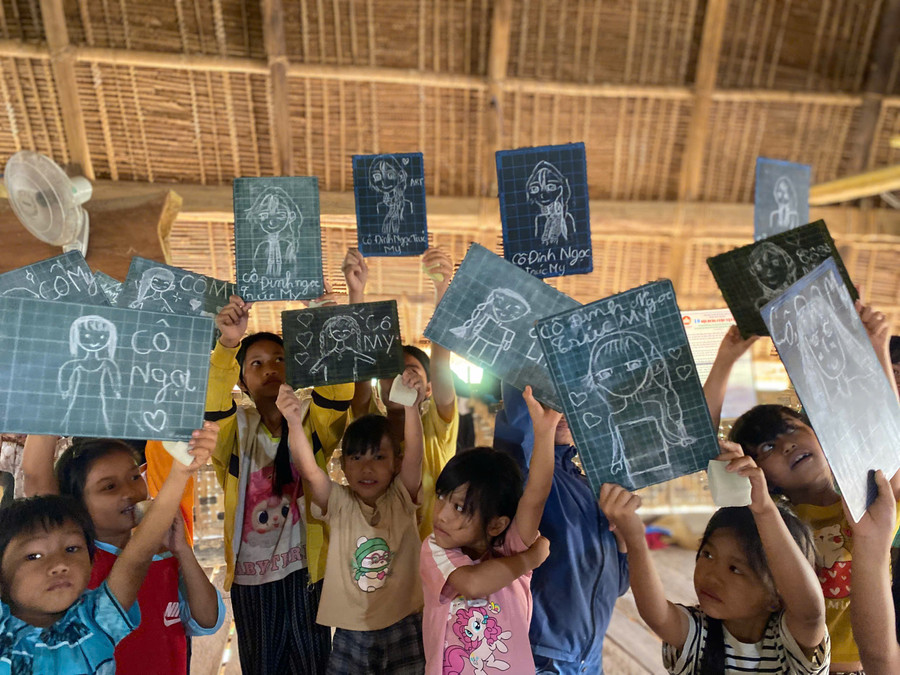
Not only teachers, but also young people are contributing to literacy campaigns. During the summer, Dinh Ngoc Truc My – a third-year Business Administration student and Deputy Secretary of the Youth Union of the Faculty of Economics , Da Nang University Branch in Kon Tum (Quang Ngai) – along with 30 other students, participated in the "Green Summer" campaign.
In Ngok Reo commune (Quang Ngai province), the student group organized recreational activities for children, taught Vietnamese, Math, and English to students, and introduced the "Popular Education" channel to the local people. For those who are illiterate or have forgotten how to read and write, this is an effective learning tool.
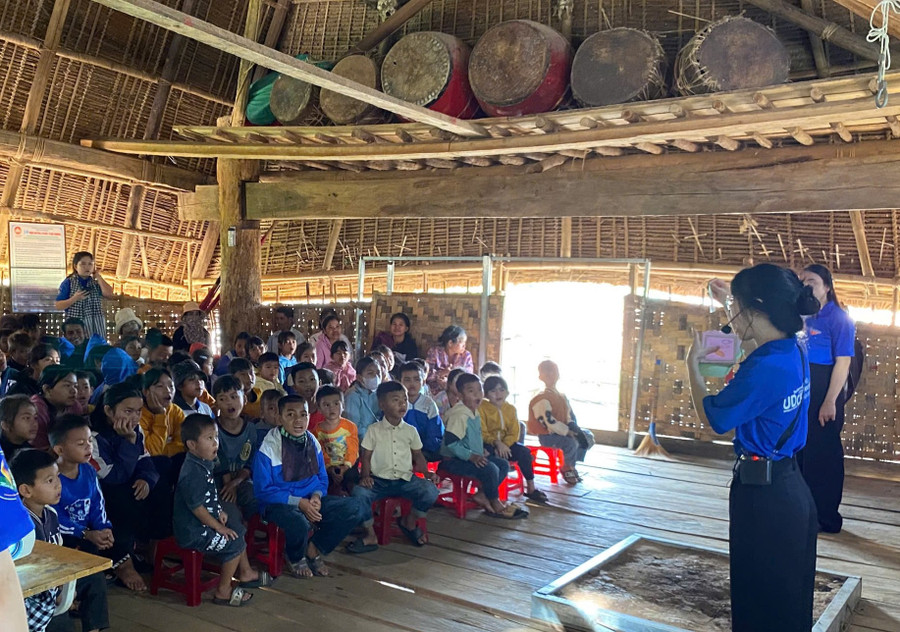
The group of students also guided local people on how to use social media and access websites safely. In addition to teaching, they also renovated and upgraded the playground and volleyball court for local youth.
“This is my second year participating in the Green Summer program. Each year we go to a different locality, meeting and supporting people in disadvantaged areas. Each trip leaves behind beautiful memories and unique joys,” Truc My shared.
Evening classes and summer volunteer programs have contributed to illuminating knowledge in the villages. Literacy not only helps the Xơ Đăng people communicate and conduct business more easily, but also opens up opportunities for a better life.
Source: https://giaoducthoidai.vn/con-chu-ve-voi-ban-lang-post745799.html






























































































Comment (0)