|
Ronaldo has frequently used the technique of pausing his run-up. |
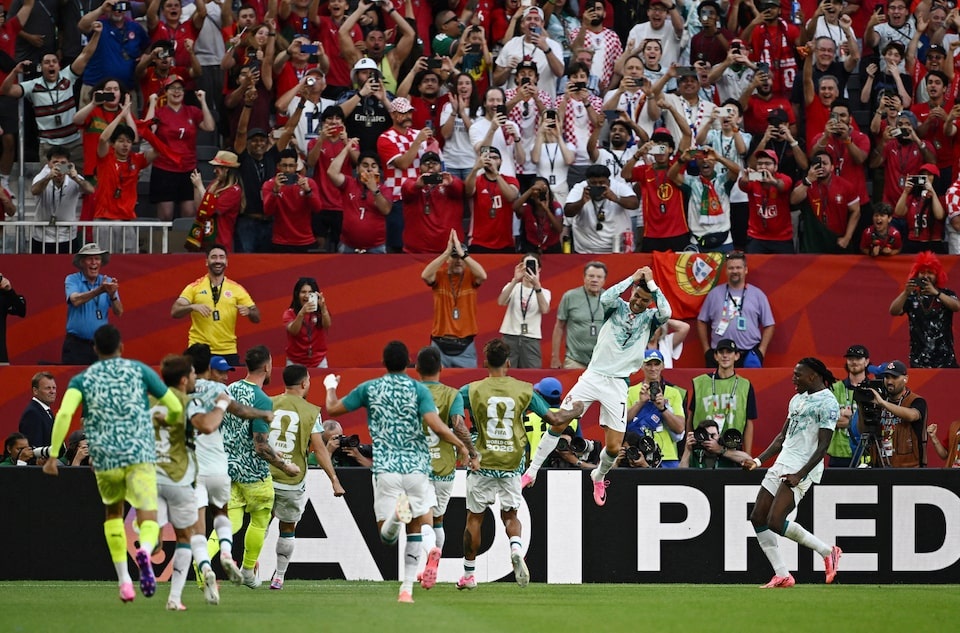
In the 68th minute at BMO Field, with Portugal trailing Croatia in the Round of 32 of the 2026 FIFA World Cup , Cristiano Ronaldo stepped up to take the penalty kick at the height of the pressure. The entire stadium held its breath as the shot could change the fate of the "Selecao".
He slowed down his run-up, feigning a lunge forward before shooting, completely deceiving Dominik Livakovic. The ball went into the net, leveling the score at 1-1. Once again, the technique of slowing down his run-up became a psychological weapon that helped Ronaldo turn the most tense moment into a goal.
One of Cristiano Ronaldo's penalty-taking techniques is the stutter step. This technique has been used in many of the most stressful moments of his career, from the injury-time penalty against Juventus in the 2017/18 Champions League, the penalty shootout against France at Euro 2024, to the 1-1 equalizer for Portugal against Croatia in the Round of 32 of the 2026 World Cup.
Instead of charging at a steady pace, Ronaldo deliberately disrupts the rhythm of the run with a pause or short steps just before shooting. According to The Guardian 's analysis, this moment of hesitation forces the goalkeeper to make an early decision based on the shooter's body language rather than waiting for the ball to leave his foot.
As soon as Ronaldo notices the opponent has shifted their weight or started to dive, he will turn the ball in the opposite direction. At that point, control of the situation no longer rests with the goalkeeper's reflexes but with the player taking the shot. This is also why this technique makes many goalkeepers wary. They usually rely on signals such as the angle of the hips, the speed of the run-up, or the rhythm of the steps to predict when the player will shoot.
When the shooter suddenly changes speed, those signals are almost completely erased. The goalkeeper is forced to "restart" their judgment process, easily falling into a state of anticipating rather than reacting to the ball. Simply diving early leaves the goal virtually open for the player, regardless of the shot's power.
  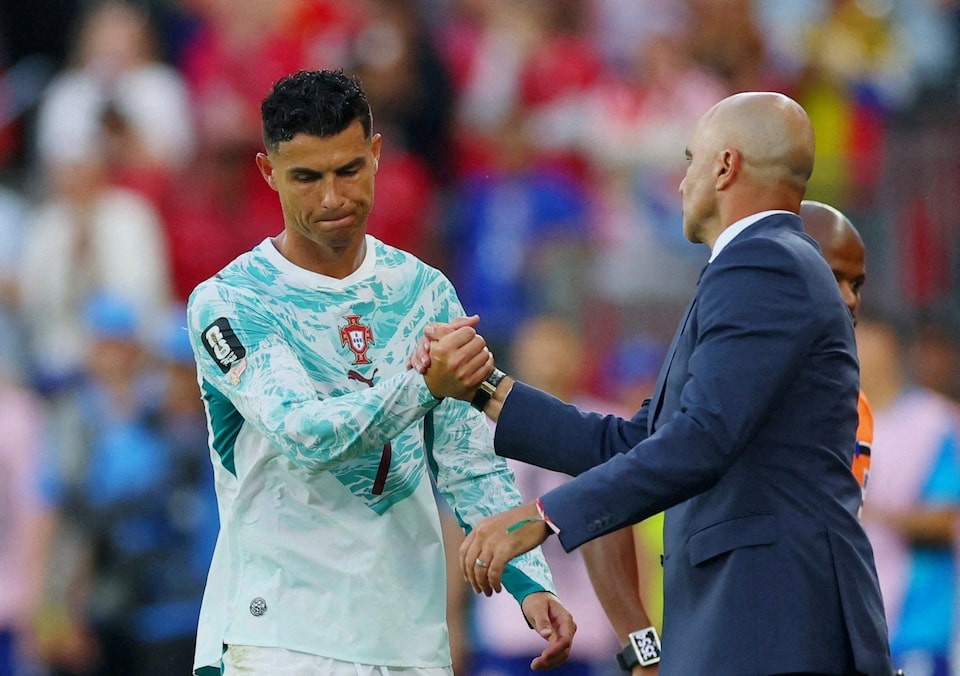  |
Ronaldo experienced an emotional match. Photo: Reuters . You may also like  Three doctors took turns performing CPR for an hour to save a patient who had suffered cardiac arrest.Phu Dien General Hospital (Nghe An province) recently successfully resuscitated a 28-year-old male patient who was in critical condition with cardiac arrest, respiratory arrest, and circulatory arrest before arriving at the hospital.  A nearly 20cm ovarian cyst was removed during a cesarean section for a high-risk pregnant woman.SKĐS - Pregnant for the fourth time, with a history of cesarean section and an ovarian cyst nearly 20cm in size, a woman recently underwent a successful cesarean section and cyst removal surgery at the Obstetrics and Gynecology Department of Hoan My Vinh Hospital in a single operation.  Male student from Phenikaa Medical School donates organs to save 3 people after being declared brain dead.NVN, a student at Phenikaa Medical School, passed away in an accident at the young age of 19. Fulfilling her wish to contribute to society, her family donated her tissues and organs to save the lives of three patients. The story of this student, who never had the chance to wear a medical coat but already fulfilled her mission of saving lives, has deeply moved many. |
Ronaldo's approach is not based solely on feeling or experience; it also reflects many principles studied in football psychology. The work of football psychology professor Geir Jordet shows that the ability to remain calm and control the tempo before taking a penalty kick has a significant impact on success rates.
Analysis of penalty kick data in the Premier League over five seasons shows that the technique of a half-time run-up increases the success rate by about 10% compared to the traditional run-up. According to football psychology professor Geir Jordet, the advantage doesn't come from the run-up itself, but from the fact that the shooter makes it difficult for the goalkeeper to anticipate their intentions until the very last moments.
Many experts consider the kick-step to be one of the ways to achieve that goal, as the shooter actively changes the tempo and forces the goalkeeper to make an early decision. Therefore, the ability to control the tempo, conceal intentions, and create psychological pressure on the opponent is key to making a difference.
This advantage is so significant that in 2016, the International Football Federation Council amended the rules, prohibiting players from faking a movement in the final touch of the ball to deceive the goalkeeper. However, altering the pace of the run-up beforehand remains perfectly legal and continues to be used by many players.
Even after becoming one of the world's best penalty takers, Ronaldo continued to refine this technique. After moving to Saudi Arabia, he adjusted his run-up to be more subtle: starting with very slow steps, constantly observing the goalkeeper, then suddenly accelerating in the last two or three steps. This approach generated enough power for the shot while also preventing the goalkeeper from having enough time to perform the power step – the crucial run-up to make the save.
According to Total Football Analysis, after changing his run-up technique, Ronaldo successfully converted 18 consecutive penalties, raising his career penalty conversion rate to approximately 85%. This shows that, even at the highest level, adaptability and continuous technical optimization remain key factors in maintaining his effectiveness.
Compared to many other penalty-taking styles, Ronaldo's approach leans more towards a psychological battle of wits than brute force. Players like Erling Haaland often opt for a powerful shot, utilizing speed and ball strength to beat the goalkeeper, while many others prioritize placing the ball into the far corner based on accuracy.
Conversely, the stutter step aims to make the goalkeeper freeze or dive prematurely, although it also carries the risk of causing the shooter to lose their balance if not executed correctly.



Source: https://znews.vn/cu-lua-cua-ronaldo-post1665853.html


![[Image] Overview of the construction site for the underground station of metro line 5 at the Hanoi Ring Road 1 intersection.](https://vphoto.vietnam.vn/thumb/1200x675/vietnam/resource/IMAGE/2026/07/03/1783065595682_ndo_br_z7974930852369-100ca093c306e72675f1d3700966a86b-jpg.webp)