

Add tools for management.
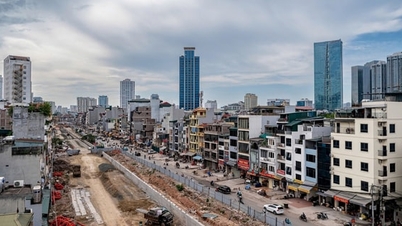
The Regulations on Architectural Management of Hanoi City (hereinafter referred to as the Regulations), issued by the Hanoi People's Committee, serve as a "set of principles" for all levels of government and relevant agencies to implement architectural management. For Hanoi, these Regulations are of significant importance, concretizing the regulations for managing urban and rural development after the Hanoi Capital City Planning for the period 2021-2030, with a vision to 2050, and the Revised General Planning of Hanoi Capital City to 2045, with a vision to 2065, were approved by the Prime Minister.

According to Dr. Architect Dao Ngoc Nghiem - Vice President of the Vietnam Urban Planning and Development Association, following the Architecture Law, the Government and the National Assembly want to have regulations for architectural management. First, it must be understood that this innovation is about the concept of architecture. Architecture is not just about architectural works but also about architectural activities. This regulation is broader than the old one, still adhering to planning but expanding to include architecture. In addition, Hanoi has recently implemented a comprehensive system of documents and tools to develop the city.
The Capital City Law 2024, the two planning projects, the Architectural Management Regulations, and the City's Urban Development Program are a set of tools for managing development in a directed manner, demonstrating Hanoi's serious research and building upon previous regulations.
“The key issue is linking this Regulation with the implementation of the planning, especially the Urban Development Program. It must be implemented synchronously, with a rational organizational structure, widespread dissemination of information; and regular inspections and enforcement of violations. Furthermore, the role and responsibilities of the community need more specific guidance to ensure effective implementation,” emphasized architect Dao Ngoc Nghiem.
Strengthen propaganda, inspection, and supervision.
In recent times, districts and communes in Hanoi have implemented the Regulations on Architectural Management. For example, according to the Vice Chairman of the People's Committee of Dong Da District, Ha Anh Tuan, to ensure the implementation of the Regulations in accordance with Decision No. 73/QD-UBND dated December 31, 2024, of the Hanoi People's Committee, the People's Committee of Dong Da District has requested the District Urban Management Department to receive, review, and evaluate suggestions and proposals related to these Regulations from relevant agencies, organizations, and individuals in order to provide appropriate explanations and guidance.
Synthesize and review proposals for cases arising from practice or not yet regulated in this Regulation, and advise the Dong Da District People's Committee to report to the Department of Planning and Architecture and the Hanoi City People's Committee. Lead the editing of the basic contents of the Architectural Management Regulation related to the district's authority and the investor's construction activities for dissemination and promotion.
Propose the implementation of an action program in architectural and landscape management; strengthen the application of information technology and geographic information technology (GIS) in architectural and landscape management; and research the possibilities of applying BIM models or using artificial intelligence in planning and architectural management.
Preside over the handling of violations of architectural management regulations as proposed by the Construction Order Management Team and the People's Committee of the ward. Review the current state of architecture and buildings, and houses in the area to develop solutions for renovation and beautification, especially in areas where the landscape and architecture are inconsistent and aesthetically unappealing, affecting the overall architectural landscape of the area.
The Urban Construction Order Management Team proposes handling cases of construction that violate the issued construction permits, inspecting construction investment projects; and proposing measures to remedy situations that detract from the aesthetics of the space, architecture, and landscape (such as extensions, placing old or damaged items, equipment, architectural structures, advertisements, etc.) through the Urban Management Department.
The People's Committee of Dong Da District also requested the District's Department of Culture and Information to study the regulations of the Regulations on advertising activities; guide organizations and individuals to comply with the regulations and review the entire system of signs and billboards to find solutions for remediation. The People's Committees of the wards are to study and disseminate the Regulations on architectural management to organizations and people in their wards; and compile difficulties and obstacles relevant to the actual situation in the locality.
On the other hand, according to architect Dao Ngoc Nghiem, authorities need to widely disseminate information and management tools to the public. It shouldn't be limited to just the management agencies; solutions should be chosen to involve the media in disseminating this information to all citizens. This is an issue the city is currently neglecting and needs more attention. Simultaneously, inspection and supervision must be strengthened.
According to experts, several issues will arise during the implementation of the Architectural Management Regulations. For example, the operational process of the Regulations will inevitably reveal shortcomings. This is because all regulations, when applied, give rise to practical problems, unlike what was anticipated during the survey and compilation of past experiences. Therefore, the competent authority can continue to adjust the Regulations in the future to make them more complete.
The Architectural Management Regulations are a general policy and guideline of the State and Hanoi City, creating a new habit, a new way of doing things, and a new approach to problem-solving. The Architectural Management Regulations contain many revolutionary provisions, but they are based on scientific principles; if implemented, they will demonstrate progress in the construction and management of sustainable urban development.
On the other hand, the Architectural Management Regulations contain provisions extending down to the district level. Districts and counties will implement these regulations based on their content. When applying them, we need consistent enforcement from the city level down to the district and county levels, through the system of city-level departments and agencies, and down to the district and county offices. Simultaneously, Hanoi needs to promote, educate, and guide the community to ensure timely implementation.
Dr. Phan Dang Son - President of the Vietnam Association of Architects
Source: https://kinhtedothi.vn/cu-the-hoa-che-tai-quan-ly-phat-trien-do-thi.html































































































Comment (0)