Spending heavily on the military budget.
According to data from the Stockholm International Peace Research Institute, Algeria will have the largest military budget in Africa in 2025, with spending reaching approximately $25.4 billion, an 11% increase compared to 2024. This expenditure is equivalent to about 8.8% of GDP and nearly 25% of total state budget spending. In terms of the proportion of GDP allocated to defense, Algeria ranks second in the world , only after Ukraine, and even higher than the 7.8% of GDP that Israel allocates to defense.
According to Defense News, analysts say Algeria's defense policy is influenced by many regional security factors. Algeria pursues a strategy of maintaining a strong deterrent capability to protect its sovereignty and regional stability in the face of geopolitical upheavals, especially since NATO's military intervention in Libya in 2011, which has complicated the security environment along Algeria's eastern border.
In addition, there is the ongoing instability in the Sahel region, where terrorist and armed groups are highly active in Mali, Niger, and Burkina Faso. Algerian air defenses are currently equipped with Russian weapons, including S-400 Triumph long-range missile systems in conjunction with S-300PMU2, creating a powerful anti-access/area denial (A2/AD) zone over the Mediterranean Sea. On the ground, armored brigades possess thousands of T-90SA main battle tanks, combined with squadrons of Su-30MKA fighter jets in the air.
Unlike Algeria, which relies heavily on equipment from Russia, Morocco is continuing to expand its military budget, pursuing a strategy of military modernization based on American technology and defense cooperation with Israel. Its defense spending is projected to increase by 6.6%, reaching approximately $6.3 billion in 2025, equivalent to 3.5% of GDP. This figure is nearly double South Africa's defense budget ($3.2 billion) and about three times that of Nigeria ($2.1 billion).
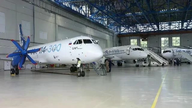
The backbone of the Royal Moroccan Air Force is its squadron of modern F-16 Viper fighter jets, supported by the Patriot PAC-3 missile defense system and the highly mobile HIMARS long-range rocket artillery systems from the United States. Notably, following the Abraham Accords, Morocco quickly incorporated advanced electronic warfare technologies, early warning radar systems, and cutting-edge Israeli reconnaissance and attack UAVs such as the Heron, Hermes 900, and the Harop suicide drone.
The trend toward decentralizing security.
Although the two North African nations are not in direct conflict, observers believe Algeria and Morocco are engaged in a strategic rivalry in the race to modernize their militaries.
Morocco skillfully utilized space-based surveillance systems, unmanned aerial vehicles (UAVs), and precision strike technology to neutralize Algeria's overwhelming advantage in armor and air defense capabilities. This integration allowed Morocco to establish a flexible counter-offensive capability, compensating for its lack of raw troop numbers.
The focus of all these military preparations and deployments remains on the issue of territorial disputes in the Western Sahara region and the geostrategic interests extending into the Atlantic. According to international security analysts, following NATO's 2011 military intervention that led to the collapse of the Libyan government, Algeria's entire vast eastern border has become a highly vulnerable area. Al Jazeera notes that, along with the Libyan crisis, the prolonged instability in the sub-Saharan region, particularly in the Mali-Niger-Burkina Faso triangle, is creating significant security pressure on the southern flanks of both Algeria and Morocco.
According to the latest strategic assessment report by security experts at the International Institute for Strategic Studies (IISS), the arms race in North Africa clearly demonstrates a trend towards “security decentralization.” The sharp increase in defense spending by nations shows they no longer place much faith in regional collective security mechanisms or UN coordination, but instead choose to strengthen their self-defense capabilities against unpredictable geopolitical shifts.

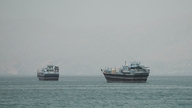
In the current tense situation, observers warn that any military movement or minor miscalculation along the Moroccan Wall (also known as The Berm) could trigger a widespread crisis, completely disrupting the already fragile balance of deterrence.
Source: https://www.sggp.org.vn/cuoc-dua-hien-dai-hoa-quan-doi-tai-bac-phi-post857407.html
![[Image] Schools organize meetings and introduce teaching models to students admitted to grade 10.](https://vphoto.vietnam.vn/thumb/1200x675/vietnam/resource/IMAGE/2026/06/25/1782368077271_ndo_br_z7970052192242-1ec8daeb77a6eed1a4e9f58c564ddd3e-jpg.webp)
![[Photo] General Secretary and President To Lam receives Palestinian Ambassador Saadi Salama](https://vphoto.vietnam.vn/thumb/1200x675/vietnam/resource/IMAGE/2026/06/25/1782365384740_a1-bnd-9423-8322-jpg.webp)

![[Image] Ho Chi Minh City: Ma Lang area, Chicken-Rice Market about to change its appearance](https://vphoto.vietnam.vn/thumb/1200x675/vietnam/resource/IMAGE/2026/06/25/1782377698627_ndo_br_m1-jpg.webp)












![[Video] Weather forecast for tonight and tomorrow, June 26, 2026: Northern Vietnam to end heatwave from tomorrow, Central Vietnam to continue experiencing a heatwave.](https://vphoto.vietnam.vn/thumb/402x226/vietnam/resource/IMAGE/2026/06/25/1782392692278_thumb-dem-png.webp)