

If we were to call the energy conversion process an "athlete," then this athlete left the starting line many years ago. Although they've already run halfway, the finish line is still a long way off.
Notably, momentum slowed in the final stretch, and the improvement in the global Energy Transition Index (ETI) score from 2021-2024 was nearly four times lower than the score from 2018-2021.
ETI highlights the challenges in achieving a balanced transition between sustainability, equity, and security. Only 21 out of 120 countries made progress across all three areas in the past year.
Sustainability has improved. However, aside from increased use of wind and solar power, this aspect is no longer keeping pace with the trajectory needed to achieve net-zero emissions by 2050.
Energy security is being challenged amid rising geopolitical tensions. Challenges to energy equity persist within and between countries – particularly regarding affordability and accessibility.
Investment in clean energy reached a record high of $1.8 trillion in 2023, but this is still only about one-third of what is needed by 2030 to achieve net-zero emissions. Post-Covid-19, the energy transition landscape has undergone dramatic changes in geopolitical and economic realities, challenging the fundamental drivers of the energy transition.
The question is how to help the "athlete" named energy transformation regain momentum. The World Economic Forum (WEF), together with Accenture, has identified five actions that need to be taken in combination to answer this question, and more importantly, to ensure the "athlete" maintains its performance in the second half of this marathon.
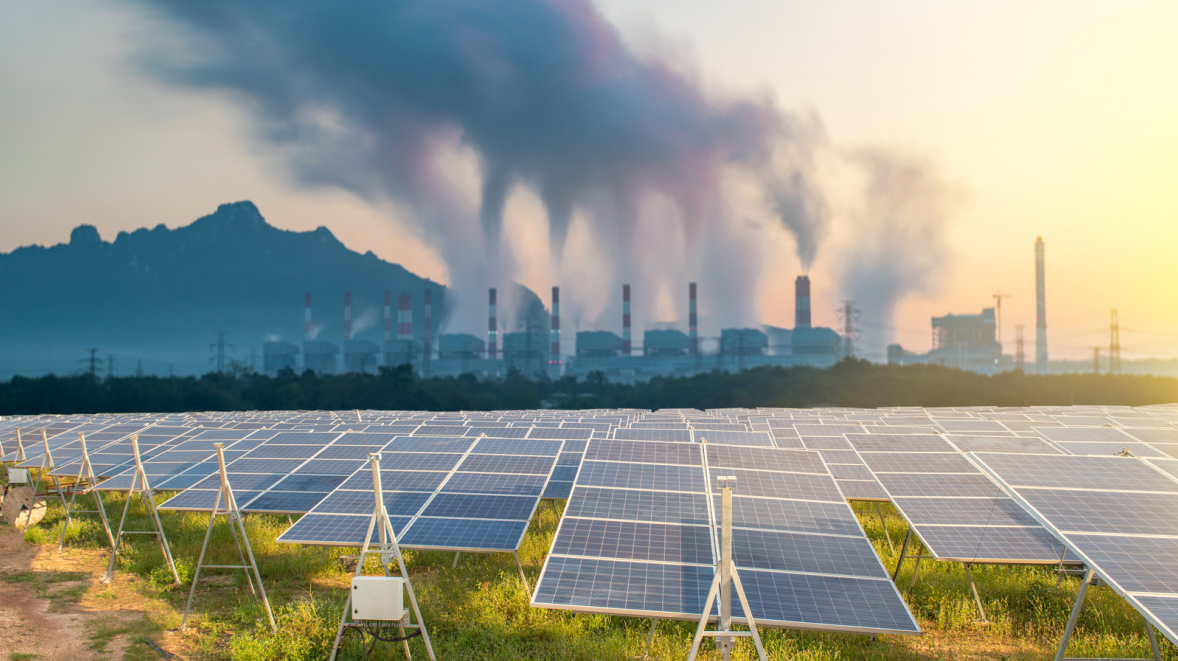
The energy transition is not just about developing new infrastructure and technologies; it entails profound changes in society and the economy. Photo: RIFS Potsdam

First, priority should be given to regulations that promote decarbonization and energy efficiency. For example, the U.S. Inflation Reduction Act (IRA) provides a 26% tax credit for solar energy investments within a fund totaling $369 billion for conversion incentives.
Similarly, the UK has Contracts for Difference (CfD), which provide long-term price stability to attract investment in renewable energy. The Minimum Energy Performance Standards (MEPS), adopted by the EU, the US, and Canada, helped reduce energy consumption in Japan's manufacturing sector by 20% between 2000 and 2012.
Secondly, digital technologies and AI need to be applied to increase productivity and accelerate innovation. In particular, AI generation represents a transformative opportunity, and many companies and governments are reshaping how technology will reinvent their entire value chains. By 2030, Accenture estimates that industry investment in AI generation will more than triple, rising from approximately $40 billion annually to over $140 billion.
Ensuring the benefits of the AI revolution map to the energy sector is a top priority. Energy requirements for AI are currently a major topic, as several countries are reassessing their future electricity demand growth, which is surging due to the proliferation of data centers. Ensuring AI has a positive net impact on this transformation means delivering benefits that extend beyond the new energy demands the technology creates.
Third, energy equity must be provided to vulnerable populations and households. Society as a whole ultimately determines the pace of the energy transition. Social safety nets and compensatory measures, including income-based targeted support, cash transfers, and temporary basic income initiatives, can alleviate or reverse energy poverty and ultimately increase the incentive to adopt clean energy solutions.
For example, the Philippines has implemented a Lifeline Rate program to provide subsidized electricity prices for low-income households consuming less than 100 kWh per month. France has targeted support for the majority of energy efficiency upgrades in buildings for the lowest income earners. India is targeting support for electric mobility for two- and three-wheeled vehicles, most of which are owned by low-income individuals.
Fourth, connecting energy supply and demand is necessary to drive future investment. Trade and off-take agreements are crucial in investment approvals, especially for large-scale capital projects and infrastructure programs, as they provide a reliable revenue stream. Currently, the market for green products remains small, such as hydrogen, which is only 1% the size of the current industry.
The First Movers Coalition aims to promote key emerging climate technologies needed for decarbonization in the world's heavy-emission sectors, with a commitment to meet the annual demand for $16 billion in emerging technologies by 2030.
Both the public and private sectors need to act to stimulate investment by mitigating risks to future demand. Japan and the United Arab Emirates (UAE) recently collaborated on the transport of thousands of tons of green ammonia, marking the first initiative of this scale.

Fifth, achieving a successful energy transition requires both global cooperation, such as joint commitments like those at COP28, and individual actions tailored to the initial conditions, readiness, and priorities of each sector.
The most significant difference in system performance between advanced economies and emerging and developing countries lies in the disparity in energy equity, particularly in emerging Asia and sub-Saharan Africa… Meanwhile, global dynamics depend on engaging all countries, not just advanced ones.
The message from this year's Energy Transition Index (ETI) is clear: We are well into a marathon. Momentum is more important now than ever. Decision-makers worldwide must work together to keep pace and accelerate the transition toward a fair, secure, and sustainable energy future.
Minh Duc (According to WEF)
Source: https://www.nguoiduatin.vn/chuyen-doi-nang-luong-cuoc-dua-marathon-khong-phai-chay-nuoc-rut-a669401.html


































































![[Video] Sunset at Lap An Lagoon – Where the sun sets over the fishing nets](https://vphoto.vietnam.vn/thumb/1200x675/vietnam/resource/IMAGE/2026/05/31/1780192137701_beach-landscape-sea-water-nature-grass-745871-pxhere-com.jpeg)






































Comment (0)