From a low-lying area at the foot of Hon Tau mountain, the Tra Ly lotus field today not only provides a stable source of income for the local people but is also gradually becoming an attractive experiential tourism destination in the southwestern part of Da Nang city.
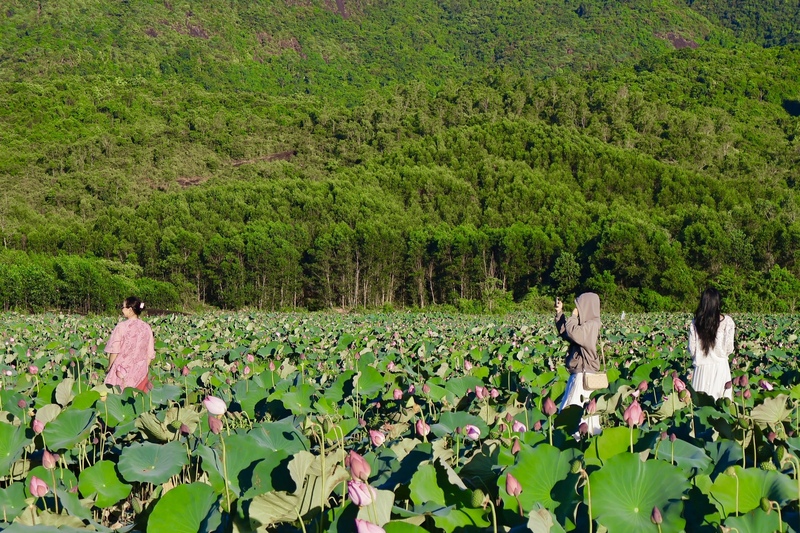
The lotus fields of Tra Ly are in full bloom, creating a unique and striking landscape in the southern countryside of Da Nang city. Photo: Diem Phuc
Developing ecotourism destinations
In early June, the Tra Ly lotus field (Chanh Loc hamlet, Duy Xuyen commune, Da Nang city) enters its most beautiful time of the year. This is considered one of the largest concentrated lotus growing areas in the region.
The lotus season lasts from May to August, with June being the peak blooming period, attracting numerous tourists and photographers who come to visit and capture the characteristic moments of this rural area.
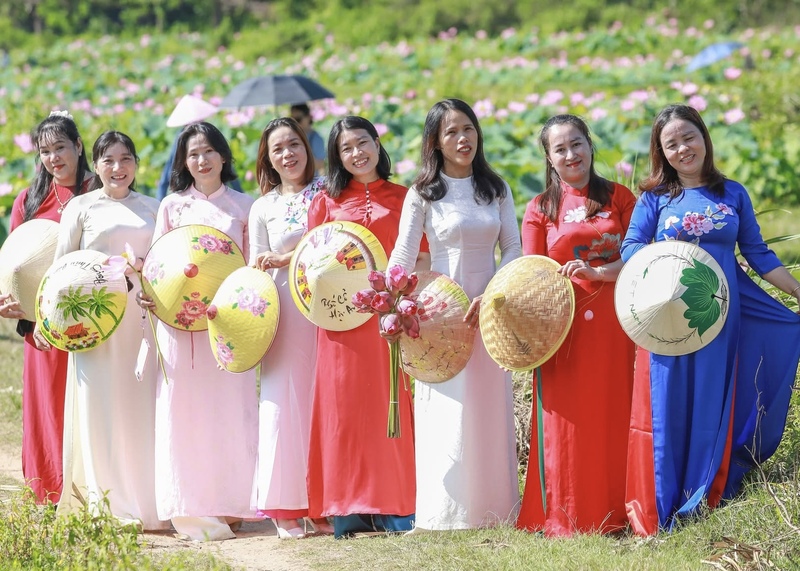
Tra Ly welcomes hundreds of tourists every day who come to visit, take photos, and experience the local culture. Photo: Nhat Tu
According to the Project for the Development of Organic Agriculture in Da Nang City for the period 2026-2030, with a vision to 2035, Tra Ly lotus lake is one of 16 organic agricultural spaces linked to experiential tourism that the city has planned to develop. This is considered an important foundation for the locality to gradually form a community-based ecotourism model based on the existing advantages of the lotus region.
Speaking with a reporter from the Industry and Trade Newspaper, Mr. Phan Van Hai, head of Chanh Loc village, said that the lotus season begins to bloom from the end of May, which is also the time when the number of visitors starts to increase rapidly. Each day, the lotus pond welcomes about 200-300 visitors, with peak times between 6-8 am and after 3 pm.
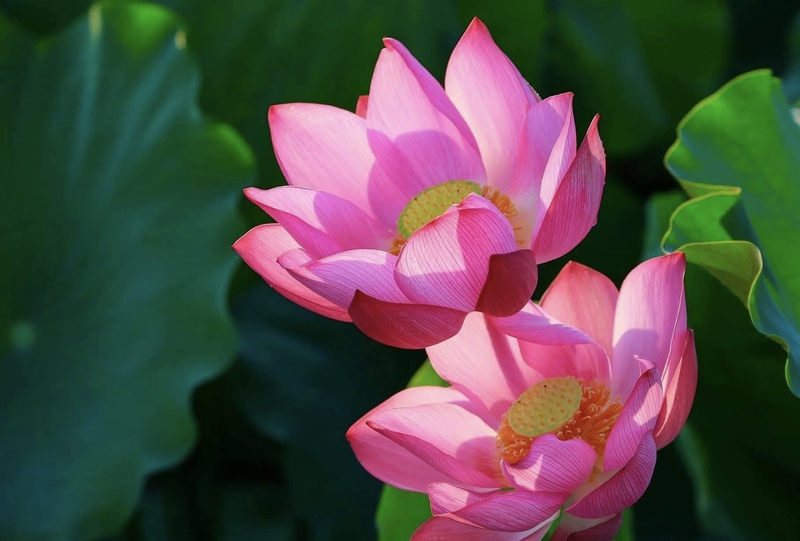
Lotus flowers bloom profusely in the early morning. Photo: Diem Phuc


Traveling over 20km to Tra Ly, Ms. Nguyen Thi Sau, a resident of Thu Bon commune (Da Nang city), shared: “Tra Ly lotus pond has been famous for a long time. It only blooms once a year, and when people hear about the blooming season, they eagerly come to take pictures and admire the flowers. The beauty of our countryside is always the most special.”
In addition, services such as refreshment stalls, agricultural product sales, costume rentals for photography, and assistance for tourists visiting the lotus pond all develop seasonally, contributing to increased income for many households in the surrounding area.
Mr. Nguyen Chi Cong, Vice Chairman of the Duy Xuyen Commune People's Committee, informed: "We are also creating favorable conditions for people and businesses to invest in developing rural eco-tourism here, combined with visiting historical sites to improve the lives of the people and develop the local economy."
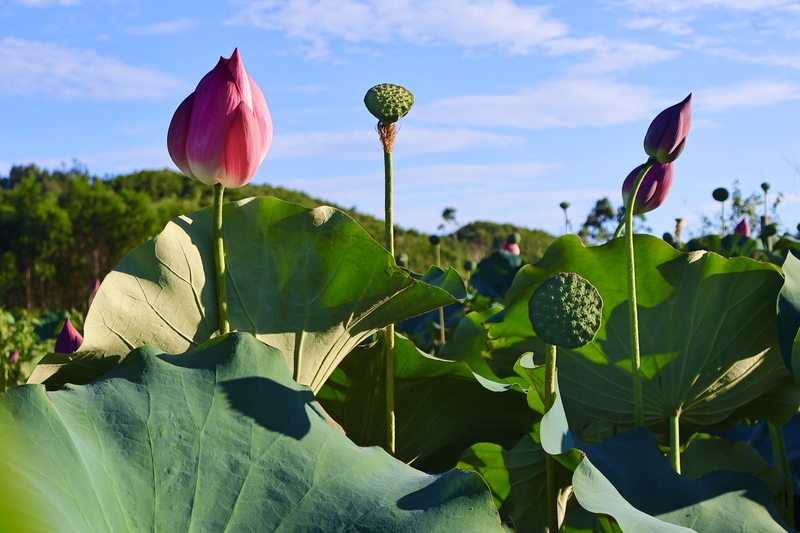
Lotus seeds are the main product of the Tra Ly lotus growing region, providing a stable source of income for dozens of households with a selling price of 45,000 - 60,000 VND/kg of fresh lotus seeds. Photo: Diem Phuc
Maximizing the economic value of the lotus plant.
Currently, the lotus growing area has about 75 households directly involved in lotus production and about 90 households indirectly benefiting from activities related to lotus cultivation. Compared to many traditional crops, lotus shows superior economic efficiency on the same cultivated area.
Sharing with us about the profits earned during the lotus season, Mr. Ho Sinh (51 years old, residing in Chanh Loc village), who currently cultivates nearly 2 hectares of lotus, said: “It depends on the season; not every season brings a big harvest. But basically, growing lotus provides a more stable income compared to growing rice. If the harvest is good, the price will be around 60,000 - 70,000 VND/kg of fresh lotus seeds, and 1 hectare can yield more than 120 million VND.”
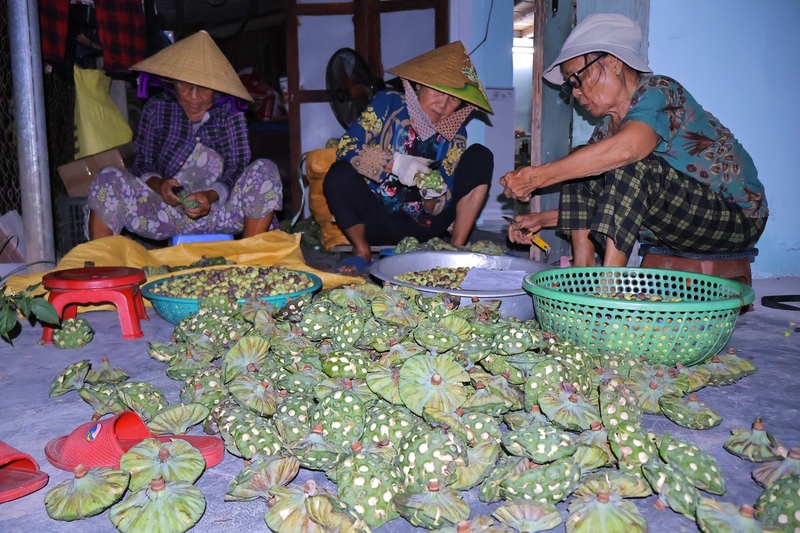
Not only lotus seeds, but also lotus leaves, lotus roots, and lotus hearts are collected for food processing. Photo: Diem Phuc
A unique characteristic of the lotus plant is that almost every part can generate economic value. Specifically, lotus seeds are the main product purchased by traders for consumption and food processing; lotus leaves are sold to bakeries and packaging facilities; lotus roots are used as ingredients in restaurant dishes; and lotus hearts are collected for processing into tea and medicinal products.
By utilizing the entire lotus plant, people are not entirely dependent on a single source of income, and it also significantly reduces the waste of agricultural by-products.
"Besides providing direct economic benefits, lotus cultivation also contributes to creating seasonal jobs for local farmers, such as hiring people to harvest, peel, separate seeds, and transport... providing relatively stable income each season," said Mr. Nguyen Chi Cong, Vice Chairman of the Duy Xuyen Commune People's Committee.



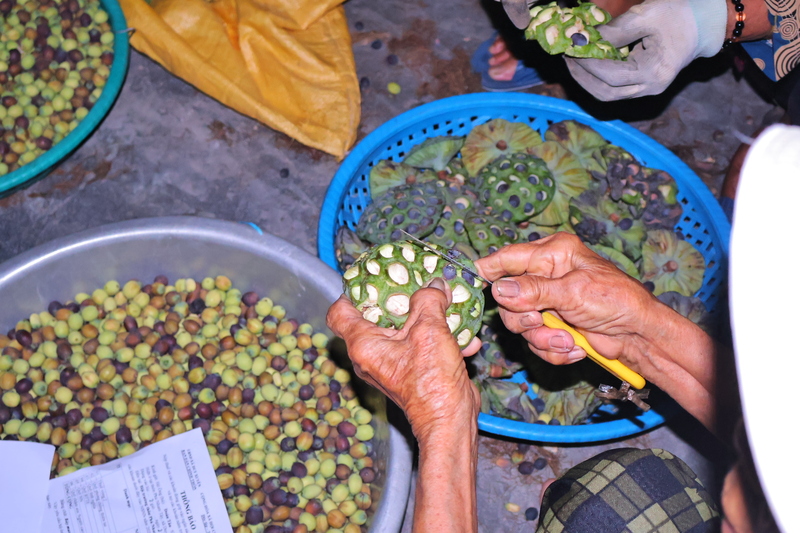
The lotus season creates seasonal jobs for local people in the harvesting, transportation, and processing stages. Photo: Diem Phuc
Notably, the inclusion of Tra Ly in the city's organic agricultural development plan has opened up opportunities to enhance the value of the entire lotus growing region. With proper investment in infrastructure, branding, and the development of processed products, Tra Ly lotus could absolutely become a distinctive local agricultural product.
To fully exploit these potentials, closer collaboration from the government is needed in planning cultivation areas, investing in transportation infrastructure, and promoting marketing. When the lotus flowers of Tra Ly not only bloom on the surface of the pond but also "bloom" on the shelves of OCOP (One Commune One Product) stores and in every photo shared by tourists on social media, that is when the lotus plant truly fulfills its mission of enriching the rural areas of Da Nang.
From the Tra Ly lotus growing region, many processed products such as: Tho Moc tea, lotus seed and black sesame cereal from Me Mit Food Co., Ltd., Duy Oanh cereal powder, Tra Ly dried lotus... have been brought to the market, contributing to increasing the economic value of the local lotus plant.
Source: https://congthuong.vn/da-nang-khai-thac-da-gia-tri-tu-cay-sen-460229.html