

People in each rural area of Vietnam have their own distinctive dialect, but nowhere is it like the Nghe An - Ha Tinh region, where the language used in daily communication becomes a "specialty" that shapes the unique cultural identity and personality of the people, enabling them to identify and connect with the community.

Folk song festivals are a way to preserve and spread the Nghe An dialect in daily life. (Photo: Performance by the Nguyen Cong Tru Folk Song Club (Nghi Xuan) at the 2023 Nghe An - Ha Tinh Inter-provincial Folk Song Festival.)
"The Nghe An dialect returns"
Located in the heart of Vietnam, Nghe An and Ha Tinh provinces are considered ancient lands. According to archaeological evidence, humans have lived in this region for over 5,000 years. Associated with the iconic Hong Mountain and Lam River, Nghe An boasts many unique and distinctive tangible and intangible cultural heritages. Among these, the Nghe An dialect (including its pronunciation, vocabulary, and semantics) is a distinct feature of daily communication and life, reflecting the region's formation and development. The Nghe An dialect is also found in poetry, folk art, and contemporary forms such as the Nghe An-Ha Tinh folk songs – a representative intangible cultural heritage of humanity.
The Nghe An dialect is heavy, reflecting the hardships and struggles of the region over generations. In terms of phonetics (tonal range), as many linguists have observed, the tonal system of the Nghe An-Tinh An dialect is not as complete as that of the standard language; the falling tone is pronounced as a heavy tone. Some dialects in Nghi Loc and Nghi Xuan have a tonal system with only four tones, and in some areas, only three tones. From a perceptual standpoint, listeners perceive a somewhat "broken" language where the distinguishing value of those few tones is no longer clear.
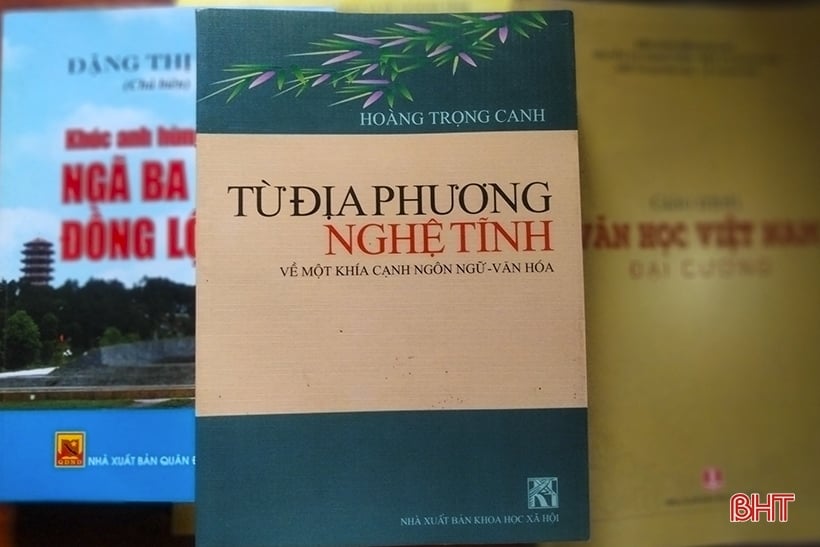
One of the research works on the Nghệ An dialect has been incorporated into the curriculum of language-related departments at Vinh University (Nghệ An).
In a recent study, Associate Professor Hoang Trong Canh (Vinh University) observed: “The phonetic correspondence between the Nghe-Tinh dialect and the standard Vietnamese language is rich, but also extremely complex. This phonetic correspondence occurs in the initial consonants, vowels, and tones, but not in a uniform proportion across these sound components or within each component. However, generally speaking, the phonetic correspondence follows a pattern. Most initial consonants in the Nghe-Tinh dialect correspond to many initial consonants in standard Vietnamese. This also demonstrates that the phonetic changes in the initial consonant system of the Nghe-Tinh dialect are minimal and slow. Regarding vowels, the correspondence is more complex, especially with regard to the correspondence of different types of vowels. Regarding tones, this correspondence mainly occurs in the heavy and level tones of the Nghe-Tinh dialect with some other tones in standard Vietnamese.”
In terms of meaning, the Nghe An - Thinh Hoa dialect system is more complex than phonetic issues. The system of nouns, personal pronouns, demonstrative pronouns, adjectives, verbs, etc., is extremely rich and also very different. Therefore, when communicating with people from many other regions of the country, experienced people from Nghe An often have to "translate" for their listeners. As an ancient land, the system of ancient nouns naming places, objects, things, and events is also very ancient. Over time, this system of words is gradually disappearing, becoming "ancient capital" in idioms, proverbs, and folk songs, and is a subject for cultural researchers. For example, the system of local words in the folk poem "The Falling Thunder God" by Le Thanh Binh. For instance, "tro" is a local variant of "trận" (battle/storm): "Trộ mưa" - "trộ nam cào"; "một trộ" - "trộ gió" (one tro) Especially the system of personal pronouns: Tau, mi, há, ả, eng... Demonstrative pronouns: ni, nớ, tề... Question words: rứa, hè, mô (mô rú mô sông mô nỏ chộ/ mô rừng mô biển chộ mô mồ?).
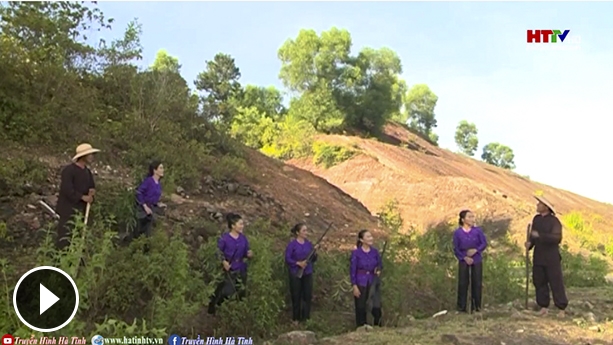
Video : Folk song "Thunder God Falls". Source: HTTV
In modern society, cultural exchange is increasingly widespread, but the Nghe dialect is still preserved and maintained in daily life as a characteristic reflecting the personality and culture of the people of the Hong Mountain - Lam River region. Using the Nghe dialect creates wit and humor in communication, while also fostering closeness and affection, serving as a distinguishing mark that sets people from Nghe An apart from others when they are far away.
Having been away from her homeland for 40 years, every time one meets People's Artist Hong Oanh, they can still feel the soul and character of a person from Ha Tinh in her, through her words and songs about her hometown. “For thousands of people from Nghe Tinh currently living and working in the South, the Nghe dialect is the ‘sacred soul’ of our homeland, the gratitude for our roots that those who are far from home cherish like treasures. Speaking our native dialect at gatherings and reunions with fellow countrymen is incredibly sacred and moving. Therefore, when we hear lullabies and folk songs in a foreign land, everyone is filled with nostalgia for their roots. Only when you are far away do you realize that the language of your homeland is where you truly return to,” shared People's Artist Hong Oanh.

People's Artist Nguyen Hong Oanh is a person who has devoted much effort to preserving and promoting the art of singing through the folk songs and lullabies of the southern provinces.
In the flow of national culture, many poems and songs using the melodies and words of Nghe An have created a unique mark, spreading widely in life and loved by people all over the country, such as the song: "The Girl of the La River" (poem by Nguyen Phuong Thuy, music by Doan Nho), "A Heartfelt Song of a Ha Tinh Person" (music by Nguyen Van Ty), the poem "Nghe An Voice" by poet Nguyen Bui Voi, or recent songs such as: "The Nghe An Voice Returns" by musician Le Xuan Hoa, set to a poem by Luong Khac Thanh...
With its diverse vocabulary, rich expressive power encompassing nuances, emotional depth, descriptions, narratives of events, landscapes, and people, along with its distinctive dialect... the Nghe An dialect contributes to enriching and beautifying the Vietnamese language in modern social life, and is an inseparable part that brings the Nghe An and Ha Tinh communities closer together. As the Russian writer Ilya E. Renburg once said: "The love for home, for the village, for the countryside has become the love for the Fatherland." From loving the language of their ancestors, the people of Nghe An further deepen their love for their homeland, working together to build and develop the country.
To prevent familiar sounds from becoming strange...
Nghe An dialect is a dialect within the Vietnamese language, but its preservation and increasingly widespread use have made it a "brand" identifying the culture and people of Nghe An in the context of integration. Although rich in expressiveness, the Nghe An dialect still has limitations in mass communication, requiring people from Nghe An to flexibly and adaptably use their mother tongue, dialects, and local dialects in their work and studies to achieve effectiveness.
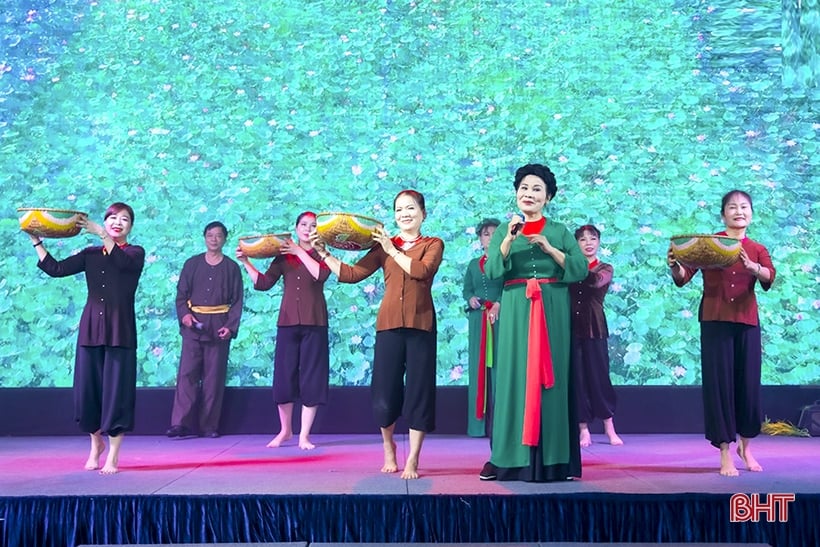
The Southern provinces' folk singing club performs at a cultural event in Ho Chi Minh City in 2022. Photo: Provided by NNND Hong Oanh.
Mr. Duong Van The (originally from Loc Ha, currently working in Lao Cai) expressed: “The Nghe An dialect has a diverse range of expressive words, from personal pronouns to adjectives and verbs… but if used incorrectly in context, they can be very crude, sometimes even vulgar, making even native Nghe An speakers feel uncomfortable. Especially adjectives that express rudeness and abruptness… Therefore, it is very necessary to eliminate or limit them.” It is known that, out of love for his hometown dialect, Mr. The previously joined a Nghe An dialect group on social media with the aim of communicating in his native language to satisfy his longing. However, some members of the group abused crude language in their posts and comments, which annoyed him and led him to leave the group.
One of the limitations of the Nghe An dialect in communicating with people from other regions is its strong regional accent. This often leads to mispronunciation of words with tilde accents (~) and question marks (?), sometimes even using a dot (.), and in some areas, a dot (.) becomes a grave accent (`), and a grave accent (`) becomes an acute accent ('). This causes misunderstandings or difficulty in understanding for people from other regions. Furthermore, the strong regional accent of Nghe An is also a barrier when learning foreign languages. This was clearly demonstrated at the 2023 Inter-provincial Accommodation Service Professional Competition between Thanh Hoa, Nghe An, and Ha Tinh, recently held in Vinh City. Several contestants from Nghe An and Ha Tinh, when giving presentations in English, had a strong regional accent, making it difficult for the judges and some audience members to understand them.
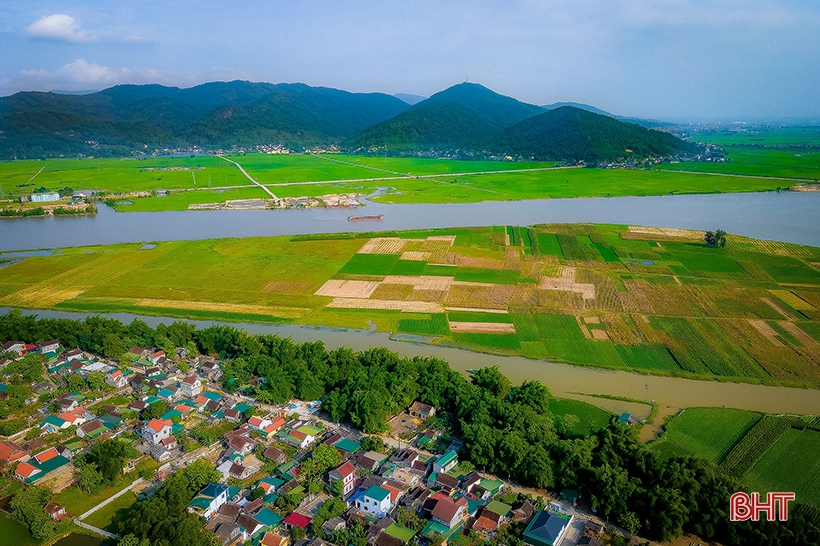
Homeland of the Lam River and Hong Mountain. Photo: Dinh Nhat.
According to some writers and researchers, in order for the Nghe An dialect to retain its identity while integrating into modern life, the first step is to have preservation policies and strategies. This includes schools needing systematic lessons on the beauty and limitations of the Nghe An dialect; strengthening the preservation of cultural heritage such as Nghe Tinh lullabies, folk songs, and traditional singing, thereby reviving the words of our ancestors that embody the distinctive spirit and soul of the people of Nghe An. Artists and artisans need to be aware of their responsibility by incorporating the words and expressions of their ancestors—from folk songs, proverbs, idioms, and expressions of the people of Nghe An—into their works. From there, the beauty of the Nghe An dialect will spread in modern life.
Each individual in the Nghe An community needs to pay attention to pronunciation and use words flexibly in each context, paying attention to using words commonly used by the people so that listeners can easily understand the content, avoiding misunderstandings that could hinder their work and life.
Thien Vy - Hanh Nhan
Source




























































































Comment (0)