Busy during the dry season, raising cattle for Tet.
These days, Hiep Hoa commune, home to the traditional dried beef making industry, is entering its busiest production season of the year. From early morning, the atmosphere at the dried beef processing facilities is bustling with activity at every stage of production.
Around 4 a.m., nearly 10 workers at the Tam Ben dried beef production facility begin their new workday. The beef is carefully selected, sliced, seasoned, and then dried on racks. Each step is performed meticulously, ensuring the preservation of the distinctive flavor of traditional dried beef.

Workers at Tam Ben Dried Beef Production Facility are busy drying beef from early morning to meet Tet holiday order deadlines.
According to Ho Van Ben, owner of Tam Ben dried beef production facility, this year's sunny and stable weather has made drying beef quite favorable. In addition, the price of raw beef has also remained stable, allowing the facility to proactively plan its production.
Thanks to favorable factors, the facility's dried beef production for this year's Tet holiday remains comparable to previous years. Currently, the facility produces an average of about 100kg of various types of dried beef per day, consistently fulfilling signed orders. "Orders this year are stable, not increasing dramatically but also not decreasing, so the facility is confident in maintaining production," Mr. Ben shared.
The main ingredients for dried beef are tenderloin and thigh meat from local cattle. After purchasing, the meat is washed, cut into appropriately sized pieces, and marinated with familiar spices such as chili, garlic, lemongrass, fish sauce, five-spice powder, etc., creating a distinctive aroma that is favored by consumers.
Currently, Tam Ben Dried Beef Production Facility supplies the market with two main product lines: sun-dried dried beef and regular dried beef. On average, about 3kg of fresh beef is needed to produce 1kg of finished dried beef. The current selling price ranges from 650,000 to 700,000 VND/kg, depending on the type, and is relatively stable compared to previous years.
Thanks to its consistently high quality, Tam Ben dried beef continues to be trusted and chosen by consumers both within and outside the province, and is consumed in many major locations such as Ho Chi Minh City, Hanoi , and Da Nang.
With the advantage of being a 3-star OCOP product and a typical provincial-level rural industrial product, Tam Ben dried beef continues to maintain market trust. This also serves as a basis for the unit to maintain a stable production pace, focus on improving quality, and gradually affirm the traditional dried beef brand of Hiep Hoa commune during the Tet holiday season.
Traditional cakes and jams bring joy to spring.
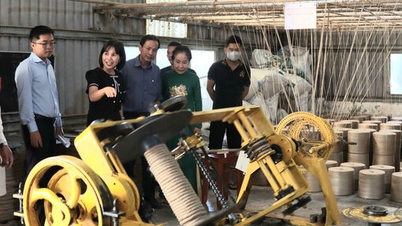
Along with dried beef, traditional cakes and jams are indispensable items on the tea table during the spring festival. At this time, many cake and jam production facilities in the province are busier than usual. At the Van Long business (Tan Tru commune), from morning to evening, the production area is always bustling with the sounds of machinery and the nimble hands of the workers.
Weighing the flour, pouring into molds, simmering the jam, packaging... each step is carried out urgently to meet the deadlines of the signed orders. The aroma of flour, malt, peanuts, ginger... spreads, evoking the atmosphere of Tet (Vietnamese New Year) approaching.




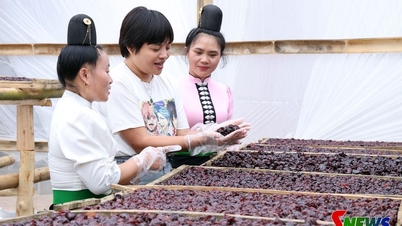
After simmering, the ginger jam is dried in a greenhouse at Van Long Business Household, ensuring hygiene and product quality.
According to the owner of Van Long business, Duong Thi Anh Tho, the facility started producing Tet (Lunar New Year) goods around the 8th lunar month, as in previous years. However, the market this year has been volatile. "The price of ginger has decreased compared to before, which helps reduce raw material costs somewhat, but labor costs have increased quite a bit, so production costs haven't decreased much," Ms. Tho shared.
Besides cost pressures, the volume of orders this year is equivalent to, or even lower than, previous years, so the business is balancing production. Currently, Van Long Household Business maintains a production plan of approximately 5 tons of ginger jam and 10 tons of flour for making printed cakes according to existing orders.
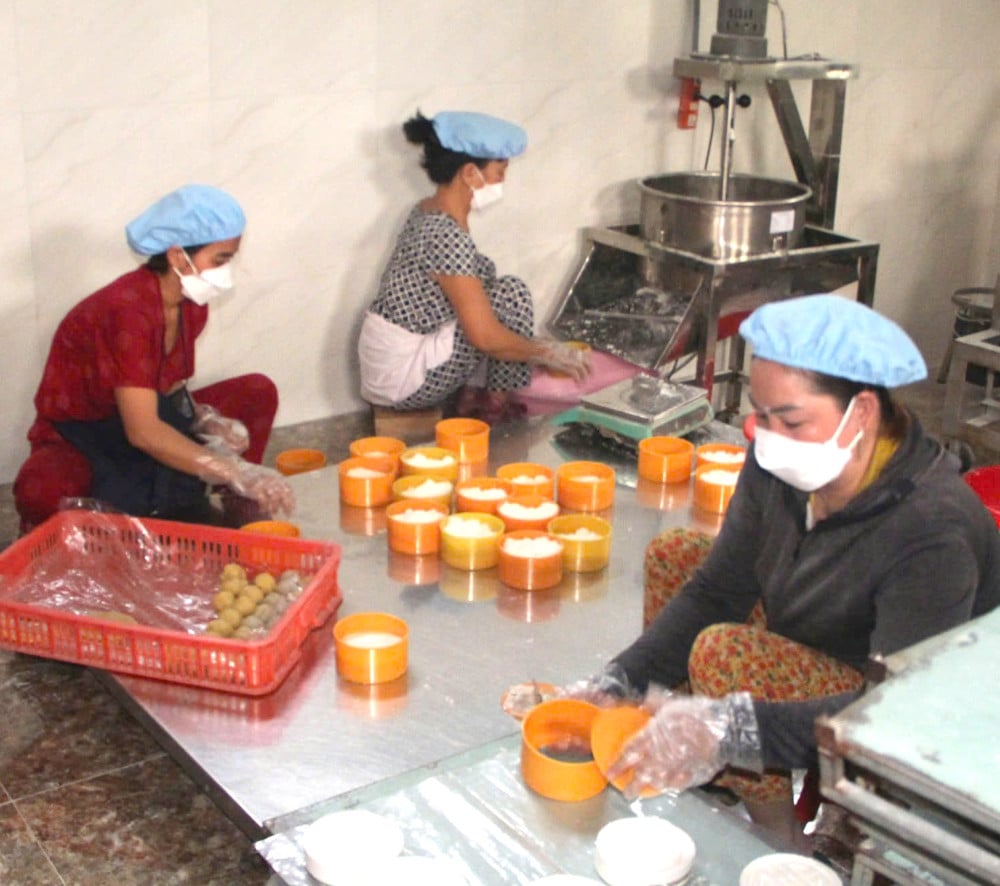
Van Long household business is busy making printed cakes to serve the Tet market.
Van Long's traditional Vietnamese cakes have been recognized as achieving OCOP (One Commune One Product) 3-star standard since July 2024. Participating in the OCOP program has helped the business gradually improve its designs and packaging, and expand its distribution channels. Currently, the business's cakes and jams are available on many e-commerce platforms, but according to Ms. Tho, purchasing power on these channels this year has not really picked up. "We are both producing and closely monitoring the market, hoping that purchasing power will increase in the days leading up to Tet (Lunar New Year)," Ms. Tho said.
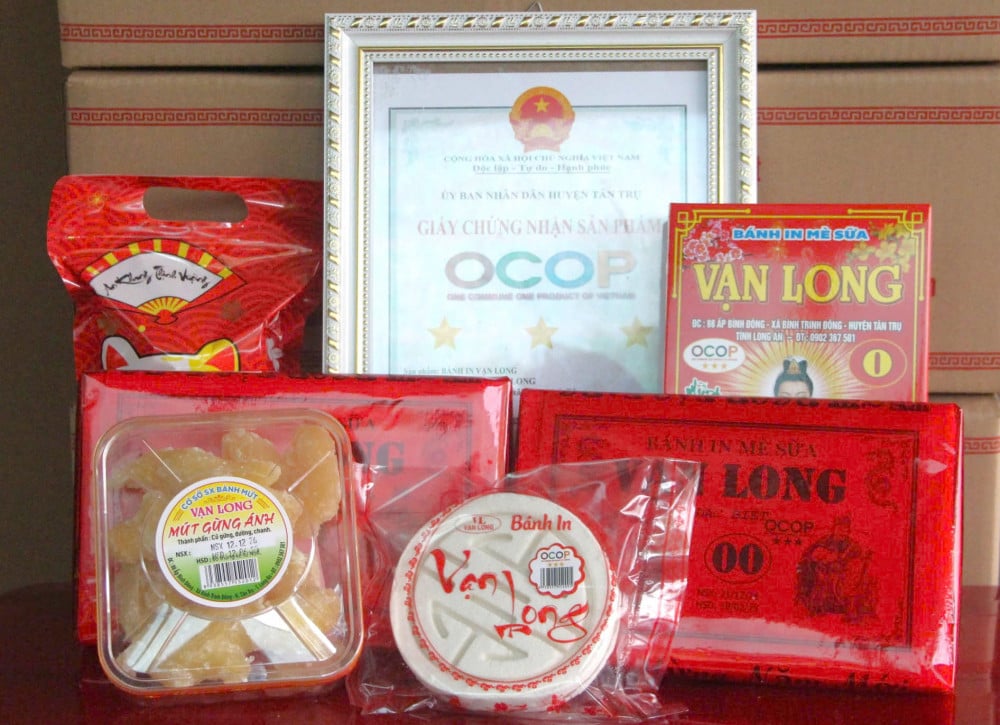
Van Long's printed cakes have been recognized as meeting OCOP 3-star standards, gradually establishing their brand in the market.
Amid fluctuating input costs and lower-than-expected purchasing power, many traditional bakeries and confectionery producers are still striving to maintain quality, flexibly adjust production, and seek additional distribution channels. For them, each batch of cakes and candies is not just a product but also a way to preserve the traditional flavors of Tet (Vietnamese Lunar New Year).
Tay Ninh shrimp salt - a rich flavor of Tet.
From a humble, traditional product, shrimp salt has become a distinctive brand of this sun-drenched region, favored by consumers both domestically and internationally. In the days leading up to Tet (Lunar New Year), the atmosphere at shrimp salt production facilities throughout the province is busier than usual. At the Thang Loi shrimp salt production facility (Chau Thanh commune), workers are busy from selecting raw materials to roasting, drying, and packaging to meet the increased order volume during the Tet holiday.

Workers at Thang Loi shrimp salt production facility dry salt indoors, ensuring even drying and food safety and hygiene (Photo: Provided by the facility).



According to Ms. Truong Thi Vu Vi, owner of Thang Loi Shrimp Salt Production Facility, the quality of raw materials is the key factor determining the product's flavor; from shrimp and chili to salt, everything must be carefully selected, ensuring freshness and cleanliness. The shrimp salt production process requires meticulous attention to detail at every stage. After mixing in the appropriate proportions, the mixture is roasted evenly to create its characteristic color and aroma.
“Currently, many processes are mechanized to increase productivity while ensuring food safety and hygiene requirements. However, the salt drying process still heavily depends on weather conditions. To proactively manage production, some facilities have invested in enclosed systems, which help the salt dry quickly, evenly, and reduce risks from rain and wind,” Ms. Vi said.
Thanks to a focus on quality and brand building, Tay Ninh shrimp salt products are expanding their market reach. The products are not only widely distributed domestically but also exported to several demanding markets. Being recognized as an OCOP product has further enhanced Tay Ninh shrimp salt's position and contributed to preserving this traditional craft.
In today's fast-paced, increasingly competitive market, traditional Tet specialties remain strong thanks to their authentic flavors, meticulous production, and consumer trust. These are not just dishes for the spring festival, but also cultural elements and memories of the traditional Tet holiday, preserved and passed down through generations.
Bui Tung
Source: https://baolongan.vn/dac-san-tet-hoi-ha-vao-mua-a209389.html