


A Tủa, I'm genuinely curious to know that you graduated with a Bachelor's degree in Economic Law, then returned to your hometown to work as the Deputy Head of the Commune Police, and are now the Vice Chairman of the Commune's Fatherland Front. What led you to become a "Tourism Ambassador" for your village?
- In 2017, after graduating with a degree in Economic Law from Hanoi Law University, I worked in the capital for a while with a relatively good salary. But following the call of my family, I decided to return to Phinh Ho.
In the highlands, earning a university degree is a great source of pride. Thanks to the support and assistance from the local authorities, I was entrusted with the position of Deputy Head of the Commune Police, and currently, I am the Vice Chairman of the Commune's Fatherland Front. During this time, I was fortunate to travel to many places like Ha Giang, Lai Chau, and Lao Cai, and I saw how successful the local people were in developing experiential and community-based tourism . Looking at Suoi Giang in Van Chan district, just near Phinh Ho, they have already done very well in tourism. I asked myself, why can't my hometown of Phinh Ho, with its potential and advantages, especially its treasure of 200 hectares of ancient Shan Tuyet tea trees, develop tourism? Could this be the reason why poverty has plagued my people from generation to generation?
From those concerns, I advised the commune leaders and also came up with many ideas for developing tourism in my hometown. However, because I am from a mountainous ethnic minority and have limited access to science and technology, for two or three years I struggled to find ways to develop experiential tourism but all my attempts failed.
Later, I started posting pictures of my hometown online to "guide" travel enthusiasts. Gradually, I explored how to create engaging short videos for social media. I even decided to go to Hanoi to learn how to make TikTok videos.
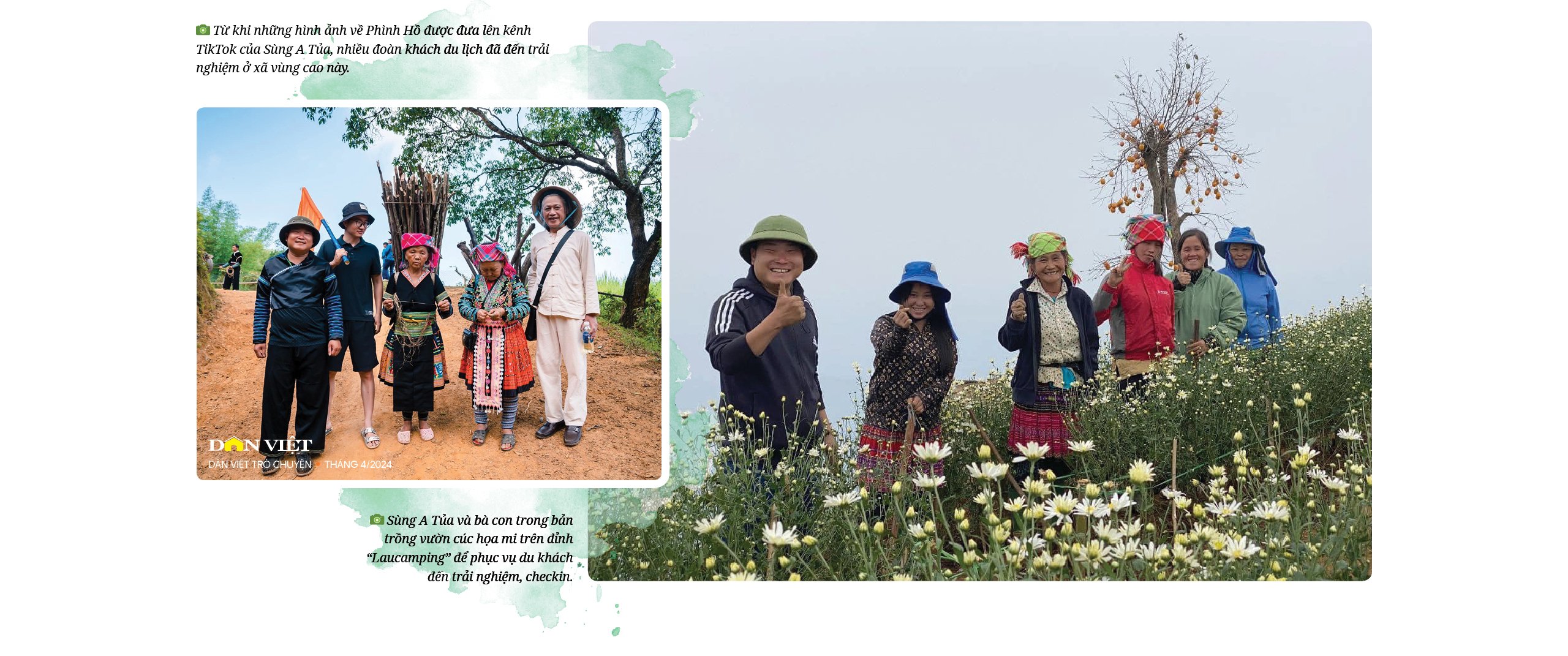
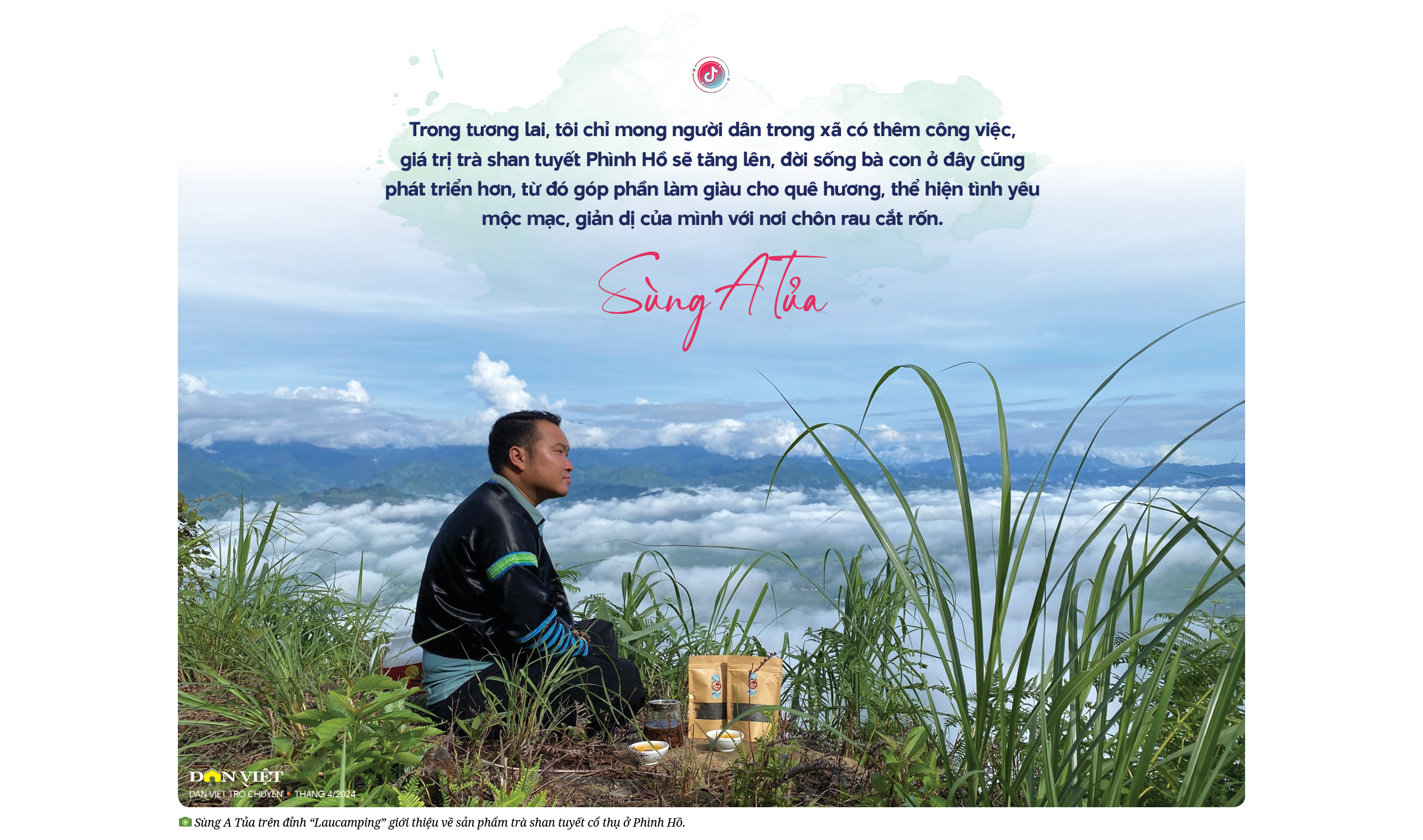
In 2023, I introduced and connected some friends in Yen Bai city to Phinh Ho to invest in tourism. With the approval of the authorities, after a period of construction, the "Laucamping" cloud-watching spot was established. This is considered a highlight whenever tourists visit Phinh Ho.
From the initial videos posted on the TikTok channel "A Tủa Phình Hồ," fortunately, they attracted many viewers and were well-received by everyone.
Perhaps what attracts so many viewers to Phinh Ho in general and Tram Tau district in particular is the authenticity, simplicity, and rustic charm in the videos, as well as the unique culture and natural scenery bestowed upon Phinh Ho by nature, which has garnered so many views.
Indeed, if I hadn't known about the TikTok channel "A Tủa Phình Hồ," I wouldn't have known that Yên Bái has such a breathtakingly beautiful tourist destination. Looking back a year ago, did A Tủa ever imagine that Phình Hồ would become so widely known throughout the country and attract thousands of tourists?
- Honestly, neither I nor the people of Phinh Ho could have imagined, even in our wildest dreams, the powerful impact of the videos I posted. Before, Phinh Ho was literally "immersed" in poverty and backwardness. But now, with increased awareness, Phinh Ho has welcomed many foreign and regional tourists who come to visit, travel, experience, and relax.
As you know, Phình Hồ is located at an altitude of 900-1,500m above sea level, covered in fog year-round. 90% of the population are ethnic Mong people, so the climate is cool all year round. From the cloud-watching spot, you can see the entire Mường Lò plain (Nghĩa Lộ town)... it has great potential, but the locals just didn't know how to promote it before.
A friend of mine in Tram Tau told me that a few decades ago, Phinh Ho was a land almost completely isolated from the outside world, plagued by poverty, backwardness, and steeped in opium smoke. Currently, the poverty rate has reached 80%, and many outdated customs still persist. Convincing the people to shift towards tourism must have been quite challenging for A Tua, right?
- It wasn't easy at all! As you know, the advantages and potential were there, but the people's awareness was still very backward. No one in Phình Hồ had ever started a tourism business before. At that time, when I called on everyone to participate, no one believed we could do it, so they didn't support me. Many people even resented me and avoided me when I came to persuade them. But that's how the people in the highlands are; they are very honest. If we succeed, they see it and change their perception very quickly, but if we fail, we are considered a boastful person, a deceiver of the village.
Despite those who disagreed, I still received support from some people, including the Party Secretary of the commune, and especially my family, my wife and children, who always trusted me. Through hard work and effort, from a place with "four lacks" (no roads, no electricity, no water, no internet), "Laucamping" now has roads, electricity, water, and internet, becoming one of the most attractive cloud-watching spots in the North.
Since the "Laucamping" cloud-watching spot opened on April 30th last year, Phinh Ho has become more well-known. Most importantly, tourists come here not only to watch the clouds, but also to experience the life of the Mong people, explore their culture and cuisine… thereby creating sustainable livelihoods for the local people. This is the greatest joy I have been able to achieve for my people so far.
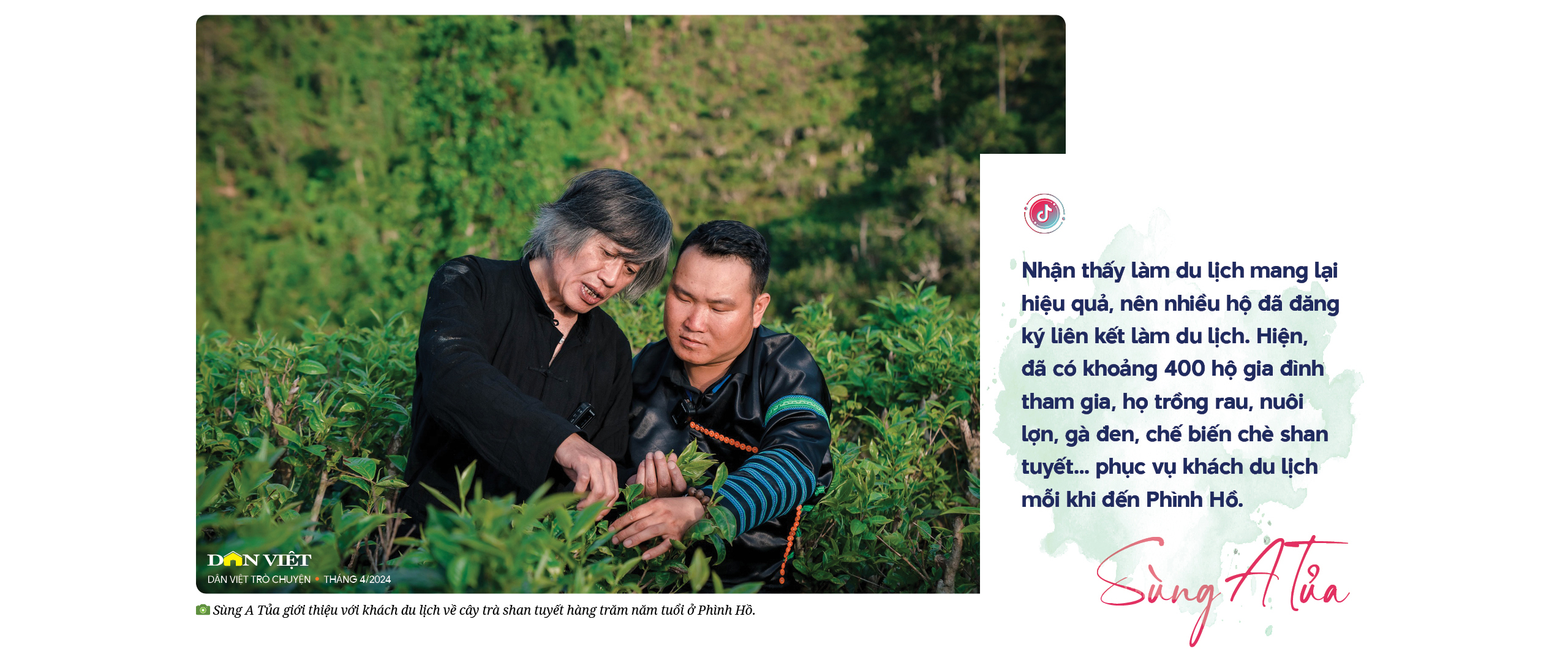
Recognizing the benefits of tourism, many households have registered to participate in tourism-related activities. Currently, about 400 families are involved, growing vegetables, raising pigs and black chickens, processing Shan Tuyet tea, etc., to serve tourists whenever they visit Phinh Ho.
As both a local official and a tourism ambassador, how does A Tủa balance his time to excel in both roles?
- Besides the mandatory office hours on Mondays and Thursdays, I spend the rest of my time traveling to villages, learning about and talking with the people, understanding their thoughts and aspirations, and then advising my superiors.
In addition, my friends and I at "Laucamping" also spend time promoting Shan Tuyet tea, a local specialty, seeking out more markets, and finding stable outlets for tea growers and agricultural products for the local people.

Most comments on A Tủa's TikTok channel are mostly praise for Phình Hồ, the local people, and even you, but I also see quite a few people saying things like: "Always showing off that you're a local official," or "using the image of 103-year-old Sùng Sấu Cua to promote yourself." What does A Tủa say about these comments?
- I think that once you post an image on social media, there will be people who praise it, but it's also difficult to avoid frank comments or criticism. But as a local official in a mountainous area, I only want to use my reputation to affirm that the images of my homeland are authentic and fully capture the potential that Phinh Ho has to offer to everyone.
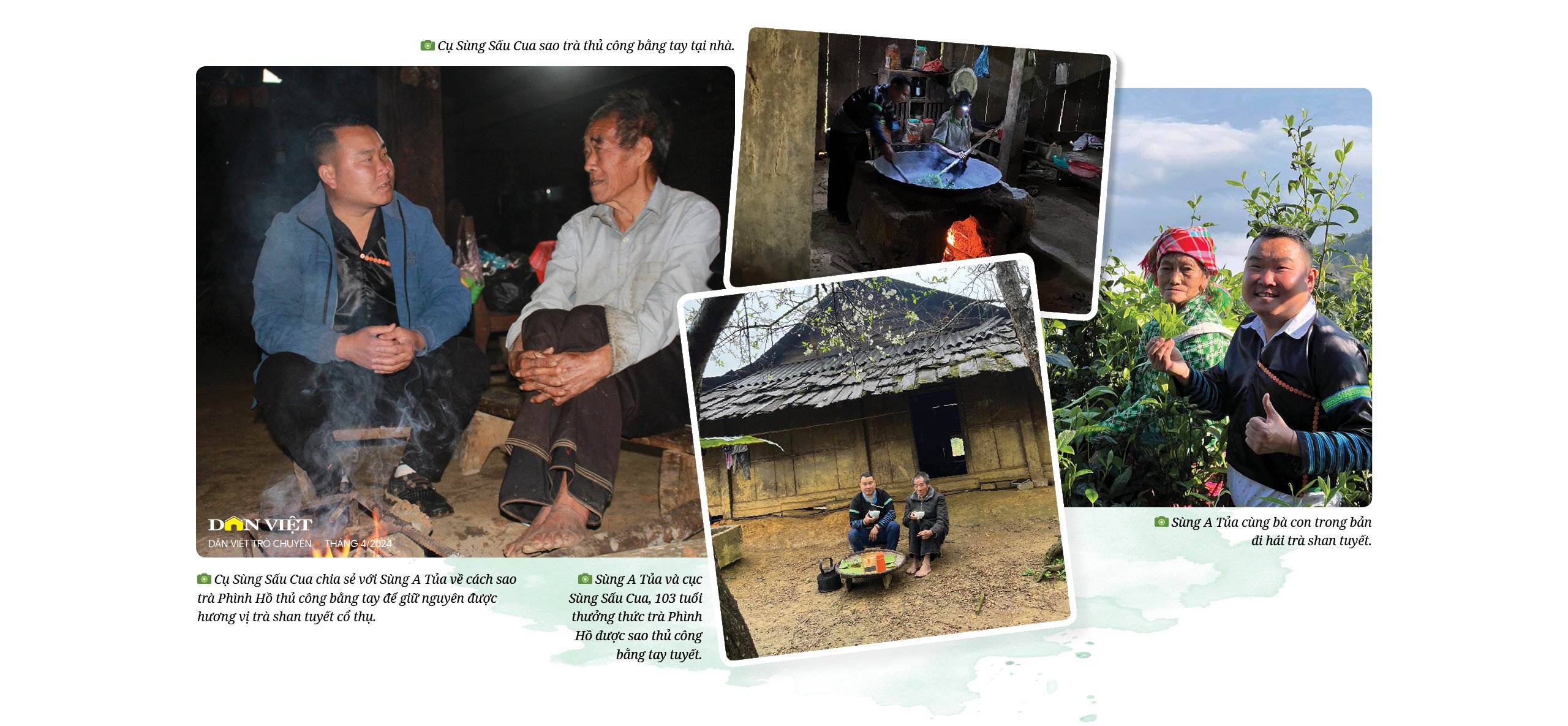
As for the claim that I'm "borrowing the image of 103-year-old Mr. Sung Sau Cua to promote myself," that's completely untrue. In Phinh Ho, everyone, from adults to children, knows that he is the person with the longest history of cultivating Shan Tuyet tea. He understands the value and the ups and downs that the tea has gone through. Therefore, the people of Phinh Ho always consider him a century-old witness preserving the soul of Shan Tuyet tea. In particular, his method of roasting tea by hand in a still-hot pan produces an exquisite tea. Therefore, to spread the image of ancient tea trees and the centuries-old Shan Tuyet tea processing method to everyone, no one else but Mr. Sung Sau Cua is the one to do it. If this spreads widely and is well-received, the tea-growing households will benefit.
Speaking of Mr. Sung Sau Cua and the centuries-old Shan Tuyet tea trees, it seems that tea plants have become as deeply ingrained in the lives of the people of Phinh Ho as blood and flesh?
- Shan Tuyet tea plants grow in high mountains, surrounded by mist year-round, and enjoy a mild climate, allowing them to develop completely naturally. They absorb the finest elements of nature, resulting in a unique flavor unlike anywhere else. And Mr. Sung Sau Cua is a symbol of the enduring existence of tea plants in Phinh Ho.
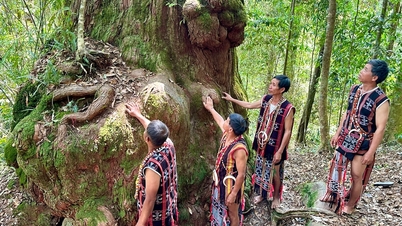
Grandpa Cua recounted to me that ever since he learned to hold a whip to chase buffaloes for grazing, he had seen the Shan Tuyet tea trees growing lush and green all over the hillsides. Noticing that these trees had large trunks, bark resembling white mold, and reached heights of tens of meters with wide canopies, the locals preserved them to prevent soil erosion. The tea leaves, when brewed into a tea, were refreshing to drink, so households encouraged each other to collect them for daily use, without anyone knowing their true value.
When the French occupied Yen Bai, recognizing that the seemingly wild tea plants were actually a wonderful gift from nature, the French officials instructed their secretaries (Vietnamese translators) to go into each village and buy up all the dried tea leaves from the people at a price of 1 hao/kg or in exchange for rice and salt.
Peace was restored, but hunger and poverty still plagued Phinh Ho. The Shan Tuyet tea trees witnessed it all, spreading their branches wide, forming a solid support system for the people of Phinh Ho to cling to, helping each other through every hardship.
Back then, Mr. Cua and the young men of the village would trek up the mountain every day from dawn, carrying torches and baskets, to pick tea leaves. Each of them would compete to carry large bundles of firewood back to use as fuel for roasting the tea. Once the tea was ready, they would quickly pack up and cross mountains and forests to bring it down to Nghia Lo town to sell to the Thai people or exchange it for rice, salt, etc., to take back home. In those days, there were no scales, so the tea was packed into small bundles according to an estimate, and buyers would pay an equivalent amount of rice and salt based on that estimate. Later, the price was converted to 5 hào/kg (for dried tea).
Having been closely associated with the ancient Shan Tuyet tea trees for generations, most people in Phinh Ho cultivate, care for, and protect them as an important family asset. Some households have a few trees, others dozens, and some even have hundreds. From generation to generation, these ancient Shan Tuyet tea trees have become a sustainable source of livelihood for the people.
The entire commune currently has 200 hectares of Shan Tuyet tea, with 300,000 trees hundreds of years old, concentrated in the villages of Ta Chu, Phinh Ho, and Chi Lu. The tea here is clean and safe because the farmers do not use chemical fertilizers or pesticides. Thanks to the unique natural conditions, the Shan Tuyet tea with the Phinh Ho geographical indication has distinctive characteristics: the green tea leaves are large, uniform, tightly curled, revealing the "snow" (a symbol of snow), and have a strong, characteristic aroma.
Currently, in Phình Hồ, a cooperative producing Shan Tuyet tea has been established with 11 households, setting out a strict production process and supplying products to local tourists. With the current selling price of fresh tea buds at 25,000 VND/kg, Shan Tuyet tea is the main source of income, creating jobs and providing income for nearly 200 households in the commune.
So what about the way Grandpa Sun Sau Cua roasts Shan Tuyet tea by hand in a sizzling hot pan? Just hearing about it already sounds like a fascinating story, doesn't it, A Tua?
- Yes, that's right. My grandfather still shares with the younger generation in Phình Hồ that to get high-quality Shan Tuyet tea buds, you have to climb to the very top of the towering trees and meticulously select each bud to pick. The fresh tea leaves, whether a lot or a little, must be roasted immediately because if left for too long, they will wilt and turn sour. The roasting process requires extreme calmness, ensuring sufficient time and almost absolute precision. The firewood used for roasting must be from sturdy trees; cypress wood should not be used because the wood's smell will spoil the tea's flavor. In addition, avoid letting plastic wrappers or packaging fall into the stove, as this will create a burning smell during the roasting process.
Each type of finished tea has a different processing method. Black tea, upon arrival, must have its fresh leaves wilted before being rolled, fermented overnight, and then roasted. White tea uses only young buds covered with a layer of white downy hairs; the processing is slow and unrolled, because if wilted and dried in conditions that are too hot, the tea will turn red, while in conditions that are too cold, it will turn black…
Each person has their own secret stir-frying technique, but Grandpa Cua's method is very special; typically, a batch takes 3 to 4 hours to stir-fry. Initially, the fire is strong, but once the cast-iron pan is hot, only the heat from the charcoal is used. A technique he still passes on to his children is that when the temperature of the cast-iron pan is difficult to estimate, it's based on the burning rate of the firewood. This means that the firewood is cut to the same size, and the tea is added and stirred as soon as the firewood burns, and the same process is followed in subsequent batches.

Standing at "Laucamping"—the highest point of Phinh Ho—what impressed me wasn't the Muong Lo rice fields or the cloudy sky, but rather the allure of the "Market in the Clouds" and the daisy garden. Where did A Tua get this idea from?
- In the early days of "Laucamping," when we welcomed our first groups of tourists, their sole desire was to chase the clouds. But clouds aren't always available; it depends on the weather. Therefore, to encourage tourists to stay longer and understand the culture of the highland people better, we decided to hold a market on weekends. There, you can find local specialties and agricultural products. Indeed, after the "market in the clouds" opened, the number of tourists visiting Phinh Ho increased significantly, and they stayed longer. As for the daisy garden, it's the result of the hard work of many villagers. After two months of planting, the daisies bloomed, creating a beautiful and romantic scene right next to the floating sea of clouds, making it an ideal check-in spot.
Given the value that tourism has brought to the people of Phình Hồ, what are A Tủa's thoughts on his journey so far?
- This achievement is the result of the contributions of all the people in Phinh Ho, not just one person contributing more or less. Everyone's small contribution has led to today's success.
Over the past year, Phình Hồ has become known to many people both domestically and internationally. Looking back, I feel that I still have a long way to go and much more to strive for. Without the local people, "Laucamping" would hardly be able to exist. Therefore, collaborating with the local people in tourism is extremely important, a matter of survival. And I am still very impressed by the quote from billionaire Warren Buffett, "If you want to go fast, go alone; if you want to go far, go together." This serves as motivation for me and the local people to strive even harder in the coming time.

I know that in many parts of Northwest Vietnam, quite a few young people are also involved in tourism. To choose a unique path, what preparations have A Tủa and the people of Phình Hồ made for the coming days?
- This is something I and the locals have also thought about. Not everyone who engages in tourism succeeds, and part of the failure is due to similar approaches, a lack of unique features, and tourists may visit once but never return. As you know, Tram Tau doesn't just have Phinh Ho; it also has many other tourist attractions such as Cu Vai, Ta Chi Nhu (Xa Ho commune), Ta Xua (Ban Cong commune), hot springs (Hat Luu), Hang De Cho waterfall (Lang Nhi commune)... Therefore, in the near future, we will organize a partnership with these tourist destinations to create a tour, and Phinh Ho will be one of the attractions when visiting Tram Tau.
At the same time, we will continue to promote the cultural identity of the local people as well as the Phinh Ho Shan Tuyet tea brand to a wider audience of tourists and people nationwide, thereby creating sustainable livelihoods. In addition, we will also collaborate with event organizers and connect with singers and celebrities to organize music nights right at "Laucamping".
A Tủa is now a TikTok celebrity with her channel "A Tủa Phình Hồ" boasting over 200,000 followers. What will you do to spread healthy ways of making TikTok videos, sharing inspiring stories and beautiful images with even more people?
- Along with popular social networks like Facebook, YouTube, and Instagram, TikTok has become a potential platform for young people to explore, promote, and showcase the beauty of their ethnic and regional cultures. However, to become a "TikToker" who spreads positive values, the creative content on TikTok must be truly diverse and unique. To promote the image of my hometown, as well as the culture and cuisine of the highlands, I alone would be too small a task. Therefore, over the past time, I have guided many young people in Tram Tau to create TikTok channels and other social media platforms.
I believe that the culture of ethnic minorities always contains beautiful values. If these values are not promoted, they will lack reach and gradually fade away. Not everyone has the opportunity to travel to remote areas to learn about the culture of these communities. Therefore, creating promotional videos like this will help people, even just browsing on their phones, to understand something about the culture and life in the highlands, creating a connection between ethnic communities. Furthermore, it will help bring the culture of Vietnamese ethnic minorities to the international community.
Recently, I've had the honor of participating in many programs promoting tourism on digital platforms. There, I've met many famous TikTokers from across the country and learned a great deal from them. Recently, I was also invited to participate in the Youth Voice Forum – Action of the Youth Union, organized by the Central Committee of the Ho Chi Minh Communist Youth Union, to share my experience on creating TikTok content and to introduce and promote tourism, as well as the Shan Tuyet tea specialty of Yen Bai, to youth union members nationwide. I hope that my small contributions will inspire many young people, spreading positive energy through social media platforms.
Thank you for sharing, A Tủa!
Source

![[Photo] Prime Minister Pham Minh Chinh receives the Chinese Ambassador to Vietnam](https://vphoto.vietnam.vn/thumb/1200x675/vietnam/resource/IMAGE/2026/04/05/1775397481797_ndo_br_dsc-5512-jpg.webp)

































































Comment (0)