Switch crops, reduce water usage.
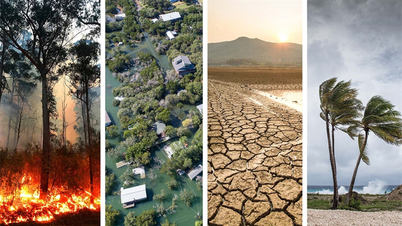
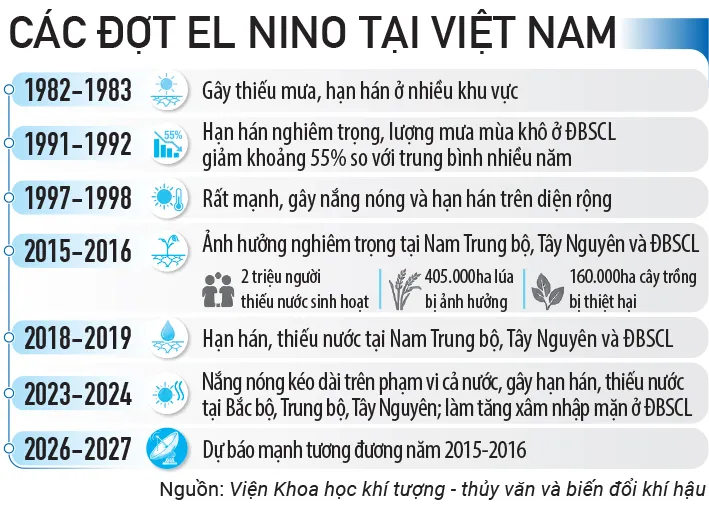
In early June 2026, the central region of Vietnam was wracked by intense heatwaves. In many areas, outdoor temperatures exceeded 40 ° C, causing cracked fields, a constant risk of forest fires, and a surge in hospitalizations due to weather-related illnesses. Amidst the increasingly severe pressure of El Nino, many localities are urgently seeking ways to conserve water, combat drought, and prevent saltwater intrusion.
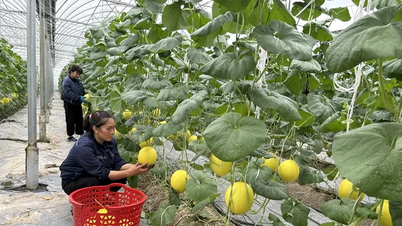
Under the scorching sun, Ms. Le Thi Minh, from Bac Van village, Dong Tien commune ( Ha Tinh province), and her family members are busy installing an automatic irrigation system with pumps, pipes, and sprinklers for over 5 hectares of watermelons. “After reading the news and watching TV and seeing experts warn of El Nino causing severe drought until mid-2027, my family decided to dig a pond to store water and install an automatic irrigation system for our watermelon fields. This technological solution saves water, ensures consistent moisture for the plants, and protects the health of family members by reducing outdoor work time,” Ms. Minh shared.
Besides concerns about water shortages for daily life and agricultural production, millions of households in the Mekong Delta face the risk of landslides as El Nino's development becomes more complex. To respond, on June 25th, the People's Committees of Ca Mau and Dong Thap provinces directed their Departments of Agriculture and Environment to coordinate with local authorities to review and compile statistics on households living in high-risk landslide areas, and to promptly develop plans to relocate people and property to safe locations, especially in the two freshwater areas of Tran Van Thoi and Go Cong. Simultaneously, they assessed the level and risk for each area, road, and location, and proposed funding for upgrading infrastructure, roads, and embankments to prevent landslides.
Along with applying technology in crop care, many localities in Central Vietnam are also changing their production structure to adapt to climate change. Mr. Phan Van Huan, Head of the Crop Production Department, Sub-Department of Crop Production and Livestock of Ha Tinh province, said that, facing the risk of irrigation water shortage due to El Nino, the locality has just converted about 289 hectares of summer-autumn rice land to growing vegetables and other crops. Similarly, the agricultural sector of Nghe An province has also converted 1,000 hectares of rice land to growing corn, peanuts, watermelons, etc., to reduce the risks arising from the upcoming severe dry season.
Urgent upgrade of irrigation system.
In Dong Thap province, the Go Cong freshwater zone is the most vulnerable area, predicted to face severe water shortages for domestic use and agricultural production when El Nino develops and droughts persist.


In response, Ms. Nguyen Thi My Hung, Head of the Rural Development Sub-Department, Department of Agriculture and Environment of Dong Thap province, said that the province is urgently investing in a project to transfer freshwater through the Cho Gao canal. Currently, the locality is implementing many items of the project. These include dredging approximately 40km of main water transfer canals, including the Nguyen Tan Thanh canal, Phu Chung - Ben Chua canal, Bao Dinh river, Hoc Dung canal, Ba Ngot canal, Go Cat canal, Ong Van canal, etc. In addition, a system of water pipes with a diameter of 2-2.5m is being installed to carry water through the Cho Gao canal, along with a booster pump station with a capacity of 15-20m³ /second; and dredging of longitudinal and transverse channels and low-lying areas to transfer and store water for the Go Cong freshwater project area.
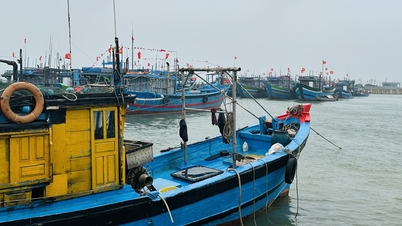
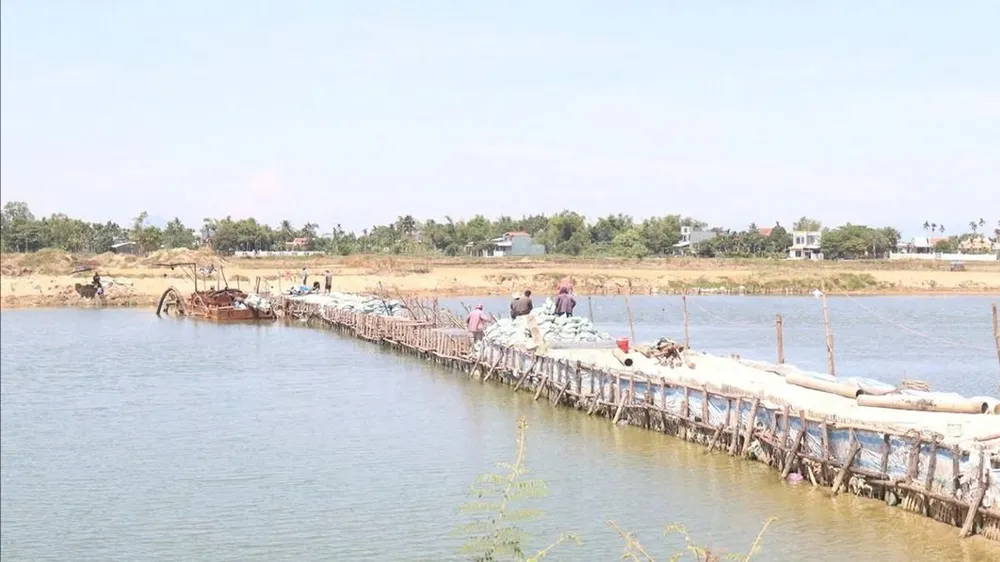
In Da Nang City, irrigation units are also racing to implement various solutions to combat saltwater intrusion, including the construction of a temporary dam on the Vinh Dien River, approximately 105 meters long, at a cost of 2.6 billion VND. Mr. Le Thanh Long, Vice Chairman of the People's Committee of Dien Ban Dong Ward, stated that without this saltwater barrier dam, over 2,000 hectares of summer-autumn rice crops would be affected, and more than 40,000 households using water from the Vinh Dien Water Treatment Plant would face the risk of water shortages. Given the complex developments of El Nino, from March 2026, the Chairman of the People's Committee of Da Nang City has directed relevant departments to closely monitor water resources, regulate reservoirs appropriately, prioritize water supply to downstream areas, upgrade rural water supply infrastructure, and develop mobile water supply plans.
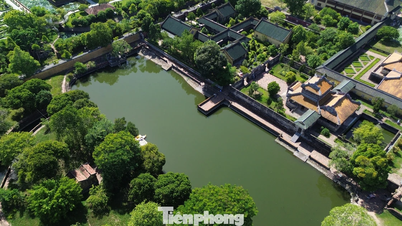
Similarly, in Hue City, the Thao Long dam at the downstream end of the Perfume River – an effective "shield" against saltwater intrusion and preserving freshwater – has been deteriorating for many years. To protect thousands of hectares of rice and vegetable crops, and to provide drinking water for hundreds of thousands of households in Hoa Chau, Phu Xuan, Thuan Hoa, and Duong No wards, amidst the complex El Nino phenomenon, Mr. Truong Van Giang, Director of the Hue City Agricultural and Rural Development Investment Project Management Board, stated that the Ministry of Agriculture and Environment has approved an urgent repair project for the Thao Long dam with a budget of 349 billion VND.
In Lam Dong province, there are currently over 25,000 hectares of dragon fruit. This crop is heavily dependent on irrigation water. Given the complex El Nino phenomenon, the Lam Dong Provincial Department of Agriculture and Environment is reviewing water resources in reservoirs and proactively accumulating water from various sources to ensure supply during periods of severe drought. Simultaneously, the agricultural sector and local authorities are supporting and facilitating farmers to invest in drip irrigation systems and mulching to retain moisture.
- Dr. Phan Viet Ha, Deputy Director in charge of the Western Highlands Institute of Agricultural and Forestry Science and Technology:
In the Central Highlands, this year's rains have arrived late, and rainfall is currently lower than in previous years. This reality affects the growth, development, and yield of many crops. To minimize the impact of extreme weather, people need to develop sustainable agricultural farming models, develop agroforestry systems, and practice intercropping to protect the orchard ecosystem. Along with that, it is necessary to apply water-saving irrigation technologies, increase water storage, and efficiently utilize irrigation water resources in drought and water shortage conditions caused by El Nino.
- Dr. Le Anh Tuan, former Deputy Director of the Institute for Climate Change Research (now the Mekong Institute, Can Tho University):



The Mekong Delta needs to take advantage of the remaining time before the dry season to proactively respond to the strengthening El Nino phenomenon. The immediate priority is to increase the capacity to store water for domestic use and production. From now until the end of the rainy season, we must find ways to store as much water as possible. Water storage needs to be implemented at multiple levels, from local infrastructure systems to individual households through ponds, reservoirs, water bags, or concrete ponds.
Local authorities are reconsidering the expansion of rice cultivation in areas frequently affected by drought and salinity. Expanding rice cultivation should be avoided, as it is a water-intensive crop with low economic returns. Given the risk of water shortages, priority should be given to domestic water supply before considering production. Coastal water treatment plants must proactively develop plans to bring raw water from upstream for treatment and supply to the population. Simultaneously, solutions for treating brackish water to produce fresh water should be prepared to cope with severe water scarcity.
For people in coastal areas, it is necessary to proactively adjust production plans now. Specifically, for crops that require a lot of water, consider reducing or switching to models suitable for the available water resources. Local authorities should boldly reduce the area of rice cultivation in areas frequently affected by drought and salinity. Reducing from three rice crops to two, or even one, per year will not affect food security but will help reduce pressure on water resources. Besides water and production solutions, localities should strengthen the promotion of water conservation, support people in transitioning to livelihoods suitable for drought and salinity conditions, and proactively develop plans for forest fire prevention.
Source: https://www.sggp.org.vn/dam-bao-nuoc-sinh-hoat-san-xuat-post859194.html