


Meticulous preparation in every step.
Immediately after the Central Committee issued the directives, the province promptly organized a conference to disseminate and implement them to localities and units. The Provincial Election Committee was established on time, assigning specific tasks to each member; at the same time, it directed the establishment of commune-level election committees in accordance with regulations. By February 28, 2026, 100% of administrative units in the province had completed the establishment of election-related organizations, issued working regulations, and developed detailed plans for each timeframe.
 |
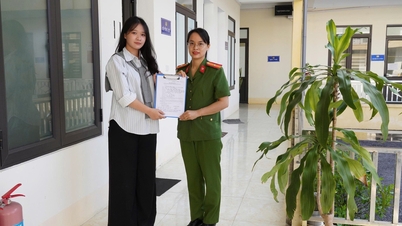
| Leaders of Tan Quang commune inspect the posting of voter lists by electoral unit in the area. |
The consultation process was implemented rigorously and democratically, ensuring the correct composition, structure, and number of candidates as guided by the Central Committee. The Standing Committee of the Vietnam Fatherland Front at all levels chaired the third consultation conference to reach consensus on the structure, composition, and number of candidates nominated for the National Assembly and People's Councils at all levels. The consultation process was conducted openly and transparently, promoting the role of member organizations and creating a high level of consensus.
To ensure the election was conducted safely and legally, the Provincial Election Committee focused on reviewing, compiling, and posting voter lists in accordance with regulations. Communes and wards organized the review of population changes, updating information promptly to minimize errors. Under the close guidance of the Provincial Election Committee, the coordination between all levels and sectors in the province created a unified process. As of February 28th, the voter list compilation was completed and publicly posted for citizens to check and verify; according to statistics, there are over 1.28 million voters in the province. Polling stations were scientifically arranged at village cultural centers, residential areas, and schools to ensure the most convenient access for citizens to exercise their right to self-governance.
Public awareness campaigns were intensified through various diverse methods. The Department of Internal Affairs organized training courses on election procedures for key officials from the provincial to the grassroots level.
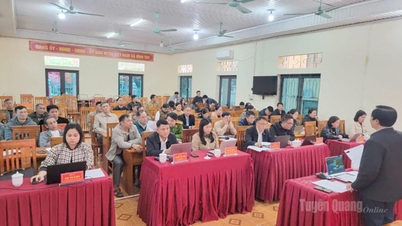
During meetings of the Logistics Subcommittee, serving the election of National Assembly deputies for the 16th term and People's Council representatives at all levels for the 2026-2031 term, Comrade Nguyen Manh Tuan, Member of the Standing Committee of the Provincial Party Committee, Permanent Vice Chairman of the Provincial People's Committee, and Head of the Logistics Subcommittee, emphasized that logistics work is a task that requires meticulous, careful, and thorough preparation and optimal contingency plans throughout the election process.
Given the province's large geographical area, complex terrain in many regions, and the significant workload, the comrade requested that relevant departments, localities, and units coordinate closely and proactively develop contingency plans for areas without electricity or with poor telephone coverage. Attention should be paid to the arrangement of generators and appropriate communication equipment to ensure uninterrupted communication and reporting of election progress under all circumstances. Simultaneously, comprehensive plans should be prepared to ensure the safety of transporting documents and ballot boxes, maintain security and order, provide healthcare, ensure food safety and hygiene, and prevent natural disasters and epidemics during the election period.
Promoting democracy
One of the key requirements of the election is the selection of truly outstanding representatives in terms of character and competence, representing the will and aspirations of the people. Therefore, the election committees at all levels in the province place special emphasis on nominating candidates who meet the standards stipulated in the Law on the Organization of the National Assembly and the Law on the Organization of Local Government. Agencies, units, and localities throughout the province have organized conferences to nominate candidates in accordance with the correct procedures. The process of gathering opinions and feedback from voters at their workplaces and places of residence is conducted openly, democratically, and objectively. After the third consultative conference, the province has 18 candidates for the National Assembly, of which 10 will be elected; 101 candidates for the Provincial People's Council, of which 62 will be elected; and 4,251 candidates for the commune-level People's Councils, of which 2,532 will be elected. Currently, National Assembly deputies and provincial People's Council representatives have drawn up specific plans for the election campaign.
According to the Provincial Election Committee's assessment, as of February 28, 2026, all steps in the election process throughout the province are progressing according to plan. The atmosphere of preparation for election day is spreading from urban to rural areas, from well-developed regions to remote areas. People of all ethnic groups in the province express their confidence in the Party's leadership and their desire to elect worthy representatives who will contribute to the development of their homeland.
With thorough, responsible, and coordinated preparation, we are confident that the election of deputies to the 16th National Assembly and representatives to the People's Councils at all levels for the 2026-2031 term in Tuyen Quang province will be a great success, contributing to strengthening the people's trust in the Party and the State, and creating new momentum for the sustainable development of the province in the coming period.
Text and photos: Hoang Ngoc
Source: https://baotuyenquang.com.vn/thoi-su-chinh-polit/tin-tuc/202603/dam-bao-tien-do-dung-luat-c634186/
![[Image] Current situation of houses precariously balanced due to road leveling in Dong Nai.](https://vphoto.vietnam.vn/thumb/1200x675/vietnam/resource/IMAGE/2026/03/02/1772455749144_ndo_br_z7579763955585-6e80a60471e75768fa835d035eba45ea-6979-jpg.webp)
































































Comment (0)