

After Cape Verde caused a sensation in their debut at the 2026 World Cup , the "Blue Sharks" were often compared to Iceland. However, this comparison is mainly based on... population. Iceland has a population of just over 400,000, while Cape Verde has approximately 530,000.
In the field of football education, Iceland and Cape Verde present two completely different stories. In total, Iceland has over 21,000 registered players and 800 UEFA-certified coaches, achieving a ratio of 1 professional coach for every 600 inhabitants, compared to only 1 in 11,000 in England. With this high ratio of professional coaches, Icelandic young talents have access to professional coaches from the age of 5-6. Currently, there are 179 standard football pitches throughout Iceland.
 |
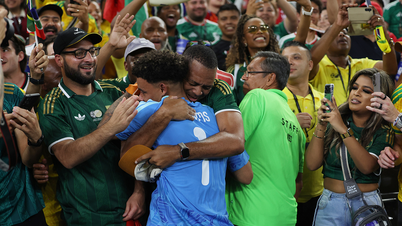
Cape Verde players celebrate after their draw against Spain. Photo: AP |
In terms of achievements, in 2016, Iceland participated in the European Championship and caused a major sensation by reaching the quarter-finals. In 2018, the only time to date, Iceland participated in the World Cup finals, causing a major upset by drawing 1-1 with Argentina. Although the "Ice Island" players were eliminated in the group stage (losing two matches against Nigeria and Croatia), they managed to leave their mark with a remarkable feat: the national team with the smallest population in the world participated in the World Cup finals and scored one goal and earned one point against one of the most successful teams in the world.
Returning to Cape Verde, in terms of football infrastructure, this small island nation lacks a large professional league and modern stadiums. The national team coach, Bubista, doesn't have a data analysis lab or a state-of-the-art training center. The "Blue Sharks'" most significant achievement internationally was reaching the quarter-finals of the 2013 Africa Cup of Nations.


Before the 2026 World Cup finals began, the "Blue Sharks" were just an unfamiliar name, a mere "stepping stone." Then, in just 90 minutes, Cape Verde stunned the world.
However, that miracle didn't fall from the sky. It was the sweet fruit of a powerful dream and the right course of action.
The moment the "Blue Sharks" defeated Eswatini, securing their ticket to the biggest sporting event on the planet, the President of Cape Verde sent his congratulations: "You have achieved what every generation dreams of. You have shown the world that from the blue ocean, it is still possible to reach for the sky."
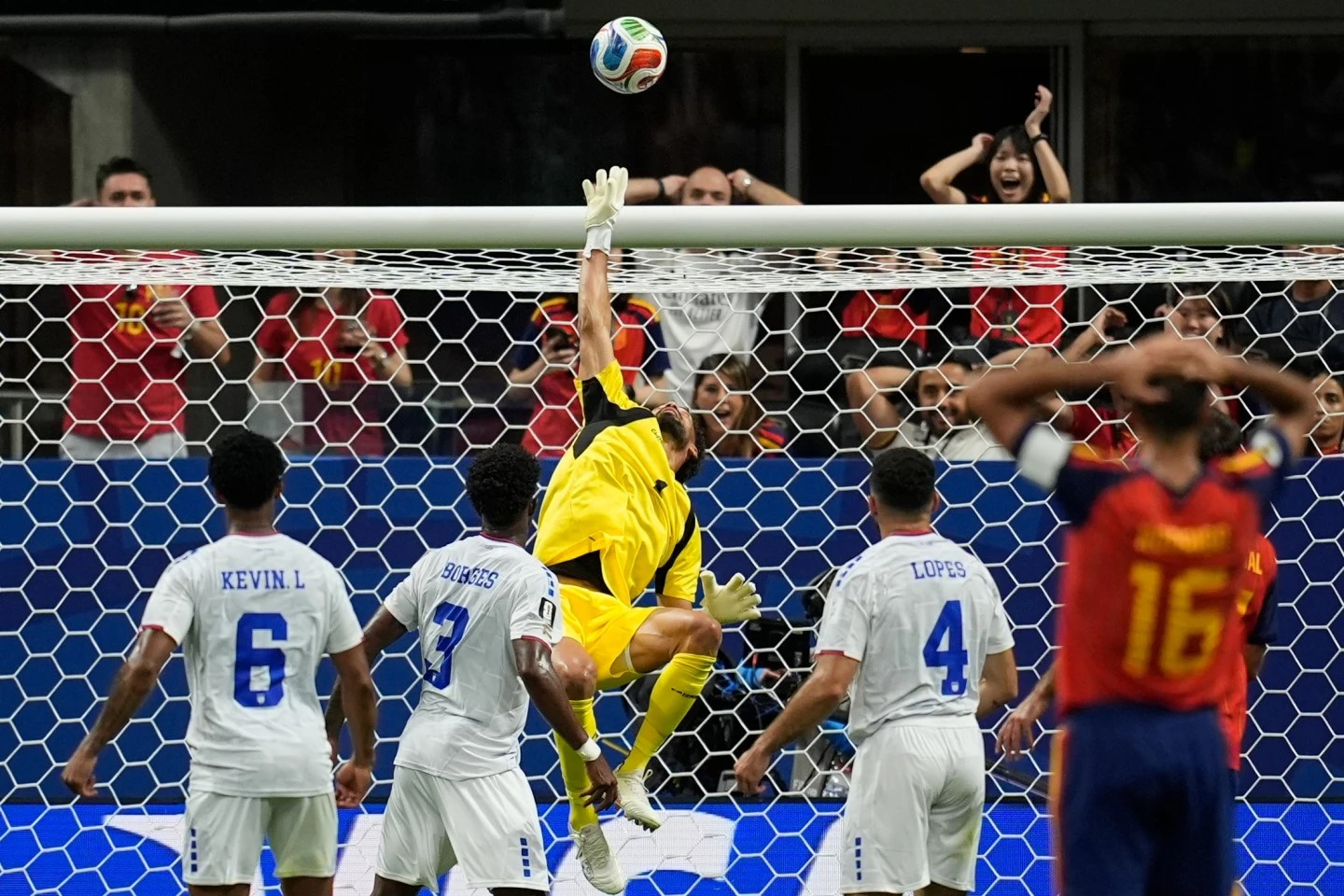 |
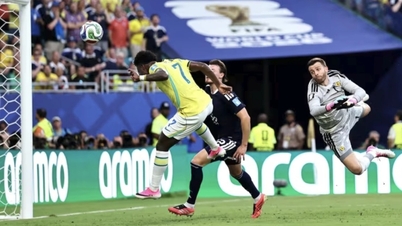
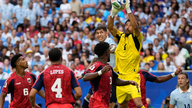
| Cape Verde goalkeeper Vozinha makes a crucial save in the draw against Spain. Photo: AP |
From the President to every barefoot boy on the streets of Cape Verde, everyone dreams of the day the "Blue Sharks" will dominate the World Cup. To realize that dream, in 2005, Cape Verde built its first National Sports Academy, opening the door for underprivileged children to access football. The academy is a place for discovering, training, and connecting many players from impoverished backgrounds to Portugal – a country that once colonized Cape Verde – to study professional football. In the campaign to qualify for the 2026 World Cup finals, Coach Bubista traveled across Europe to persuade players of Cape Verdean origin to train at top academies and contribute to their homeland.
Through persistent effort, the Cape Verde Football Federation and coach Bubista built a national team that combined the tactical thinking and discipline of European football with the physical prowess and explosive speed of African blood. While no individual player stood out, the entire "Blue Sharks" knew exactly what to do. This created a "wise collective," something many major African teams still lack. This was evident in their match against Spain, where the "Blue Sharks" played tenaciously and aggressively. The players pressed tirelessly, effectively neutralizing the opponent's key players.

Having secured one point against a strong contender for the 2026 World Cup title, the "Blue Sharks" have every right to dream. Especially since, under the new format, there will be eight additional opportunities to advance to the knockout round for the third-placed teams in their group. Another draw against Uruguay on June 22nd would open up a wide door for the "Blue Sharks" to progress further.
Source: https://www.qdnd.vn/the-thao/worldcup-2026/dam-mo-va-biet-hanh-dong-1045284
![[Image] Schools organize meetings and introduce teaching models to students admitted to grade 10.](https://vphoto.vietnam.vn/thumb/1200x675/vietnam/resource/IMAGE/2026/06/25/1782368077271_ndo_br_z7970052192242-1ec8daeb77a6eed1a4e9f58c564ddd3e-jpg.webp)
![[Photo] General Secretary and President To Lam receives Palestinian Ambassador Saadi Salama](https://vphoto.vietnam.vn/thumb/1200x675/vietnam/resource/IMAGE/2026/06/25/1782365384740_a1-bnd-9423-8322-jpg.webp)

![[Image] Ho Chi Minh City: Ma Lang area, Chicken-Rice Market about to change its appearance](https://vphoto.vietnam.vn/thumb/1200x675/vietnam/resource/IMAGE/2026/06/25/1782377698627_ndo_br_m1-jpg.webp)