

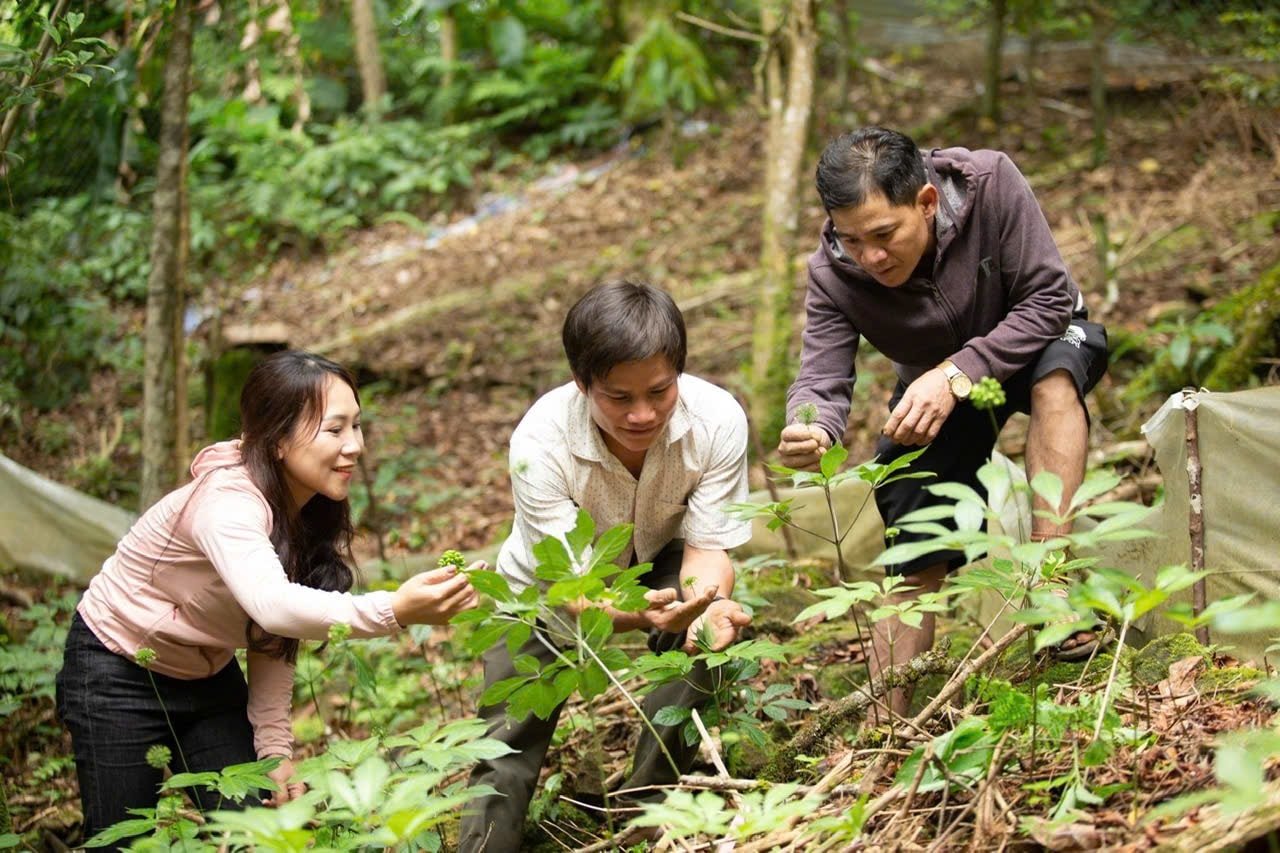
In the context of tourism shifting strongly towards wellness tourism, this resource is seen as a distinct advantage for developing new tourism products that reflect the unique character of the mountainous region and its local values.
Tourism resources
The mountainous communes in the western part of Da Nang city are currently considered the "medicinal herb capital" of Central Vietnam. Hundreds of precious medicinal plants such as Ngoc Linh ginseng, purple rehmannia, purple cardamom, Gynostemma pentaphyllum, Angelica sinensis, and many other endemic medicinal herbs can be found there.
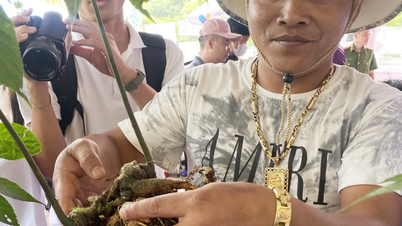
In particular, Ngoc Linh ginseng is considered one of the world's rarest and most precious ginseng varieties, containing a high saponin content with many valuable bioactive compounds. Beyond being an economic product, Ngoc Linh ginseng is also closely linked to the cultural life and indigenous knowledge of the Xe Dang, Ca Dong, and other mountain communities living around the foot of Ngoc Linh mountain.
Over the years, localities such as Nam Tra My, Tra Linh, Tra Tap, and Tra Leng have gradually integrated medicinal herbs into tourism activities. The monthly Ngoc Linh ginseng market, tours of ginseng gardens under the canopy of primeval forests, experiences in harvesting medicinal herbs, and exploration of local culture have become attractive products for tourists who love nature and health.
Looking back at the development of mountain tourism over the years, the clear imprint of products associated with Ngoc Linh ginseng is evident.
Many domestic and international tourist groups have flocked to the Ngoc Linh mountain region to witness firsthand the ginseng gardens located at an altitude of over 1,500m, listen to locals tell stories about preserving the forest and precious ginseng varieties, and experience the community culture. Ginseng festivals, ginseng markets, and OCOP product exhibition spaces have contributed to promoting the image of the highlands to tourists.

Ms. Ho Thi Muoi, Director of Ngoc Linh Community Cooperative (Nam Tra My commune), said that many visitors to the ginseng festival want to visit the ginseng forest as well as experience the culture of the local people. At Ngoc Linh Community Cooperative, when visitors arrive, the cooperative will have people to guide them through dozens of kilometers of forest trails, to visit the gardens and introduce the process of planting and caring for ginseng under the forest canopy. At the same time, they supervise and require visitors not to impact nature and to maintain environmental hygiene.

Open up the experiential space.
Tourism experts believe that, with its abundant medicinal plant resources, Da Nang has the potential to develop a range of wellness tourism products such as herbal therapy resorts, spas using local ingredients, traditional folk remedies, medicinal plant-based nutrition, meditation in mountainous forest settings, or post-treatment health recovery programs. This is a model that many countries such as South Korea, Japan, and China have successfully developed from ginseng and medicinal herb growing regions.
With its abundant resources, Da Nang is formulating a strategy for developing medicinal herb tourism. The Ngoc Linh Ginseng and International Medicinal Herb Festival 2026, scheduled to take place from August 1-3 in the city center and key medicinal herb growing areas in the western mountainous region, will be a highlight of this summer.
According to the plan, the festival will not only showcase domestic ginseng and medicinal herb products but also feature participation from many countries with strengths in ginseng, such as South Korea, China, the United States, Canada, and Russia. Visitors will experience a recreated ginseng forest ecosystem, enjoy cuisine made from medicinal herbs, participate in cultural activities, and explore themed tours about the Ngoc Linh ginseng region.

Notably, the city is positioning the festival as a cultural, economic, and tourism event to promote health tourism, attract investment in the medicinal plant sector, and connect the value chain from conservation and production to commercialization of products. This is also seen as a strategic step to position Da Nang's brand on Vietnam's health tourism map.
In recent years, the scale of ginseng and medicinal herb cultivation in Da Nang has expanded significantly. This has created a foundation for developing themed tourism routes related to medicinal herbs, connecting the urban center to the western mountainous communes. The development space is not limited to visiting ginseng gardens but also extends to research, education, experiencing local culture, and healthcare.
In its published plans, Da Nang aims to become a national center for the medicinal herb industry, with Ngoc Linh ginseng as its main crop, while also developing into a tourism destination for relaxation, rehabilitation, and health care associated with medicinal herbs and traditional medicine.
Source: https://baodanang.vn/danh-thuc-kho-bau-duoc-lieu-xu-quang-3339238.html


































![[Video] Sunset at Lap An Lagoon – Where the sun sets over the fishing nets](https://vphoto.vietnam.vn/thumb/1200x675/vietnam/resource/IMAGE/2026/05/31/1780192137701_beach-landscape-sea-water-nature-grass-745871-pxhere-com.jpeg)
























Comment (0)