Vibrant and rich in culture.
As Hanoi lights up, Ta Hien Street (Hoan Kiem Ward) immediately sheds its daytime tranquility, embracing a bustling, vibrant, and lively atmosphere. From 7 PM onwards, the clinking of glasses and the boisterous laughter and conversations in a multitude of languages fill the Old Quarter.
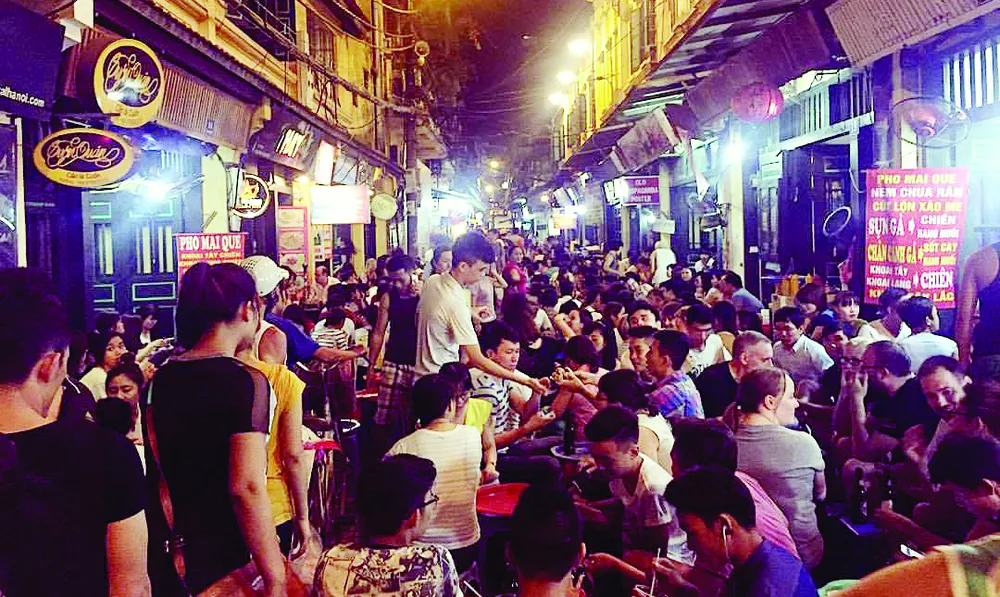
Along the street, vendors busily set up their stalls, preparing and serving food to customers. The bright neon lights from the shops shone down on the street, blending with the pulsating music to create a festive atmosphere that lasted all night. Nguyen Van Tu (34 years old, owner of a restaurant on Ta Hien Street) quickly arranged extra chairs for a group of foreign customers while sharing: “Since the city encouraged the night-time economy , the number of customers coming here to have fun has increased significantly. Revenue from 8 PM to 2 AM the next morning accounts for up to 70% of my restaurant's total revenue.”
Beyond the old Ta Hien street, Hanoi's "nighttime economy" map is expanding: from Nguyen Van Tuyet food street, Ngoc Island Ngu Xa food street... to the pedestrian area of Tran Nhan Tong street or the breezy West Lake, where young people and tourists flock to enjoy food, have fun, and immerse themselves in sweet melodies when night falls.
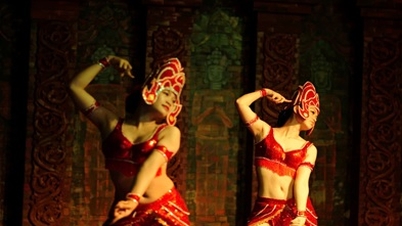
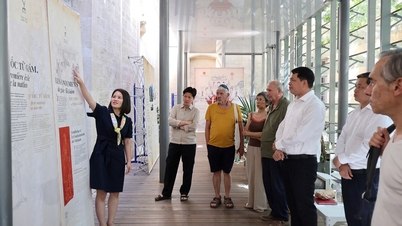
Leaving behind the bustling streets, Hanoi reveals a different rhythm of life. In the tranquil setting of the Temple of Literature - National University, visitors experience the "Essence of Philosophy" night tour, then immerse themselves in cultural experiences at Van Lake such as the lantern festival, exhibitions, painting on traditional Vietnamese paper, and performances of folk music.
Mr. Peterson (a tourist from Sweden) expressed his delight after experiencing the "Essence of Learning" night tour: "Here I experienced many different emotions. You have such diverse and modern ways of expressing yourselves, helping us to better understand the tradition of studiousness, the spirit of respecting teachers, and the beautiful traditions of your country. It's wonderful!"
Ms. Nguyen Lien Huong, Deputy Director of the Van Mieu - Quoc Tu Giám Cultural and Scientific Activities Center, said that in the coming time, the center will continue to develop the Van Mieu - Quoc Tu Giám and Ho Van relics in the direction of becoming a typical creative cultural space, moving towards forming a cultural industry center of Hanoi.

Replanning the "gold mine"
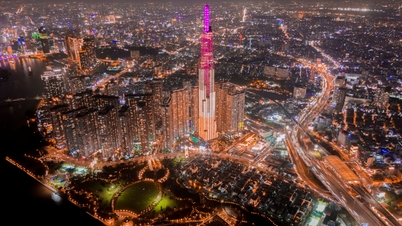
In the context of increasingly fierce competition among cities, the night-time economy is becoming a new growth engine for many countries and major cities around the world. However, the reality shows that Hanoi's night-time economy has not yet been exploited to its full potential. Many products and services operating at night lack distinctive features and appeal to tourists.
Alena, a tourist from France, said: “I really enjoy the nighttime atmosphere in Hanoi because it's peaceful and romantic. However, the city still lacks large-scale entertainment complexes, world-class art performances, and high-quality shopping centers that operate throughout the night.”
In light of the above situation, the Hanoi People's Committee has just approved the Project "Development of the Nighttime Economy in Hanoi City for the period 2026-2030, with a vision to 2045". The project clearly states that by 2035, the nighttime economy will become an important driving force of Hanoi's urban economy, contributing approximately 7%-8% to GRDP, with an average growth rate of 12%-14% per year in the service, tourism, and cultural industries.
The Red River landscape axis night economic zone will become a dynamic creative economic center, a cultural industry center, a convergence of high-value cultural, artistic, and commercial activities, connecting night economic zones in the region, playing a driving role in promoting new economic growth and affirming the capital's position on the regional and international creative map.
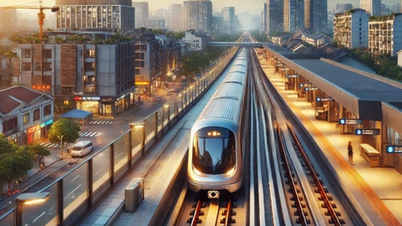
In addition, the city will develop 6-8 key night-time economic zones and 15-20 spaces and streets operating after midnight, with integrated planning and connection to the public transportation system; at least 3 of these zones will meet the standards of a regional-level night-time cultural and tourism experience zone.
By 2045, Hanoi aims to become a competitive regional center for night-time economic activity, with the night-time economy contributing over 12% to its GRDP, establishing itself as a "City of Nighttime Cultural Experiences".
Discussing the above proposal, Associate Professor Bui Hoai Son, a full-time member of the National Assembly's Committee on Culture and Society, said that Hanoi possesses many unique values with its thousand-year history of civilization and rich heritage system.
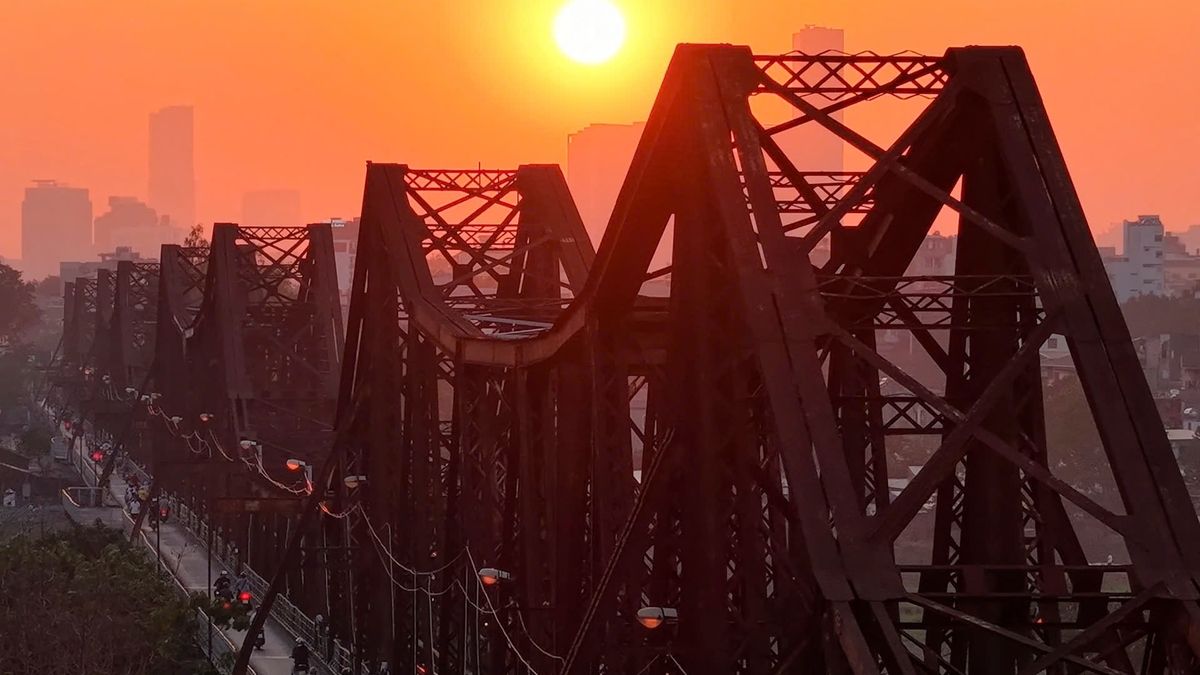
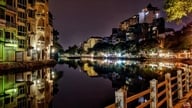
Every street corner, road, bridge, and architectural structure holds its own story, contributing to Hanoi's unique charm. Therefore, when properly organized, these elements will help transform the night-time economy into a crucial "soft power," extending tourist stays, increasing spending, and opening up opportunities to build Hanoi's brand as a livable, vibrant, and culturally rich city.
Dr. Tran Viet Dung, Head of the Department of Management and Creative Economics (School of Interdisciplinary Sciences and Arts - Vietnam National University, Hanoi), believes that Hanoi is currently facing pressure to achieve double-digit growth. To solve this problem, developing the night-time economy is a key strategy.
Hanoi needs to link the development of its night-time economy with an integrated, multi-sectoral urban model. The core of this model should be based on cultural experiences and heritage as the strategic foundation, aiming to create a space of "heritage nights and creative nights." In particular, leveraging and transforming the Red River landscape into a comprehensive development plan presents a significant opportunity to create a breakthrough for the capital's night-time economy in the future.
Source: https://www.sggp.org.vn/danh-thuc-mo-vang-kinh-te-dem-post858662.html
![[Image] Ho Chi Minh City: Ma Lang area, Chicken-Rice Market about to change its appearance](https://vphoto.vietnam.vn/thumb/1200x675/vietnam/resource/IMAGE/2026/06/25/1782377698627_ndo_br_m1-jpg.webp)
![[Photo] General Secretary and President To Lam receives Palestinian Ambassador Saadi Salama](https://vphoto.vietnam.vn/thumb/1200x675/vietnam/resource/IMAGE/2026/06/25/1782365384740_a1-bnd-9423-8322-jpg.webp)

![[Image] Schools organize meetings and introduce teaching models to students admitted to grade 10.](https://vphoto.vietnam.vn/thumb/1200x675/vietnam/resource/IMAGE/2026/06/25/1782368077271_ndo_br_z7970052192242-1ec8daeb77a6eed1a4e9f58c564ddd3e-jpg.webp)