

 |
| The family of Mr. Vi Văn Kỳ, in Bản Đồn village (Tân Kỳ commune), invites tourists to enjoy the village's specialty: sticky rice cooked in bamboo tubes. |
Preserving the soul of traditional crafts amidst the modern pace of life.
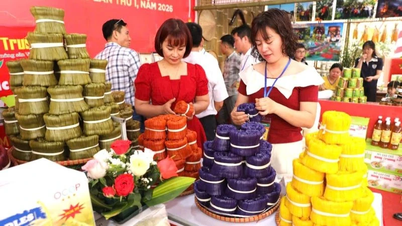
For generations, during every holiday and festival, the people of Ban Don village (Tan Ky commune) gather around the fire, preserving traditional cakes such as banh chung, banh giay, banh gio, banh cu chuoi… These are not only seasonal culinary products but also a cultural tradition, an expression of gratitude to heaven, earth, and ancestors.
Having been involved in the trade since childhood, the family of Mr. Vi Van Ky, in Ban Don village, started with simple bamboo-tube rice vendors in the 1980s. By 1995, the trade had developed in a more systematic way, establishing sales points along National Highway 3 through the village. It gradually spread as it proved economically effective, attracting many households to participate, expanding products, creating jobs, and increasing income.
What further strengthened Mr. Ky's belief in the prospects of traditional crafts was that at the end of March 2026, Tan Ky commune was recognized by the Department of Agriculture and Environment as a traditional village specializing in bamboo-cooked rice, banana root cakes, and glutinous rice cakes in Hoa Muc.
Currently, 42 out of 198 households in the craft village participate in production, generating revenue exceeding 5.2 billion VND per year, with an average income of 3.4-3.5 million VND per person per month. Furthermore, the village has an approved environmental protection plan, ensuring compliance with regulations.
 |
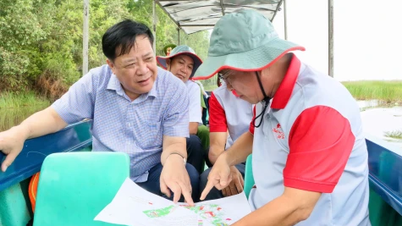
| Leaders from the Department of Agriculture and Environment of Thai Nguyen province visited a tea production village in Phu Lac commune. |
At the same time, the Department of Agriculture and Environment recognized eight more craft villages throughout the province to acknowledge and honor the traditional values and labor achievements of the community, thereby encouraging the development of rural industries. This activity contributes to raising awareness about preserving craft villages in conjunction with environmental protection and sustainable development.
Expressing his delight at the simultaneous recognition of two tea-producing villages in the locality, bringing the total number of villages in the commune to 11, Mr. Tran Duc Quy, Vice Chairman of the People's Committee of Phu Thinh commune, said: "The recognition of these new villages will continue to create momentum for expanding tea cultivation in the locality, increasing product value and income for tea producers."
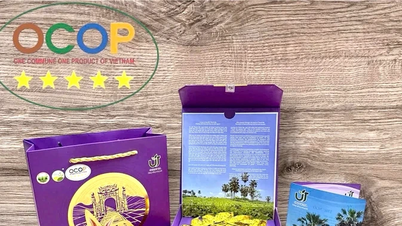
In addition, the commune aims to upgrade its tea products to OCOP 3-4 star standards, gradually expanding the market and moving towards export.
Currently, the province has nearly 280 recognized craft villages, mainly tea-making villages, providing regular employment for thousands of local workers. However, facing competitive pressure, building brands and expanding markets remains a challenge, requiring new approaches, with the creative economy expected to become a driving force for development.
 |
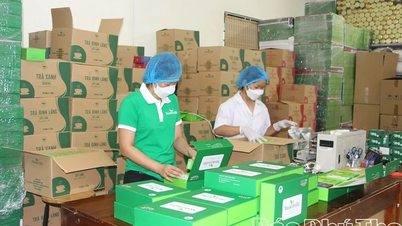
| The people of the traditional tea-making village of Lay 5 (Phuc Thuan ward) are proactively introducing machinery into the processing and packaging of their tea products. |
Unlocking potential and strengths
In the journey to awaken and develop the potential and value of traditional craft villages, the OCOP program is becoming an important driving force in elevating local products.
To date, Thai Nguyen has over 600 OCOP products rated from 3 to 5 stars, including 13 products that have achieved 5 stars at the national level. Among them, 3 products have recently been recognized: Ngoc Xuan Huong Van Tea and Tam Phuc Huong Van Tea from Huong Van Tea Cooperative, and Thanh Hai Tea - Premium Shrimp Bud Tea from La Bang Tea Cooperative.
In 2026, the program will continue to be promoted in the direction of improving quality, with many tea products being upgraded in rank, along with trade promotion activities, trade fairs and the development of digital sales.
 |
| Soy sauce processing at Uc Ky sticky rice soy sauce village (Phu Binh commune). |
As traditional craft villages develop and integrate strongly into the digital age, people have proactively applied technology and actively promoted and introduced their products on online platforms, thereby bringing their goods to larger markets.
Traditional craft villages in the province are shifting towards enhancing product value in conjunction with the OCOP program, while also expanding export opportunities.
Beyond simply preserving traditional crafts, many localities are effectively leveraging their indigenous cultural values to develop unique tourism products, thereby increasing their attractiveness and economic value.
Within that overall picture, the craft villages in Tan Cuong are considered the "green capital" of Thai Nguyen tea, providing high-quality products and gradually establishing their brand in domestic and international markets. In particular, the craft village of Con Minh commune has made its mark by bringing its traditional cassava vermicelli product, achieving OCOP 5-star certification, to the international market.
 |
| The vermicelli-making village in Con Minh commune is famous for its hand-cut vermicelli. |
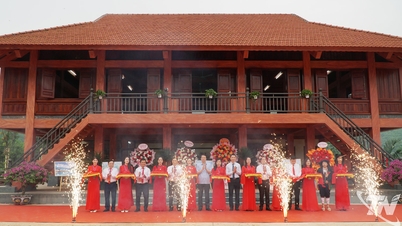
Visiting Con Minh commune to experience the traditional stilt houses and see the locals making vermicelli by hand, and to visit large-scale production models of vermicelli exported by Tai Hoan Cooperative, we clearly felt the combination of traditional values and modern production methods.
Thanks to the development of cassava vermicelli production, the Tai Hoan Cassava Vermicelli Cooperative has linked up with and guaranteed the purchase of cassava from over 500 households, creating stable jobs for approximately 25-40 local workers and contributing to reducing the poverty rate from 30% in 2020 to over 12% in 2025.
Mr. Nguyen Ngoc Cuong, Secretary of the Party Committee of Con Minh commune, said: "Rice vermicelli production is a traditional occupation of the local people, so the commune has identified the development of cassava raw material areas associated with the craft village as a pillar in economic development. In the period up to 2030, the locality aims to continue expanding the scale, improving the quality and value of the product."
Diversify products and enhance product value.
 |
| With their high quality and aesthetic value, products from the fine art woodworking villages in the province have established a reputation and brand, ensuring stable sales. |
Mr. Nguyen My Hai, Deputy Director of the Department of Agriculture and Environment of Thai Nguyen province, said: In the coming time, the province will continue to focus on developing traditional craft villages as an important direction in the rural economic structure. This will promote the long-standing production traditions of the people, while also boosting the application of science and technology and gradually transferring technology into production.
Traditional craft villages are encouraged to diversify their products and improve designs and packaging in order to enhance the value of their goods and increase their competitiveness in the market.
The development of craft villages contributes to bringing together production and business households in a sustainable linkage direction, creating conditions for artisans to continue preserving and passing on experience and techniques to future generations, thereby preserving and promoting the value of traditional crafts.
By 2030, Thai Nguyen aims to recognize at least 15 more craft villages, including 5 craft villages linked to tourism development. Digital transformation plays a crucial role throughout this entire process, from traceability and production management to product promotion and consumption.
 |
| Tea-making villages in the province play a crucial role in building the famous "Thai Tea" brand, while also attracting a large number of tourists to visit and experience it. |
Thai Nguyen is stepping up trade promotion activities and promoting OCOP products and traditional craft products. Through agricultural fairs and festivals linked with tourism, hundreds of booths from within and outside the province have participated, creating a space to connect supply and demand.
In addition, the province is promoting digital transformation in trade promotion, bringing products to e-commerce platforms, combining livestreaming sales, and organizing experiential tours in craft villages. As a result, many products have not only expanded their domestic market but are also gradually accessing international markets, contributing to affirming the brand of Thai Nguyen agricultural products in the integration period.
Source: https://baothainguyen.vn/kinh-te/202604/danh-thuc-tiem-nanggia-tri-lang-nghe-46b33fb/



































































Comment (0)