

Ms. Nguyen Thi Thuy (52 years old) from Dong Luat village, Vinh Hoang commune, said that recently, a model of raising commercial snakehead fish in cement tanks lined with tarpaulin has been developing in the village to utilize the barren white sand area that is unsuitable for cultivation.
Around 2018, some households in the former Vinh Thai commune visited and learned about the model of raising snakehead fish in cement tanks lined with tarpaulin, practiced by people in the former Quang Binh province. Recognizing the potential for developing this model in Dong Luat village, many households invested in building cement tanks lined with tarpaulin to raise commercial snakehead fish.
As for Ms. Thuy's family, it wasn't until early 2025 that they invested nearly 580 million VND to build two cement ponds lined with tarpaulin, covering an area of 240m2, and to buy fish fry. The ponds for raising commercial snakehead fish are typically over 1 meter high; the bottom of the pond is sloped to facilitate water changes; the freshwater in the ponds is sourced from a drilled well system to ensure the growth and development of the snakehead fish; the ponds are covered with netting to limit direct sunlight and temperature inside.
With two cement tanks lined with tarpaulin, Ms. Thuy raises approximately 30,000-40,000 fish fry each season. After 8-10 months of rearing, the fish reach a weight of 1-1.5 kg/each. Snakehead fish raised in these tarpaulin-lined cement tanks are purchased by traders at prices ranging from 43,000-45,000 VND/kg. Recently, Ms. Thuy's family harvested over 11 tons of snakehead fish, earning over 500 million VND, and currently has about 3-4 tons of snakehead fish yet to be harvested.
 |
| The model of growing taro and cassava on sandy soil yields high economic efficiency - Photo: SH |
It can be said that the model of commercially raising snakehead fish in cement tanks lined with tarpaulin has truly brought high economic efficiency. With a net profit of about 100-120 million VND per farming season, this is a fairly high income for the people of Dong Luat sandy area. To date, the area for commercially raising snakehead fish in cement tanks lined with tarpaulin in Dong Luat village is about 1,200 m2 with an estimated production of 50 tons per season per year. Snakehead fish is a freshwater fish with delicious meat, favored by consumers.
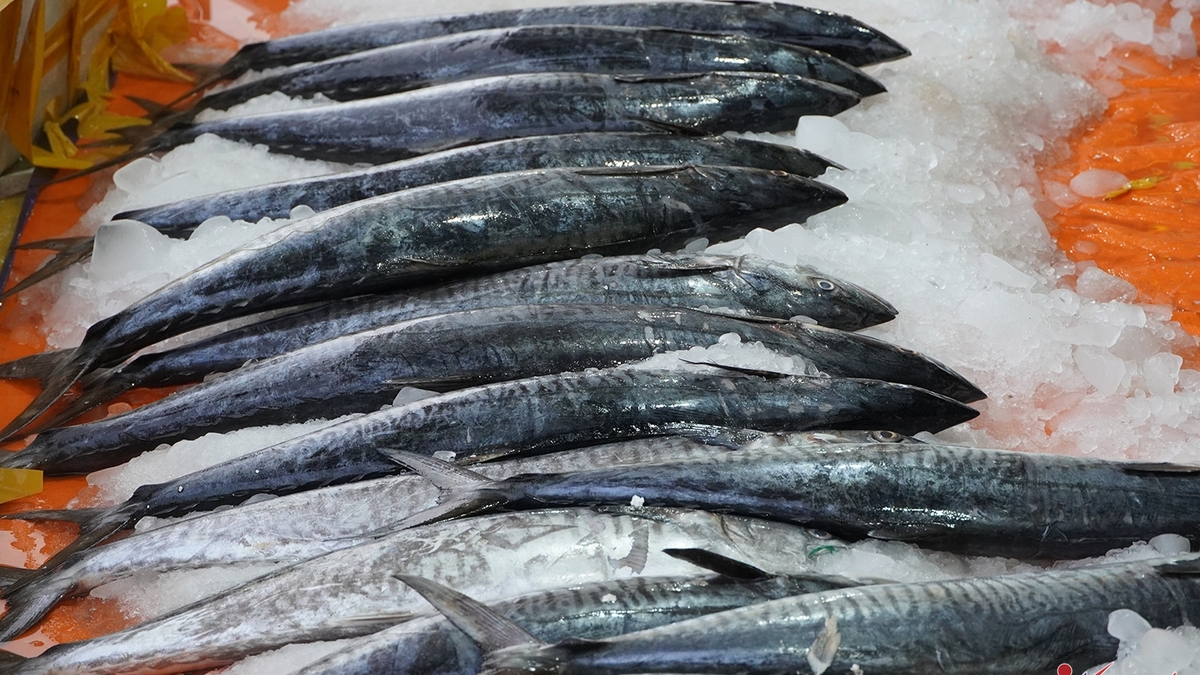
Mr. Nguyen Van Ngo (70 years old) from Thai Lai village, Vinh Hoang commune, said that in 2023 he began his venture into raising kingfish and sea bass on sandy soil. With an area of 2,000 square meters, he stocked nearly 40,000 kingfish fingerlings. Kingfish and sea bass have the advantage of not requiring as strict farming techniques as shrimp farming; farmers only need to pay attention to maintaining clean water, stable oxygen levels, and proper feed management to avoid pollution. The feed for kingfish and sea bass consists of industrial feed and various types of algae readily available in the pond or harvested from nature. Kingfish, in particular, have a flexible farming period and allow for gradual harvesting according to market demand.
Starting with juvenile whale sharks at a size of approximately 350-400 fish per kilogram, after 3 months of rearing, the fish reach marketable size of 20-30 fish per kilogram and can be harvested. If the rearing time is extended to 7-8 months, the fish can reach a size of 5-6 fish per kilogram. With an average price of around 140,000 VND/kg, after deducting investment costs, Mr. Ngo earns 150-200 million VND. After harvesting the whale shark crop, at the end of 2025, Mr. Ngo will release 40,000 juvenile sea bass into a 2,000m2 area. He expects to harvest them in June 2026, generating an estimated income of 100-150 million VND.
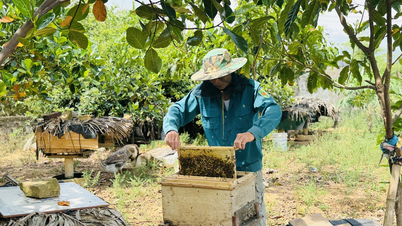
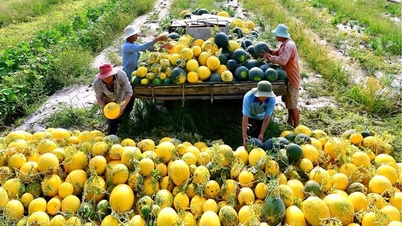
According to Nguyen Huu Truong, Vice Chairman of the People's Committee of Vinh Hoang commune, the commune currently has many highly effective economic models such as watermelon cultivation on over 130 hectares, cassava cultivation on over 100 hectares, organic pepper cultivation on nearly 45 hectares; and models of integrated chicken farming, high-tech duck farming, cage fish farming, beekeeping for honey production, and egg-laying chicken farming…
Specifically for the sandy areas of Vinh Hoang commune, there are concentrated models of growing taro on sand in Dong Luat and Thu Luat villages with an area of nearly 60 hectares; models of growing taro and wax taro concentrated in Dong Luat, Thu Luat, and Tan Mach villages with an area of 60 hectares; and models of growing peanuts on sand with an area of 50 hectares… In aquaculture, there are two-stage shrimp farming models in Thai Lai and Tan Hoa villages with an area of 6 hectares; farming of abalone and tilapia in Tan Thuan, Dong Luat, and Thai Lai villages with an area of 7.5 hectares; and farming of snakehead fish and frogs in Thu Luat and Dong Luat villages with an area of 1.5 hectares.
Previously, in the imagination of many, the sandy areas of Vinh Hoang commune were vast white sand dunes under the scorching sun… a nightmare for generations of local people. But now, those old white sand dunes have been replaced by the green of many high-value crops; the prosperity of farms and livestock breeding and aquaculture has emerged on this barren white sand.
Sy Hoang
Source: https://baoquangtri.vn/kinh-te/202605/danh-thuc-vung-cat-trang-302372a/
![[Photo] National Assembly Chairman Tran Thanh Man working with the Standing Committee of the National Assembly's Ethnic Council](https://vphoto.vietnam.vn/thumb/1200x675/vietnam/resource/IMAGE/2026/05/21/1779337435930_ndo_br_1-jpg.webp)
![[Image] "Journey of Hope" promotes the organ and tissue donation movement in Vietnam.](https://vphoto.vietnam.vn/thumb/1200x675/vietnam/resource/IMAGE/2026/05/20/1779294400833_1-8910-jpg.webp)
























































Comment (0)