The Government Office recently announced the conclusions of the Government leaders at a working session with the Standing Committee of the Ho Chi Minh City Party Committee. One of the notable directions is that the city needs to shift strongly from a mindset of supporting home ownership to ensuring the right to housing for citizens through the development of rental housing funds.
Detached townhouses: cramped, difficult to sell.
According to the directive, Ho Chi Minh City needs to accelerate the completion of its master plan with a long-term, internationally-oriented vision; effectively utilize underground space, develop industrial zones, and increase the area of green spaces and public areas.
In its urban development plan, government leaders have noted that Ho Chi Minh City needs to limit the construction of low-rise, individual houses and prioritize the development of high-rise buildings and rental housing in urban areas.
Buffer zones and green spaces between residential areas also need to be planned in a coordinated manner. "People who do not yet have the means to own their own homes must have access to affordable rental housing," the announcement stated.
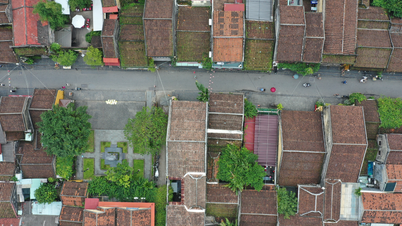
In fact, according to observations by reporters from the Nguoi Lao Dong newspaper, the central area of Ho Chi Minh City currently has many very small houses located deep in alleys, which have existed for many years. Despite having a convenient location, many of these houses are currently experiencing slow sales, and even price reductions.

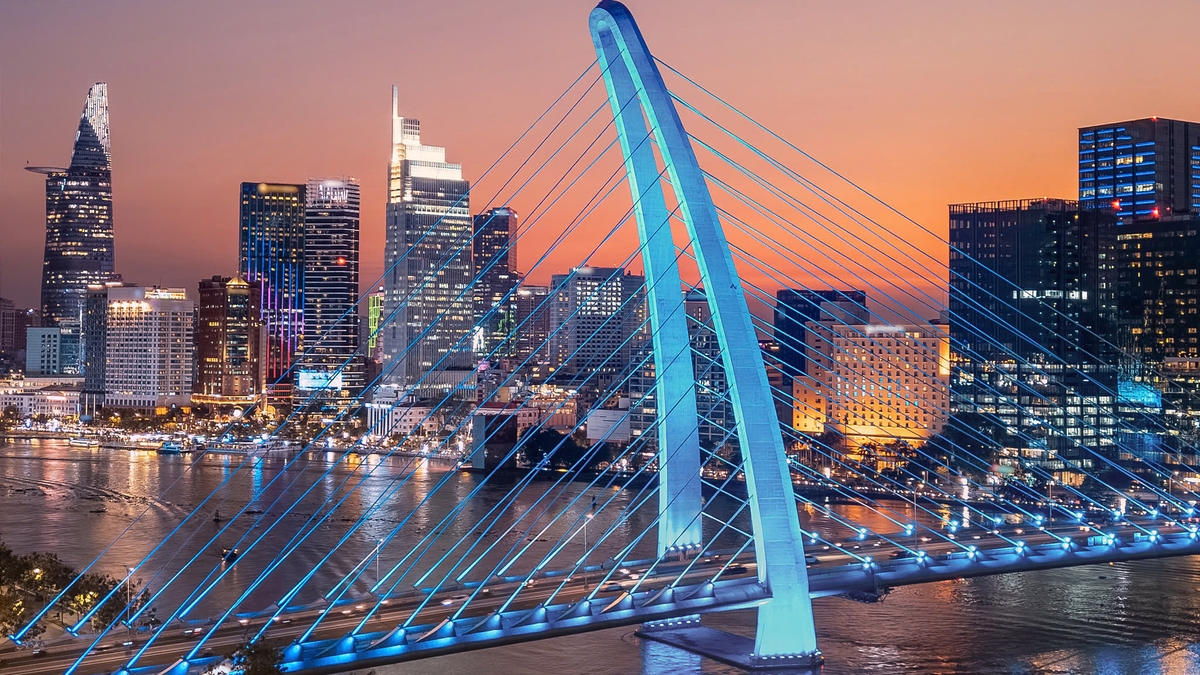
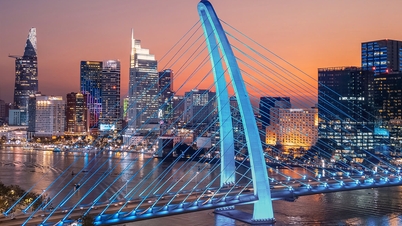
A high-rise apartment project in Ho Chi Minh City. Photo: TAN THANH
Mr. Hoang, a long-time real estate agent in the city center, said that in the past, many people accepted buying small houses in the city center mainly for convenience in registering their residency and doing business. However, this demand is no longer as strong as before, so the liquidity of townhouses in Ho Chi Minh City has decreased significantly. "Buyers are mainly those who need to live near their workplace or run small businesses in the city center. But this group of customers is getting smaller and smaller," Mr. Hoang said.
According to reporters, on central streets like Tran Hung Dao (Ben Thanh ward), a house with an area of about 10 m² is being offered for sale at over 2.3 billion VND, a significant decrease compared to before, but still attracting few buyers. In the Le Hong Phong area (Vuon Lai ward), a house of similar size is being offered for sale at around 1.89 billion VND.


However, Ms. Anh, a real estate agent specializing in townhouses, said that small houses in alleys are currently quite difficult to sell because they no longer suit the needs of young families. "Buyers of this type of property are mostly older people or those who need to live near the city center. Young people usually prefer apartments with more spacious living areas," she said.
Ms. Anh, the owner of a house measuring only about 8 square meters in Ben Thanh ward, said that her family of five has had to live in this cramped space for many years, mainly for the convenience of earning a living. Now that her children are older, the family wants to move to an apartment, but the current selling price of their house is less than 1.6 billion VND, making the change of residence difficult.
According to experts, given these realities, the government and Ho Chi Minh City's orientation towards developing high-rise rental housing and other affordable housing options could become the solution to the housing problem for people in the future.
The solution for dense urbanization in Ho Chi Minh City.
From a market perspective, Mr. Vo Hong Thang, Deputy General Director of DKRA Group, believes that the housing needs of young people have changed significantly. Instead of small houses in alleys, most people prioritize apartments with integrated amenities, a safe and civilized living environment, and convenient transportation connections.
Therefore, the policy of restricting the development of low-rise detached houses in large cities like Ho Chi Minh City is considered appropriate. "This not only contributes to improving urban aesthetics but also addresses issues of environmental sanitation, safety, and essential infrastructure," Mr. Thang commented.
However, to effectively implement this policy, according to Mr. Thang, the State needs to play a leading role in planning and implementation. Urban renovation must be accompanied by comprehensive planning, expansion of transportation infrastructure, and ensuring reasonable resettlement so that people have better new homes and stable lives.
According to Mr. Thang, in many central areas, there are still houses with a width of only 2-3 meters and a length of 6-7 meters, located deep in narrow alleys barely wide enough for a motorbike to pass through. These properties are very difficult to renovate or develop into modern buildings.
"In the long term, it is necessary to study the consolidation of small land plots to develop large-scale projects with synchronized infrastructure. After resettlement, the land can be exploited more efficiently, or even auctioned off to recover investment resources," Mr. Thang proposed.
From an urban planning perspective, Dr. Pham Viet Thuan, Director of the Institute of Resource and Environmental Economics in Ho Chi Minh City, believes that the orientation of limiting low-rise housing and prioritizing the development of high-rise buildings is very suitable given the increasingly limited land resources of Ho Chi Minh City.



According to Mr. Thuan, developing high-rise buildings helps to use land more efficiently, limit urban sprawl, and create conditions for the development of social housing and rental housing for workers and low-income earners. In addition, high-rise residential areas are more easily connected to public transportation systems, technical infrastructure, and modern urban amenities compared to spontaneously developed residential areas.
Adapting to climate change
Dr. Pham Viet Thuan believes that planning large-scale urban areas will facilitate raising the ground level, improving the drainage system, and reducing the risk of flooding in the core urban area. He emphasized that this is an important solution to help Ho Chi Minh City adapt to climate change.
Source: https://nld.com.vn/dap-an-cho-bai-toan-an-cu-196260617200946961.htm