During this period, more than 12.5 million people from Africa, the Caribbean, and South America were trafficked as "mobile goods" by colonial and imperial regimes. To this day, the governments that succeeded these colonial regimes completely deny responsibility for this act, which the UN considers "the greatest crime against humanity" in a resolution adopted by the UN General Assembly last March.
Based on that resolution, the AU and CARICOM, at their recent conference in Ghana, joined forces to demand reparations for the slave trade between the Americas and Africa, as well as for colonial occupation. The AU and CARICOM specifically articulated this demand within a 19-point plan, which includes requests for a formal apology, debt reduction and cancellation, reparations, the establishment of a global fund for reparations, and the restoration of cultural heritage stolen by colonial powers.

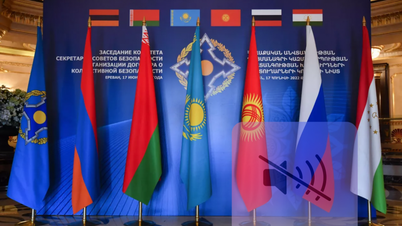
Flags of the two organizations: the African Union (right) and the Caribbean Community (CARICOM).



(illustrative image)
The plan is a prelude to an organized global alliance that will elevate this issue from a purely diplomatic and political standpoint to an international legal one. The West will undoubtedly resist fiercely, as it did with the UN General Assembly resolution. However, the true value of this alliance lies in demanding genuine justice, not in demanding money or forcing the West to admit guilt. They want the West to take responsibility, making the ancient slave trade a global topical issue with a proposed "Decade of Reparations" from 2026-2034. From now on, the West will find it difficult to continue to disregard, reject, and obstruct this plan indefinitely.



Source: https://thanhnien.vn/dau-moc-lich-su-moi-185260622212057376.htm
![[Photo] General Secretary and President To Lam receives Palestinian Ambassador Saadi Salama](https://vphoto.vietnam.vn/thumb/1200x675/vietnam/resource/IMAGE/2026/06/25/1782365384740_a1-bnd-9423-8322-jpg.webp)


![[Image] Ho Chi Minh City: Ma Lang area, Chicken-Rice Market about to change its appearance](https://vphoto.vietnam.vn/thumb/1200x675/vietnam/resource/IMAGE/2026/06/25/1782377698627_ndo_br_m1-jpg.webp)
![[Image] Schools organize meetings and introduce teaching models to students admitted to grade 10.](https://vphoto.vietnam.vn/thumb/1200x675/vietnam/resource/IMAGE/2026/06/25/1782368077271_ndo_br_z7970052192242-1ec8daeb77a6eed1a4e9f58c564ddd3e-jpg.webp)