

The first time I tasted "unity porridge" at a highland food market in A Lưới 2 commune (Hue City), I was quite surprised when the owner neatly placed a green banana leaf in front of me. After scooping up my portion, the owner smiled and wished me a good meal, and only then did I realize they hadn't served the wrong dish. It turns out that enjoying "unity porridge" properly means using a spoon to scoop it from a banana leaf. And being able to place the porridge on the leaf without it spilling is also a way to gauge its perfect consistency.

Solidarity porridge
PHOTO: HOANG SON
According to Mr. Le Van Het (33 years old, residing in Ky Re village, formerly Hong Thuong commune; now part of A Luoi 3 commune), the Co Tu, Ta Oi, and Van Kieu ethnic groups call this local dish by different names, but the preparation method is the same. His Pa Koh people call the "unity porridge" " to'r luc ," meaning "cook whatever is available." Making a pot of "unity porridge" isn't difficult because the ingredients are readily available in the mountains and forests. However, to get the authentic taste, certain agricultural and forestry products are almost mandatory.
"Since it's called porridge, the essential ingredient is rice milled from upland rice. Pumpkin adds a sweet and savory flavor, bamboo shoots and wild greens provide a refreshing taste, and wild eggplant brings out the distinctive aroma," Mr. Hết said.
The spices are distinctly mountain-style, including raw salt, chili peppers, wild pepper seeds, and young shoots of the a lao plant – which smells like lemongrass but is milder and more pungent. Importantly, the key ingredient is stream fish, either dried or fresh, which is grilled. In the cold winter months, when the streams are too frigid, the chef substitutes it with fermented stream fish sauce, which has a characteristic spicy and salty flavor.
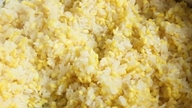
Another unique aspect of "solidarity porridge" is its unconventional cooking process. Instead of simmering the rice beforehand like most porridges, the rice is added almost last. "In the past, when we didn't have cooking oil, we'd sauté dried fish in a little pork fat. Then we'd add bamboo shoots, eggplant, pumpkin, and water spinach, stir until almost cooked, then add water, and finally add the rice," Mr. Hết explained, demonstrating with his hands.
Sitting by the fire, Mr. Hết recounted that the "unity porridge" was a childhood dish. In times of hardship, it was a staple meal for many families, much like how the Kinh people cook rice mixed with cassava. For his people, when they called it porridge, they were referring to "unity porridge," meaning it had to be "dry porridge." Thin porridge, on the other hand, was served with ingredients like beef porridge, chicken porridge, or duck porridge…
"Why is 'unity porridge' so thick?" I asked. Mr. Hết didn't answer immediately, but used his chopsticks to lift the lid and stir the porridge. He revealed that the best 'unity porridge' is cooked over a low wood fire for about 45 minutes. The perfect porridge has evenly expanded and tightly packed rice grains. Interestingly, despite being called porridge, the rice grains remain intact, not mushy. The only difference between porridge and perfectly cooked rice is its consistency.
"The porridge is thick because, in the old days, people mainly did manual labor, and they needed thick porridge to feel full for longer and have enough energy to work in the fields," Het explained.
Scooping up a small amount of porridge, Mr. Hết invited me to taste it. Before me was a bowl of porridge with cheerful colors. There was the yellow of pumpkin, the deep green of wild vegetables, a hint of the slightly pungent taste of bamboo shoots, all blended with the nutty flavor of rice and the richness of stream fish.
The Ta Oi people often eat porridge with cheo – a type of spicy, tongue-numbingly pungent salt mixed with dried fish. The porridge of solidarity doesn't follow a fixed recipe; it has many variations since ancient times. For example, people might add rattan shoots or wild betel leaves. Nowadays, many families may add dried meat or mushrooms to increase its nutritional value.
According to Meritorious Artisan Ho Van Hanh (78 years old, residing in A Nieng Le Trieng village, Trung Son commune; now A Luoi 1 commune), the "unity porridge" symbolizes solidarity, from its ingredients to the literal meaning of solidarity among families living in longhouses since ancient times. In the past, when living in longhouses, everyone contributed what they had to cook porridge. Some families would give pumpkin, others bamboo shoots, and still others would add a handful of wild greens or some dried stream fish. When the fragrant porridge was ready, it marked the beginning of a meal that bonded the family. During the war, this solidarity porridge also strengthened the bond between soldiers and civilians, particularly between mothers and soldiers of Uncle Ho's army, through meals where porridge was served instead of rice.

Because of that meaning, according to Elder Hanh, in the Trường Sơn people's belief, eating porridge at the beginning of the year is a wish for the village to be united, for a bountiful harvest, and for everyone to be healthy. Children eat it to grow quickly, and adults eat it to remind each other to love one another. And if a guest is lucky enough to be invited, it means they are highly valued by the villagers.
"Each pot of porridge not only encapsulates the essence of the mountains and forests but also holds countless memories. For my father, eating porridge together is like savoring a sky full of memories. I remember the Tet holidays when my mother was still around. Back then, my father was a young man, always wandering around and getting drunk. When he returned home, my mother would spoon-feed him a bowl of porridge to cure his hangover, and it warmed his heart…," old Hanh said, his eyes welling up with tears.
Source: https://thanhnien.vn/dau-nam-an-chao-doan-ket-185260212085938066.htm




























![[Video] Sunset at Lap An Lagoon – Where the sun sets over the fishing nets](https://vphoto.vietnam.vn/thumb/1200x675/vietnam/resource/IMAGE/2026/05/31/1780192137701_beach-landscape-sea-water-nature-grass-745871-pxhere-com.jpeg)






















Comment (0)