


OUTSTANDING HISTORICAL AND CULTURAL SITES
The most unique feature that defines the architectural identity of Vinh Binh communal house is its "longitudinal house" construction style, modeled after the temple dedicated to national hero Truong Dinh.

The system of rafters, columns, braces, and purlins is structured in the style of a traditional house with a longitudinal ridge beam, creating a space that is both sturdy and elegant. The main hall of the temple is impressive with its two-tiered roof covered with hooked tiles (Western tiles) and a floor paved with glazed tiles.
The original Vinh Binh communal house was built using traditional materials such as precious wood, stone, brick, and yin-yang tiles. Later, during restoration, reinforced concrete was used, and brick walls were constructed with cement as a binding agent.
Stepping inside, one is greeted by the solemn and magnificent sight of ornate wooden panels, horizontal plaques, and couplets, all painted in vibrant red and gold.
Ancient artisans breathed life into wood and stone through exquisite carvings of the "four mythical creatures" (dragon,麒麟, turtle, phoenix), pheasants, or peonies, expressing their aspirations for a peaceful and prosperous life.
In particular, the pair of dragon pillars, each over 4 meters tall and carved with dragons hidden in clouds, are priceless artifacts, a testament to the skillful hands and artistic soul of our ancestors.
The harmonious arrangement of the altars, from the deity's altar to the ancestral altars, not only has aesthetic value but also profoundly educates descendants about gratitude towards those who contributed to the reclamation and establishment of the village.
Based on the royal decree of King Tu Duc the fifth in his reign and the annual temple worship rituals, Vinh Binh Temple worships the Local Guardian Deity (this is the deity who presides over the village temple, with the concept of the guardian deity of the fortress and moat protecting the locality), the pioneering ancestors (Mr. Tran Van Hue), and the founding ancestors.
During the resistance against the French and American forces, the communal house also served as a hiding place and meeting point for revolutionary forces.
After the liberation of South Vietnam and the reunification of the country in 1975, through many ups and downs and events, in 1995, with the donations of the people, the local government built a new communal house, located in Vinh Binh commune, which is now spacious and majestic. With its historical and cultural values, in 2016, Vinh Binh communal house was honored to receive the Certificate of Provincial-level Historical and Cultural Relic.
Subsequently, in 2017, the Ky Yen Festival at Vinh Binh communal house was recognized as a provincial-level intangible cultural heritage.
PRESERVING AND PROMOTING LOCAL HERITAGE
Protecting and promoting the value of Vinh Binh communal house is not limited to architectural restoration, but also lies in spreading intangible cultural values. The Ky Yen festival, held from the 14th to the 16th of the 12th lunar month every year, is the clearest evidence of this.

This is not simply a ritual to pray for favorable weather, but has become a celebration of national unity.
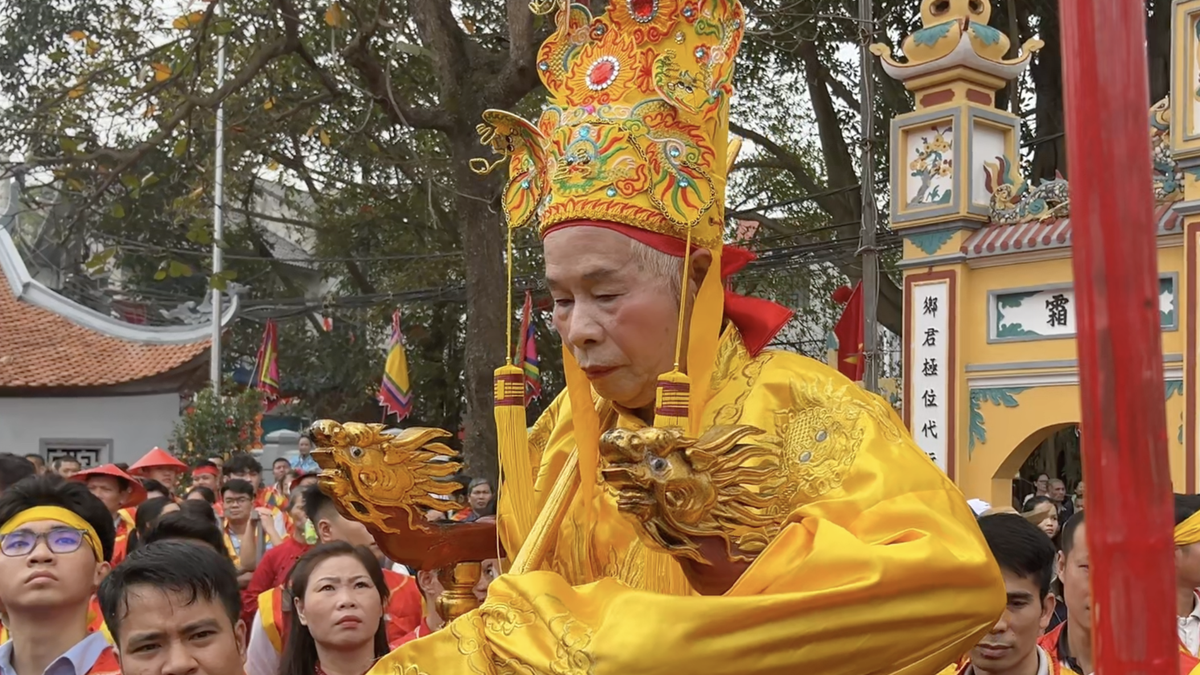
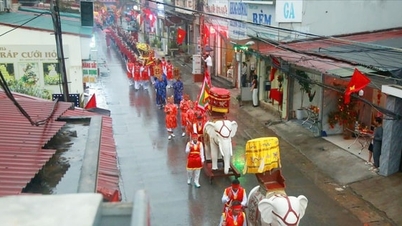
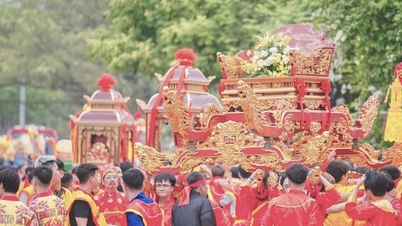
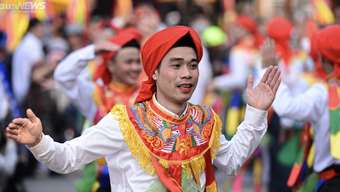
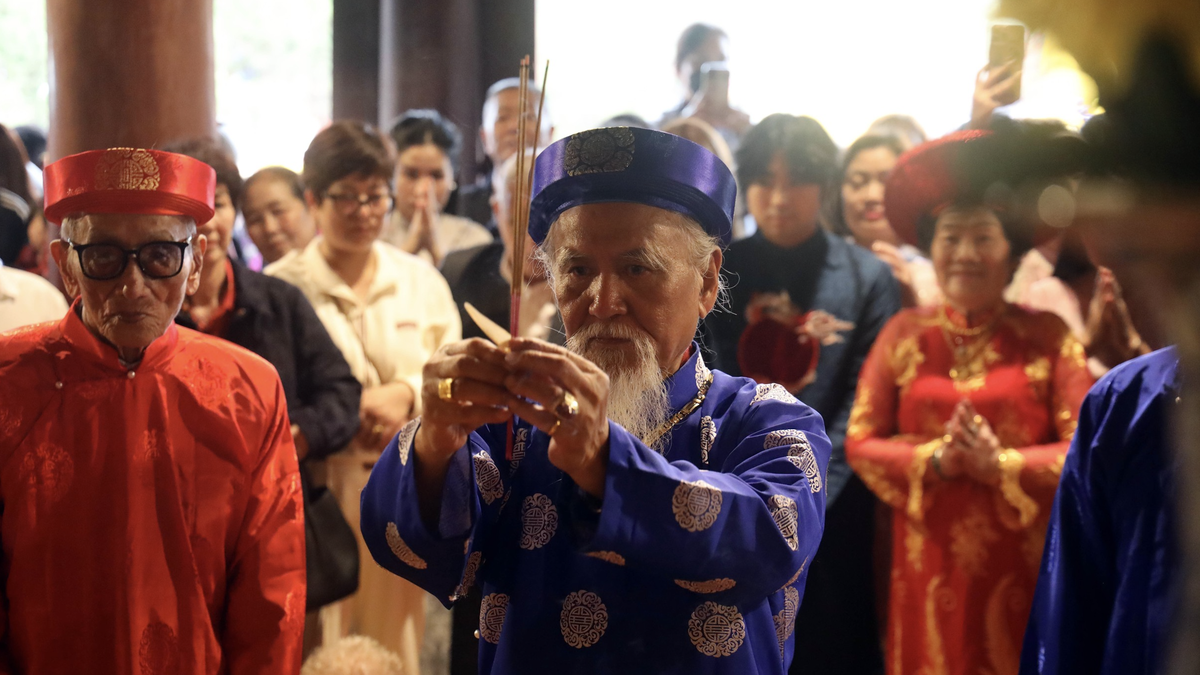
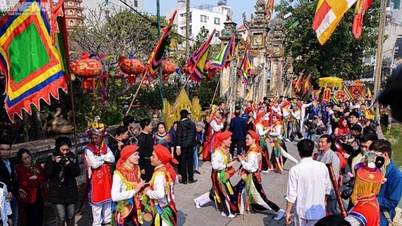
The annual Ky Yen Festival rituals and programs at the communal house include: the procession of the deity's statue to Thien Y Thanh Mieu, the ceremony of offering sacrifices to the Goddess, the transfer of the deity's statue to the communal house for placement, a large number of people coming to worship the deity, the ceremony of worshiping the ancestors and later generations, the ceremony of worshiping the spirits of martyrs; lion and dragon dances performed around Vinh Binh market and along the streets to celebrate the development of the homeland and wish prosperity, peace and well-being to everyone.

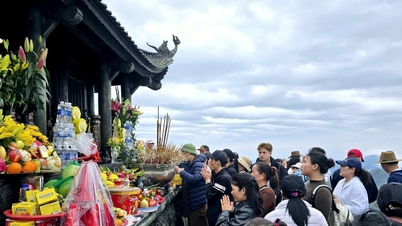
Observations show that during the Ky Yen Festival, the streets in the central area of Vinh Binh commune become bustling, houses are decorated neatly, and many families display trays of five fruits in front of their doors to welcome the "divine spirit," praying for a peaceful and prosperous new year.
Vinh Binh communal house is over 200 years old and is currently located in Hamlet 1, Vinh Binh commune. According to many historical records, Vietnamese people first settled and cultivated the Go Cong area very early on. In particular, around the latter half of the 18th century, Mr. Tran Van Hue and more than 40 others came here to clear land and establish a livelihood. In the year Mau Thin (1808), Vinh Loi village was established (belonging to Hoa Binh commune, Kien Hoa district, Dinh Tuong province); after settling down and establishing stable livelihoods, the people requested to build a communal house. During this period, Mr. Hue took the initiative to renovate the small, pre-existing shrine into a simple village communal house made of bamboo and leaves to worship the tutelary deity of the locality. That was the first brick that laid the foundation for the existence of Vinh Binh communal house today. |
From noon on the 14th day of the 12th lunar month, the lion and dragon dance troupe of the communal house respectfully brings the sacred tablets from the "Village Altar" to the communal house to venerate the deities worshipped at the local shrines and the spirits of the ancestors who contributed to the community. At 6 PM that same day, the procession carrying the "sacred tablets" goes around Vinh Binh market, then to the Lady's Shrine for a very solemn ceremony; after that, the "sacred tablets" are brought back to Vinh Binh communal house for placement. Villagers offer gifts such as sticky rice, meat, tea, wine, cakes, fruits, and even roasted pig to the communal house.
At noon on the 16th day of the 12th lunar month, the "Exorcism of Evil Winds" ceremony takes place. Elaborately decorated paper boats, lit with candles, are released onto the river along with rituals to expel evil winds and bad luck into the sea, concluding three days and nights of emotional and spiritual experiences, filled with the lively ceremonies of the Ky Yen Festival.
According to Mr. Tran Van Cam Xuan, a member of the Vinh Binh Temple's Worship Committee, the Ky Yen Festival at Vinh Binh Temple is a beautiful cultural and spiritual tradition that has been continuously maintained for many years.
This is an opportunity for the people to express their reverence to the local tutelary deity, and to pray for favorable weather, peaceful lives, and prosperity for all families.

The ancient communal house is not only a place of worship but also closely associated with the arduous journey of our ancestors in reclaiming and establishing settlements in this land.
No matter where they live, during every festival, people gather at the communal house to offer incense, preserving the traditional cultural beauty of their homeland and upholding the principle of "drinking water, remembering the source" for future generations.
The Kỳ Yên Festival at Vĩnh Bình communal house is solemnly organized annually by the communal house's worship committee in coordination with the local government. This is not only an occasion for community gatherings and bonding, but also a beautiful cultural tradition that has existed for generations in Vĩnh Bình during the Lunar New Year.
Amidst rapid urbanization, Vinh Binh communal house remains a cultural landmark, helping the younger generation understand their roots and nurture love for their homeland through the lessons passed down under its ancient roof.
Preserving Vinh Binh communal house means preserving the link between the past, present, and future, so that the cultural identity of Go Cong region will endure forever.
HOAI THU - QUOC NAM
Source: https://baodongthap.vn/dau-xua-o-dinh-vinh-binh-a237261.html
























![[Infographic] 6 cases where simplified bankruptcy procedures apply](https://vphoto.vietnam.vn/thumb/402x226/vietnam/resource/IMAGE/2026/02/27/1772207933687_info-nam-10-jpg.webp)






Comment (0)