 |
| Overview of the Forum "Regional Linkages in Economic Development to Leverage Local Strengths". (Photo: Van Chi) |
These were the issues discussed at the forum "Regional Linkages in Economic Development to Leverage Local Strengths," organized by Business Magazine on August 3rd in Hanoi .
In 2022, for the first time, the Politburo issued six resolutions on socio-economic development and ensuring national defense and security in six regions until 2030, with a vision to 2045. Following these resolutions, relevant stakeholders, including ministries, sectors, localities, and the business community, cooperatives, associations, research institutes, training institutions, and households, have participated more actively in regional linkage activities. The mechanisms for implementing regional linkage policies have initially proven effective and efficient.
In recent years, the development of regional linkage models from production to consumption in localities has been growing, contributing significantly to economic development. This model has brought many benefits not only to businesses, cooperatives, and producers, but also to consumers through access to quality products at competitive prices. These linkage models have created a new image for local products, creating a positive shift in economic development towards increasing added value, sustainable economic development, and keeping pace with the trend of international economic integration.
From the perspective of the collective economy, with a scale of 30,425 cooperatives nationwide as of the end of June 2023 (including 1,032 newly established cooperatives, 133 cooperative unions, and 120,983 cooperative groups, of which 76,456 are agricultural cooperative groups), regional linkages expanding their operational scope will certainly contribute to making the operations of cooperatives and cooperative groups more efficient and advantageous due to economies of scale.
However, despite much discussion, regional linkages still face numerous difficulties and challenges. Cooperation and linkages between localities within the region remain fragmented, failing to fully exploit and develop the potential and strengths of each locality. Cooperation activities among localities in the region are not diverse, mainly focusing on exchanging information, experiences, and training personnel. Cooperation is primarily bilateral, lacking multilateral partnerships.
There are many limitations.
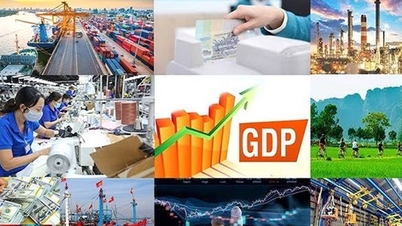
According to Mr. Hoang Anh Tuan, Deputy Director of the Domestic Market Department (Ministry of Industry and Trade), in 2022, the four key economic regions contributed nearly 75% to the country's GDP. Meanwhile, the remaining 39 provinces and cities contributed only about 25.12% to the national GDP.



In recent times, regional linkages have seen positive developments. From the perspective of the domestic market, policy mechanisms regarding regional linkages have achieved results such as: Strengthening supply-demand connections through national and local programs and projects; Effectively implementing commercial infrastructure plans; Integrating regional linkages to develop the domestic market in other sectors and socio-economic development cooperation programs.
However, representatives from the Ministry of Industry and Trade argue that key economic regions have not yet fully played their leading role, their spillover effects and investment efficiency have not been outstanding; disadvantaged regions lack sustainable development, the gap between regions has not narrowed; and regional linkages remain weak, especially between provinces and cities.
"The regional product value chain is a particularly important factor in ensuring effective regional linkages, but it is a crucial element that has not been clearly demonstrated in the current regional linkage planning and strategy. The current socio-economic zoning methods still have many limitations, failing to leverage the comparative advantages of each region along the product value chain, and intra-regional and inter-regional economic linkage value chains remain neglected," Mr. Tuan observed.
 |
| Although regional linkages have seen positive developments recently, many limitations remain. (Source: Economic Forecasting Magazine) |
According to Mr. Nguyen Van Thinh, Vice Chairman of the Vietnam Cooperative Alliance, in the context of Vietnam implementing reforms to its growth model, restructuring its economy, and enhancing national competitiveness, finding development spaces at the regional, cluster, and sub-regional levels has become more important than ever.
Mr. Thinh pointed out that cooperation and linkages between localities in the region are still fragmented, failing to fully exploit and develop the potential and strengths of each locality. The key stakeholders in these linkages—businesses, cooperatives, and economic organizations—have not yet fully played their roles. “Clearly, in the process of establishing cooperation and linkage models, we rarely talk about this activity, only generally about orientation, political commitments, and the policies of the Party and the State. These limitations have reduced the effectiveness and efficiency of regional linkage activities,” Mr. Nguyen Van Thinh emphasized.
Break away from old ways of doing things.
Mr. Le Duc Thinh, Director of the Department of Cooperative Economics and Rural Development (Ministry of Agriculture and Rural Development), believes that for regional linkages to "take off," it is necessary to break away from old ways and implement regional linkages in the direction of a knowledge-based economy, a green economy, and embrace the Fourth Industrial Revolution. At the same time, localities also need to recognize the benefits of regional linkages and create favorable conditions to promote economic activities and investment.
According to Dr. Tran Thi Hong Minh, Director of the Central Institute for Economic Management Research (CIEM), the characteristics of Vietnam's economy—its fragmented development, small-scale production, and lack of linkages—require adjustments, especially a shift from outdated, closed-loop production methods to integrated production chains, leveraging economies of scale.



Accordingly, the Director of CIEM recommended that businesses and cooperatives should also think and transform more strongly, towards strengthening cooperation and linkages with businesses in other localities in the region. Integration also forces each locality and region in Vietnam to clearly understand the strengths, potential, and differences of each region, and to have a rational arrangement and division of labor within each region.
Dr. Vu Manh Hung, Director of the Department of Agriculture and Rural Development (Central Economic Committee), proposed that in the current agricultural economic development strategy, linking production with consumption of agricultural products, linking raw material areas, and linking agricultural value chains must play a key role to create large-scale, concentrated commodity production, stabilize output, create competitiveness, and enhance the value chain for Vietnamese agricultural products.
"To enhance economic linkages in agricultural economic development, it is necessary to combine specialized agricultural zone planning with commodity sector development planning to concentrate resources and policies on the region's strengths, thereby quickly forming a developed agricultural economic zone and strong agricultural product sectors."
"State agencies also need to continue improving the legal environment, especially by issuing quality standards and regulations, enhancing contract effectiveness, and perfecting the legal framework and direct state support policies to create conditions for linkage development," Mr. Hung recommended.
Source