 |
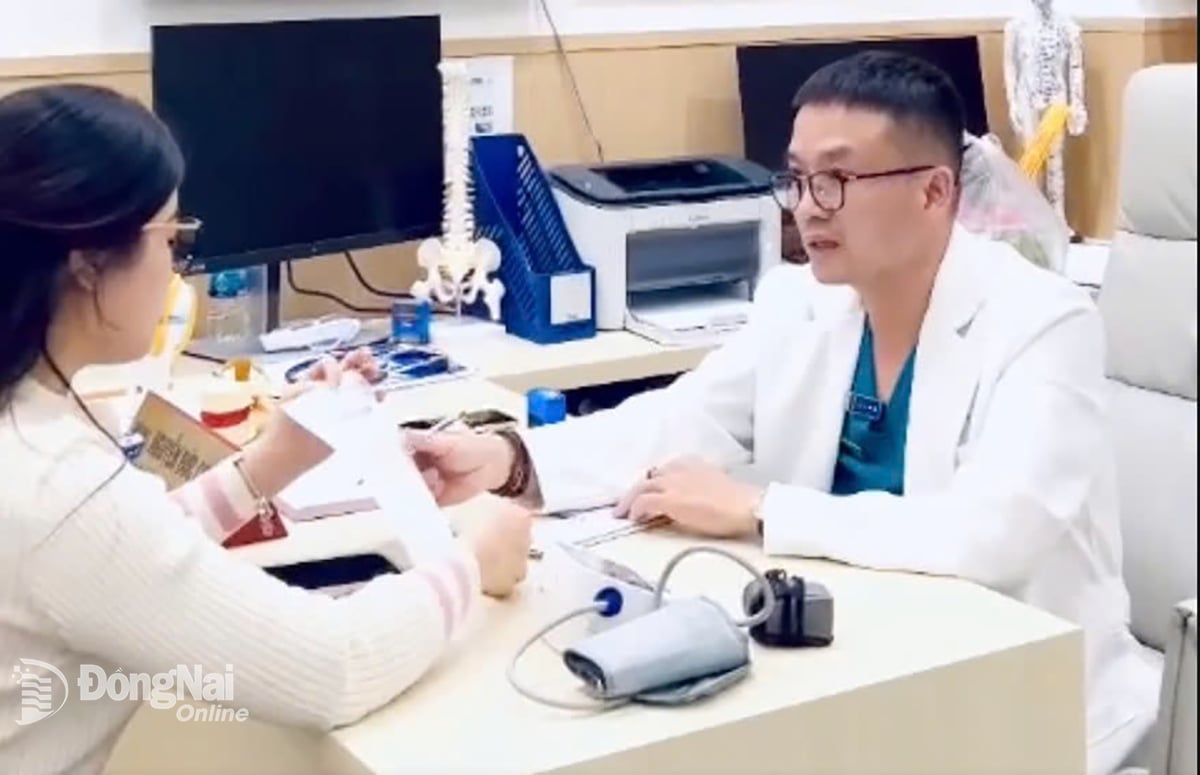
| Dr. Nguyen Duc Chuc, Specialist I, Dong Nai Traditional Medicine Hospital, examines and advises patients. Photo: TV |
Finding a way to treat sinusitis is a common desire among many patients suffering from this condition.
The changing seasons cause sinusitis to recur.
Dr. Nguyen Duc Chuc, a specialist at Dong Nai Traditional Medicine Hospital, said: “Sinusitis, also known as rhinosinusitis, occurs when harmful agents, mainly bacteria, invade, causing inflammation of the respiratory mucosa lining the paranasal sinuses. Due to certain factors, the mucosa becomes swollen, leading to increased mucus secretion and consequently, sinus blockage. Rhinosinusitis is a common disease, affecting people of all ages.”
Surgical treatment for sinusitis is applied in the following cases: when medical treatment is ineffective, when sinusitis is prolonged and persistent; when lesions or abnormalities are detected in the nasal and sinus area, such as excessively large nasal polyps or deviated nasal septum; and when the disease has caused dangerous complications such as compression of the optic nerve or orbital inflammation.
Based on the duration of the illness, sinusitis is classified into two main types: acute and chronic. Acute sinusitis is a condition that progresses and resolves on its own within a short period (less than 4 weeks). However, if neglected or not treated properly and promptly, the disease will persist for a long time (over 3 months), at which point it is called chronic sinusitis, creating conditions for bacteria to thrive, leading to typical symptoms such as: nasal congestion, thick (yellow/green) nasal discharge, facial pain (forehead, cheeks, temples), reduced or lost sense of smell, sometimes fever and fatigue…
Regarding the causes of the disease, Dr. Nguyen Duc Chuc said: There are many factors that cause symptoms of rhinosinusitis such as: fungal, viral, and bacterial infections; allergic predisposition; weak immune system; poor lifestyle and hygiene habits.


Weather is one of the factors that directly affects the respiratory system, and changes in weather can trigger recurring sinusitis episodes. For people with allergies, allergic rhinitis, or a history of chronic sinusitis, the effects of changing seasons can easily trigger a stronger inflammatory response, causing sinus irritation, swelling, and a rapid flare-up of symptoms.
Combining Eastern and Western medicine in the treatment of sinusitis.
According to Dr. Nguyen Duc Chuc, there are many methods for treating sinusitis. Among them, medical treatment is mainly applied to cases of acute sinusitis. Doctors usually prescribe medications such as antibiotics, anti-inflammatory drugs, antihistamines, or vasoconstrictors to reduce secretions. However, treatment of sinusitis with medication must strictly adhere to the instructions of an ENT specialist to avoid unwanted consequences. Incorrect use or dosage can cause many side effects. Furthermore, if patients use antibiotics beyond the prescribed amount, it can lead to antibiotic resistance, causing the disease to worsen and potentially develop complications.
In chronic rhinosinusitis, inflammation typically lasts for more than 12 weeks in the paranasal sinuses, with persistent symptoms such as nasal congestion, discharge (mucus, foul-smelling), facial and head pain, reduced or lost sense of smell, nighttime cough, and bad breath. During cold weather, in addition to following treatment protocols, people with sinusitis should keep warm, wear a mask to keep their nose and face warm when going outside, and regularly clean their nose and mouth, especially young children and the elderly with weakened immune systems. Medication should be used only as recommended and prescribed by a doctor; self-medication, particularly with antibiotics and long-term vasoconstrictor nasal sprays, should be avoided as it can cause side effects.
"Traditional medicine treats sinusitis with herbal decoctions combined with oral administration and nasal steaming (using garlic, lemon leaves, and betel leaves) to reduce nasal congestion, pain, and runny nose," said Dr. Nguyen Duc Chuc.
Additionally, sinusitis can be treated with non-drug methods such as massage and acupressure. However, this method is only supportive; patients should consult a doctor if the condition is severe or prolonged.
Currently, the combination of Eastern and Western medicine in the treatment of allergic rhinitis and sinusitis is being used increasingly. This method involves thread embedding to treat sinusitis, using absorbable catgut threads implanted into acupuncture points on the face and body (such as Yingxiang, Titong, Hegu, etc.) to create continuous stimulation, helping to regulate blood circulation, reduce inflammation and pain, clear nasal passages, improve immunity, and regulate the autonomic nervous system.



Dr. Nguyen Duc Chuc stated: "This method is effective for chronic sinusitis and allergic rhinitis, reducing reliance on medication. The procedure includes: examination, acupuncture point selection, sterile thread implantation (15-30 minutes), minimal pain, and the threads dissolve naturally after 7-15 days. Post-operative care and follow-up appointments are required."
Sea Swallow
Source: https://baodongnai.com.vn/dong-nai-cuoi-tuan/202512/de-thoat-khoi-noi-kho-viem-xoang-a030aea/

![[Image] National conference summarizing one year of operation of the overall organizational model of the political system, the three-tiered government model.](https://vphoto.vietnam.vn/thumb/1200x675/vietnam/resource/IMAGE/2026/07/01/1782882811691_ndo_br_1-jpg.webp)











![[Video] Weather forecast for tonight and tomorrow, July 2nd, 2026: Tropical depression likely to strengthen into a storm; many areas will continue to experience thunderstorms.](https://vphoto.vietnam.vn/thumb/402x226/vietnam/resource/IMAGE/2026/07/01/1782911026600_thumb-dem-png.webp)