

SGGP
According to the Ministry of Agriculture and Rural Development, Vietnamese shrimp is currently present in the markets of 100 countries, bringing in billions of USD in recent years. However, the shrimp industry is facing challenges due to fierce competition from other countries.
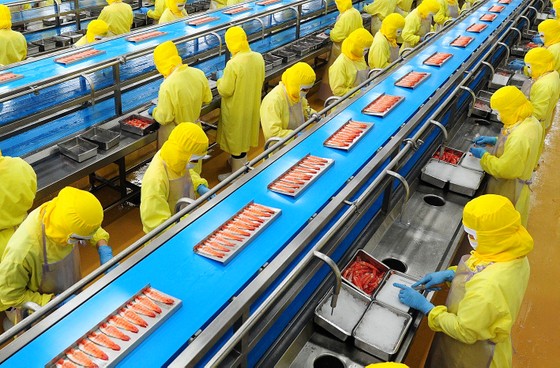 |
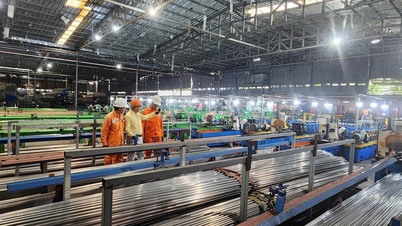
| Workers at CP Vietnam's frozen shrimp factory in Thua Thien Hue are processing shrimp. |
Many disadvantages
According to Mr. Ngo The Anh, Head of the Aquaculture Department (Fisheries Department, Ministry of Agriculture and Rural Development), Vietnam's shrimp exports rank second in the world , accounting for 13-14% of the global shrimp industry's total export value. On average, shrimp contributes about 45% of the total value of seafood exports annually, equivalent to 3.5-4 billion USD. Although the shrimp industry increased its farming area in the first six months of the year (over 650,000 hectares, up 6.4% compared to the same period) and had a good harvest (467,000 tons, up 4% compared to the same period), shrimp export revenue decreased due to high input costs and production costs, while selling prices remained low. Therefore, shrimp exports decreased by nearly 32% compared to the same period last year, with the sharpest declines in the European Union (EU) market (48%), the United States (38%), South Korea (28%), Japan (29%), and China (15%).
Along with declining exports, shrimp exporting businesses report that the industry is currently facing numerous disadvantages, especially in meeting technical barriers. Mr. Le Van Quang, General Director of Minh Phu Seafood Group Joint Stock Company ( Ca Mau ), shared that while businesses are developing raw material areas to meet the requirements of specific markets such as the US and EU, the area that has achieved certification remains very small. Vietnam currently applies many GlobalGAP certifications, but major markets do not require this certification. Meanwhile, businesses in Ecuador have received significant support from their government in certifying their farming areas.
"Local authorities, ministries, and sectors need to coordinate with organizations and businesses to verify and certify raw material areas that meet market requirements. That is, we should follow the standards the market demands, not produce what they don't need," Mr. Le Van Quang suggested.
On the other hand, some markets, particularly Japan, still lack complete trust and conduct 100% antibiotic residue checks on imported shrimp shipments. This leads to additional port costs and delays for Vietnamese shrimp, reducing their competitiveness. Meanwhile, shrimp from Thailand and India imported into Japan only undergo 20%-30% inspection. Furthermore, in the US market, since 2004, Vietnamese shrimp has faced disadvantages due to trade protection measures, including investigations and the application of anti-dumping duties.
Adapt appropriately
Regarding the export of seafood in general and shrimp in particular, Ms. Nguyen Hoang Thuy, Vietnam's Trade Representative in the Nordic countries, noted that the EU will consume more seafood and gradually reduce red meat consumption to decrease carbon emissions from livestock farming. Along with environmental protection, EU consumers will use more eco-friendly and organic shrimp, canned foods, etc. Therefore, Vietnamese businesses can explore opportunities to establish supply chains for raw shrimp and become part of the value chain for processors.
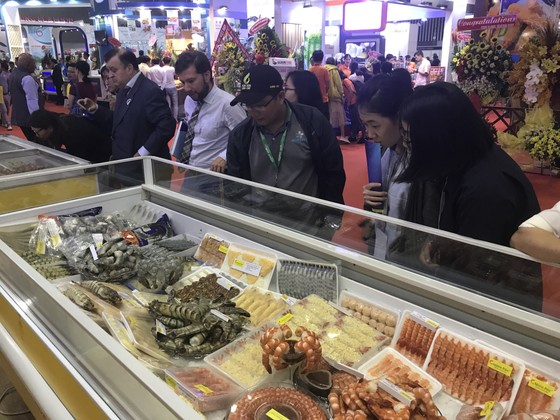 |
Foreign businesses visit the shrimp booth at the Seafood Fair held at the Saigon Exhibition and Convention Center (SECC) (District 7, Ho Chi Minh City). |
Meanwhile, the Agricultural Counselor of the Vietnamese Trade Office in the United States predicts that by the end of this year, US shrimp inventories will decrease, and importing businesses will increase their purchasing power again. Furthermore, the US is not raising interest rates to encourage businesses to purchase shrimp, hoping that inflation will gradually be brought under control. “The US places great emphasis on processed shrimp because of its convenience and long shelf life. On the other hand, Vietnamese businesses need to collaborate with international partners to improve the quality of shrimp larvae. In particular, it is necessary to maintain complete records of the production and processing process for traceability and to facilitate on-site inspections by US authorities,” the Agricultural Counselor of the Vietnamese Trade Office in the United States noted. Regarding the Chinese market, experts say that Vietnamese businesses have only exported to markets near the border, while the northern and central regions of China have enormous potential but remain untapped.
"China is reducing its own shrimp farming due to high input costs, and increasing imports of shrimp from countries with lower prices for processing and re-export. This presents a huge opportunity for Vietnam's shrimp industry to thrive," commented the representative of the Vietnamese Trade Counselor in China.
To achieve shrimp export revenue exceeding $4.3 billion in 2023, Mr. Tran Thanh Nam, Deputy Minister of Agriculture and Rural Development, stated that shrimp stocks in other countries are currently decreasing, and countries with shrimp industries competing with Vietnam are also reducing production. Taking advantage of this opportunity, Vietnamese businesses should boost exports. Furthermore, Vietnamese trade offices in other countries need to reassess whether the high cost is due to high logistics costs or high raw material prices so that the Ministry of Agriculture and Rural Development can work with relevant agencies.
“The Ministry’s stance is not to buy cheap raw materials that would lower the quality of shrimp. Regarding long-term stable development solutions, Vietnamese trade missions need to strengthen promotion and advertising of the image of Vietnamese shrimp, and provide timely information on market fluctuations to the Ministry of Agriculture and Rural Development and the Ministry of Industry and Trade to guide farming areas, as well as processing and export activities. In addition, the Ministry of Industry and Trade needs to accelerate the signing of more free trade agreements, support businesses in exploiting the potential from these agreements, and develop solutions to adapt to technical barriers,” Deputy Minister Tran Thanh Nam emphasized.
In 2022, shrimp exports reached US$4.3 billion. The top three localities nationwide in shrimp exports were: Ca Mau (over US$1 billion), Soc Trang (nearly US$1 billion), and Bac Lieu (over US$850 million). In the first six months of 2023, Ca Mau province exported over US$497 million; Soc Trang (estimated US$420 million); and Bac Lieu (US$413 million). Regarding shrimp export markets in the first six months of 2023: the EU accounted for US$192 million; the United States US$298 million; South Korea US$166 million; Japan US$236 million; and China US$280 million.
Source
![[Photo] General Secretary and President To Lam presides over the meeting to approve the draft report on the results of the second inspection by the Politburo of the Standing Committee of the Hanoi City Party Committee.](https://vphoto.vietnam.vn/thumb/1200x675/vietnam/resource/IMAGE/2026/05/26/1779789811432_a2-bnd-4430-9620-jpg.webp)

















































































Comment (0)