

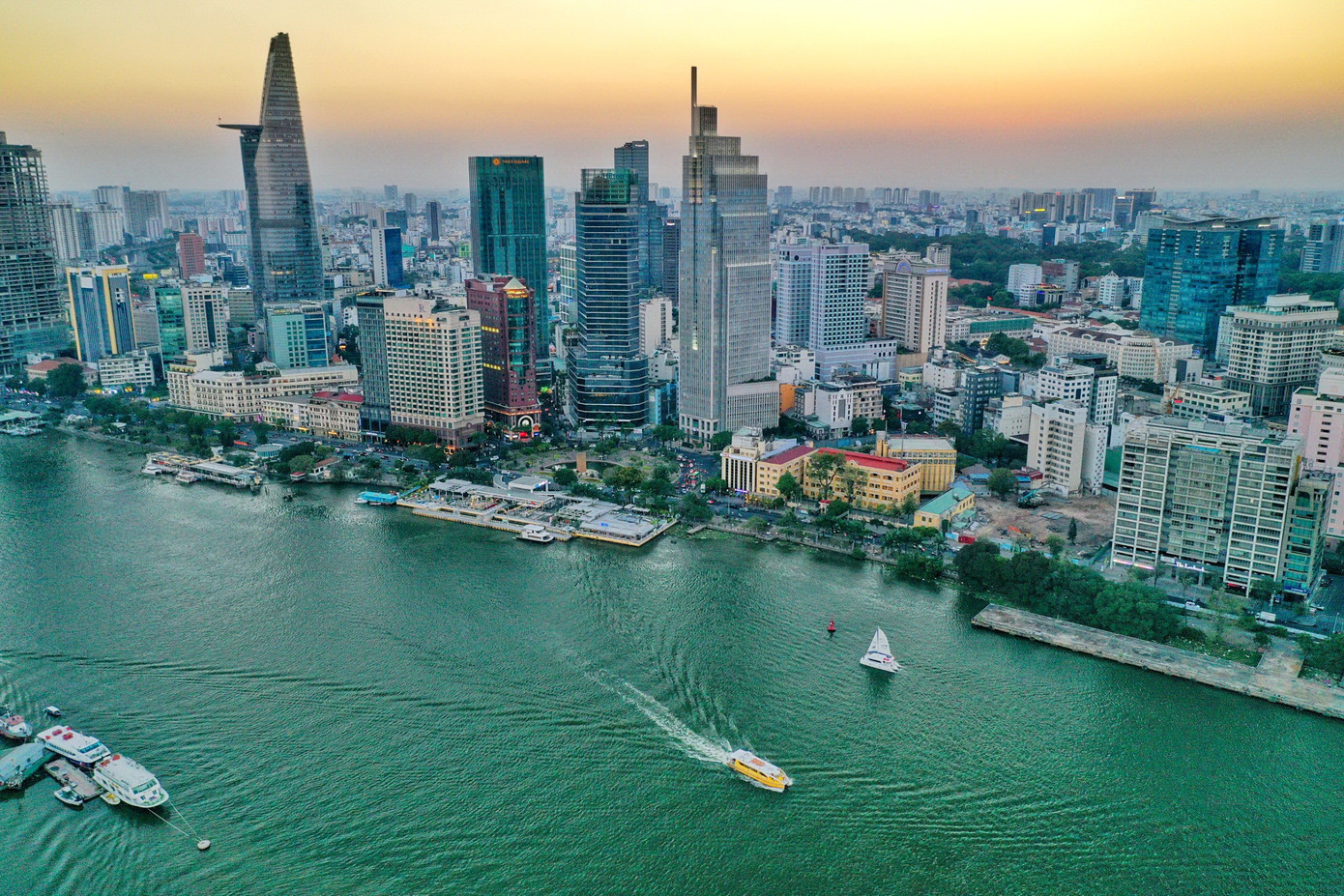
On June 24, 2023, the 15th National Assembly passed Resolution 98 on piloting a number of special mechanisms and policies for the development of Ho Chi Minh City. More than two years after adopting this new institutional framework, Ho Chi Minh City has achieved certain successes in its development process by quickly utilizing the outstanding and specific policies from the resolution.
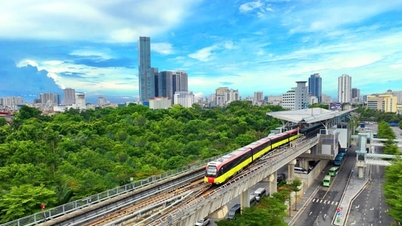
Dr. Tran Quang Thang, Director of the Ho Chi Minh City Institute of Economics and Management, commented that after a short period of implementing Resolution 98, the city has achieved and exceeded the plan for many socio-economic indicators, creating a foundation for rapid and sustainable development. Key infrastructure projects such as ring roads, metro lines, and canal renovation projects have had their funding and procedural obstacles removed, and progress has been accelerated. Along with this, the confidence of businesses and investors has increased as the city can make decisions quickly, without being bogged down by the approval process from higher authorities.
Regarding funding and resettlement, this specific resolution allows the city to use public investment funds to compensate, support, and resettle people directly in the areas surrounding the train station, instead of waiting for central government approval.
“Thanks to the special mechanism, Ho Chi Minh City can quickly implement interchanges, reduce traffic congestion, and create momentum for regional development. Resolution 98 helps the city not only streamline procedures for large projects such as Metro Line 1 and Ring Road 3, but also create direct socio-economic impacts: increasing budget revenue from land exploitation, reducing traffic congestion, improving quality of life, and expanding job opportunities for people,” Mr. Thang pointed out.
Mr. Thang acknowledged that, after more than two years of implementation, Resolution 98 has helped Ho Chi Minh City make significant progress, but it still reveals limitations in financial mechanisms, planning, investment attraction, and urban governance, and is not yet strong enough to meet the role of a megacity with over 14 million people. Therefore, the National Assembly needs to amend it to expand autonomy, remove bottlenecks, and create a more flexible legal framework.
According to Mr. Thang, this Resolution reveals fundamental limitations such as insufficient flexibility. He cited the example that Resolution 98 was designed for Ho Chi Minh City with its old scale, while the city has now expanded its development space and has a real population of nearly 20 million people. The current regulations are not sufficient to fully exploit the potential of a megacity.
Furthermore, the regulations are cumbersome and lack real authority. Some provisions still require "according to current legal regulations," forcing the city to seek opinions and undermining its specificity. Many regulations are overly detailed, leading to the need to amend resolutions when new situations arise, instead of granting the Ho Chi Minh City People's Council the authority to make its own decisions.
On the other hand, a framework for urban governance has yet to be established. Resolution 98 has not provided a complete framework for a governance model equivalent to Tokyo, Seoul, or London; fragmentation in planning, disparities in development between the inner city and suburbs, and limited data governance capacity still exist.
The Director of the Ho Chi Minh City Institute of Economics and Management emphasized that Resolution 98 still needs further amendment to meet the new scale of Ho Chi Minh City after the merger and expansion of its administrative boundaries, in order to receive a stronger mechanism for unified urban, industrial, and port management. This also reflects the National Assembly's desire to give Ho Chi Minh City its own space for freedom of innovation and breakthrough development, instead of being constrained like other localities.
"The resolution needs to be revised to be more open in order to address outstanding projects, expand financial mechanisms, attract strategic investors, and build a model for urban governance. Resolution 98 was a step forward, but it wasn't strong enough. The revision is necessary for Ho Chi Minh City to truly break through to its potential, maintain its role as the economic locomotive, and become a modern megacity," the expert commented.
Chairman of the Ho Chi Minh City People's Committee, Nguyen Van Duoc, stated that the National Assembly's discussion of the draft Resolution amending and supplementing several articles of Resolution 98 is of great significance to Ho Chi Minh City. This affirms the Central Government's close and decisive attention to urgent tasks aimed at creating conditions for the city to continue playing its pioneering role for the whole country. The adjustment and "upgrading" of Resolution 98 stems from the need to complete the planning and redesign the development space according to a multi-polar, integrated, and hyper-connected mindset, following the orientation of "3 regions - 1 special zone - 3 corridors - 5 driving forces" after the city expanded its development space to nearly 6,800 km2 and its population to approximately 14 million people. This is the foundation for Ho Chi Minh City to become a modern and sustainable urban center.
Source: https://tienphong.vn/de-tphcm-tro-thanh-sieu-do-thi-hien-dai-post1802934.tpo

![[Photo] The courage of new recruits of Brigade 144 on the training ground.](https://vphoto.vietnam.vn/thumb/1200x675/vietnam/resource/IMAGE/2026/05/27/1779881651341_anh-man-hinh-2026-05-27-luc-18-32-52.png)


![[Photo] The heat at the fireworks display site on the opening night of the Da Nang International Fireworks Festival 2026](https://vphoto.vietnam.vn/thumb/1200x675/vietnam/resource/IMAGE/2026/05/27/1779889741485_ndo_br_z7872039145157-fecaba5112f39e8352544099d7ef4738-5140-jpg.webp)


















































![[Photo] The courage of new recruits of Brigade 144 on the training ground.](https://vphoto.vietnam.vn/thumb/402x226/vietnam/resource/IMAGE/2026/05/27/1779881651341_anh-man-hinh-2026-05-27-luc-18-32-52.png)


























Comment (0)