Acute arthritis
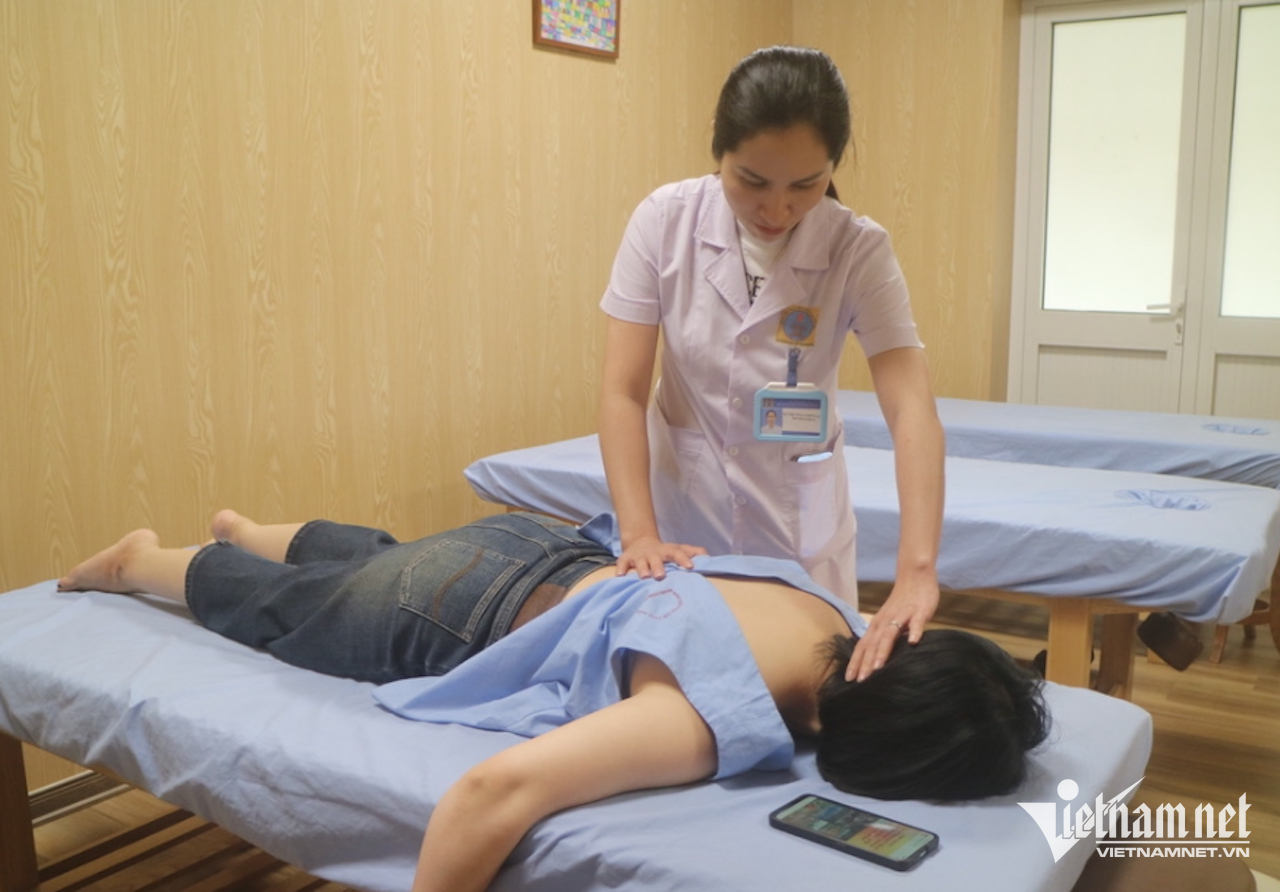
Ms. NTH (49 years old, Hanoi ) was admitted to the hospital with severe swelling and pain in both knees, making movement difficult.
Previously, after hearing from friends about the benefits of walking, she enthusiastically joined the challenge of walking 10,000 steps a day. From the very first week, despite feeling tired and experiencing dull aches, she still pushed herself to complete the goal at a fast pace.
As a result, her initial mild knee pain developed into an acute episode of arthritis with synovial effusion, requiring intensive medical intervention.
Dr. Tran Thi Hong Gam, Head of the General Outpatient Department at Hanoi Rehabilitation Hospital, who directly treated the patient, said that cases like Mrs. H.'s are not uncommon.
In reality, a paradox is occurring: many people worry that walking a lot will wear down their knee and hip joints, so they avoid exercising, while another group over-exercises, using incorrect methods, leading to serious injuries to their musculoskeletal system.
When does walking become harmful?
According to Dr. Gam, articular cartilage has no direct blood vessels supplying it. This part is nourished by synovial fluid that permeates into the joint whenever it moves. The gentle flexing and extending movements we make while walking act as a lever to help synovial fluid circulate continuously, thereby delivering essential nutrients to nourish the articular cartilage.


"Furthermore, maintaining a regular walking routine strengthens the muscle groups around the joints, supports effective weight loss to reduce the load on the knees, and helps strengthen bones and significantly reduce pain in people with mild to moderate osteoarthritis," said Dr. Gam.
The core issue doesn't lie in the walking itself, but rather in the way the person walks. According to Dr. Gam, the most common mistakes people make include walking too much and too fast right from the start, instead of gradually increasing the intensity to allow the body to adapt.
In addition, the habit of taking excessively long strides combined with stomping the heels too hard on the ground creates a large counter-shock force that directly impacts the skeletal system. Choosing unsuitable walking shoes, shoes with worn soles, or shoes lacking shock-absorbing cushioning are also leading causes of damage to the foot joints.
In particular, many people also skip two extremely important steps: warming up thoroughly before exercising and deep stretching after finishing their workout. The most serious mistake, especially, is trying to endure the pain to continue exercising when the joints are already showing signs of pain or swelling.
Furthermore, choosing overly hard terrain such as asphalt or steep slopes when the knee joint is weak can inadvertently put dangerous strain on the musculoskeletal system.
To ensure absolute safety, Dr. Gam recommends that five specific groups of people should consult a specialist before starting any exercise program:
- People who experience joint pain or swelling during an acute inflammatory episode.
- People with severe osteoarthritis have developed joint deformities.
- Individuals with cardiovascular disease or uncontrolled blood pressure.



- The diabetic patient has developed foot complications and foot ulcers.
- Individuals prone to dizziness, loss of balance, a history of falls, and severe osteoporosis with a high risk of fractures.
In these cases, it is necessary to adjust the level of exercise to suit the physical condition or proactively switch to a gentler and safer form of exercise for the musculoskeletal system, such as cycling, swimming, or participating in water-based exercises under professional guidance.
Source: https://vietnamnet.vn/di-bo-co-lam-mon-khop-2530882.html

![[Image] National conference summarizing one year of operation of the overall organizational model of the political system, the three-tiered government model.](https://vphoto.vietnam.vn/thumb/1200x675/vietnam/resource/IMAGE/2026/07/01/1782882811691_ndo_br_1-jpg.webp)