

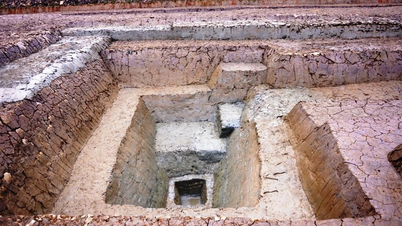
Historical relics are traces of the past left on a particular land. These traces are manifested in a physical form that is clearly visible to the human eye. Through these relics, future generations can understand the events, level of civilization, beliefs, lifestyles, and living conditions of people in the past.
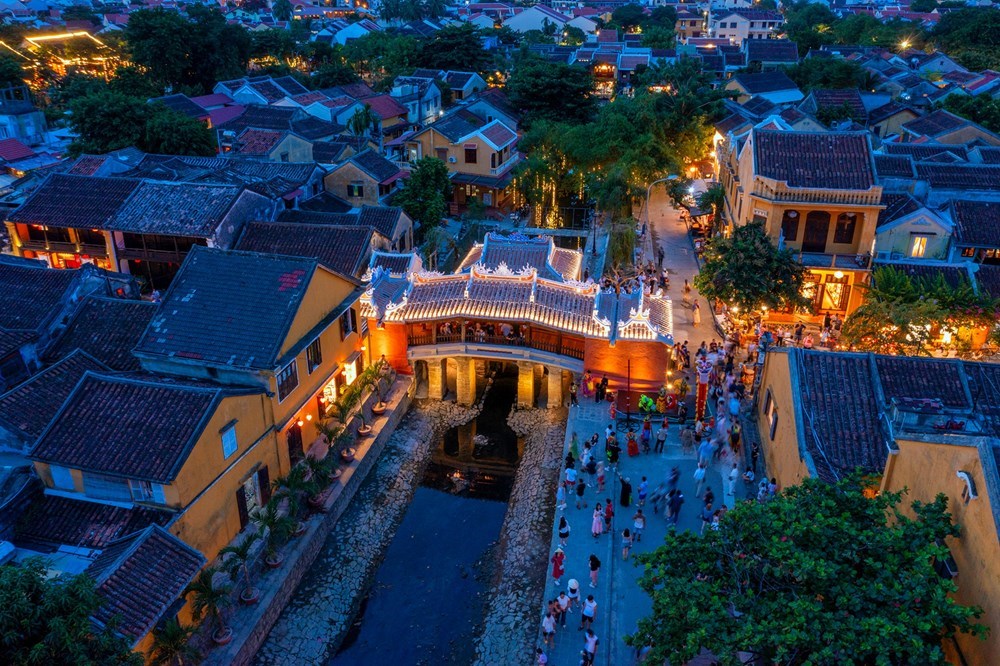
It is appealing because it provides a wealth of knowledge through vivid visuals, offering a unique perspective compared to contemporary life. The older, stranger, clearer, and more unique the historical site, the greater its appeal. Sites associated with turning points in history, marking major events, and those with magnificent architectural structures will naturally attract public attention. The Dien Bien Phu victory site, for example, is a case in point – "renowned throughout the world, shaking the earth." This means that historical sites possess inherent appeal, providing a further foundation for tourism development.
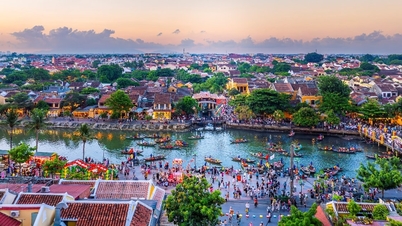
A historical site becomes even more attractive if it is linked to intangible cultural heritage that continues to be passed down, such as Hoi An Ancient Town with its traditional handicraft activities. Hoi An is also associated with a beautiful seaport and convenient transportation. These are advantages that are not easily found in many other historical sites.
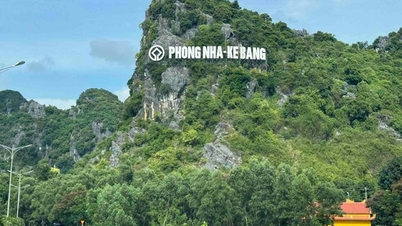
To be precise, there is a clear difference between the value of a historical site and its tourism potential. Historical sites are sometimes very important because they reflect an entire historical period, linked to a significant historical event, but tourism professionals often fail to see the great potential in them. For example, some sites are nothing more than historical locations, like battle sites where no physical traces remain except for the place names.
A historical site may be valuable, but it is often too isolated and remote, lacking supporting elements such as scenic spots and local intangible cultural heritage. While historical sites and scenic spots are sometimes important, they are not necessarily unique or one-of-a-kind; many similar entities exist elsewhere.
For example, along the South Central coast, there are many bays and inlets, such as Thi Nai, O Loan, Van Phong, Nha Trang, Cam Ranh… and each bay is beautiful, and it's impossible to say which is more beautiful than the other; of course, each has its own unique features. The thing is, bays and inlets can be found everywhere, with blue seas, white sands, cool coconut groves, and rustling casuarina forests. This also means that no place can claim to be unique, because they are all quite similar.
In short, while historical sites (and scenic spots) may be numerous and valuable, they cannot be equated with tourism potential. In other words, from a tourism perspective, historical sites are categorized differently from those already classified or evaluated from a historical site standpoint.
The reason for saying this is that in some localities there is often a seemingly critical or reproachful saying: "The locality has many valuable historical sites, but tourism is underdeveloped." Of course, in tourism development, there is a subjective factor: the people (managing and directly involved in tourism) – whether they are skilled, unskilled, professional, or just starting out – and this is not meant to justify their actions.
However, objectively speaking, subjective assessments of the tourism potential of historical sites need clarification. For example, these questions need to be raised: Are these sites unique? Do they attract significant public attention? Do they interact well with their surroundings?... Only then can we make an accurate assessment based on objective reality, and from that assessment, we can formulate the right direction for tourism development.
Vietnam's tourism industry has made impressive progress. However, in some places and at some times, certain mistakes have been made due to underestimating the potential, leading to wasted resources. Regarding the tourism potential of historical sites, general and subjective assessments must be avoided. The Ministry of Culture, Sports and Tourism is currently implementing a nationwide cultural planning program, and I believe it is extremely important to remember this.
Source: https://baovanhoa.vn/van-hoa/di-tich-va-tiem-nang-du-lich-218964.html
![[Photo] National Assembly Chairman Tran Thanh Man attends the opening session of IPU-152](https://vphoto.vietnam.vn/thumb/1200x675/vietnam/resource/IMAGE/2026/04/16/1776277863731_ctqh5-jpg.webp)
![[Photo] Mrs. Ngo Phuong Ly meets and exchanges views with Mrs. Peng Li Yuan](https://vphoto.vietnam.vn/thumb/1200x675/vietnam/resource/IMAGE/2026/04/16/1776277858080_phu-nhan-1-jpg.webp)
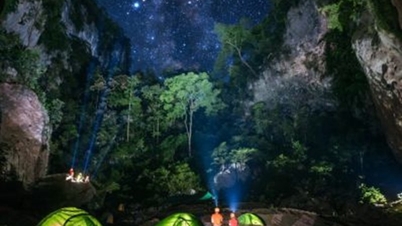
![[Photo] My Son at night: A thousand-year-old heritage site amidst the Milky Way](https://vphoto.vietnam.vn/thumb/1200x675/vietnam/resource/IMAGE/2026/04/15/1776261039184_ndo_br_chon6-jpg.webp)
![[Photo] The General Secretary, President and his wife meet with Vietnamese-Chinese friendship leaders.](https://vphoto.vietnam.vn/thumb/1200x675/vietnam/resource/IMAGE/2026/04/15/1776264829725_vna-potal-tong-bi-thu-chu-tich-nuoc-to-lam-gap-mat-nhan-sy-huu-nghi-viet-nam-trung-quoc-8703641-3130-jpg.webp)


![[Photo] My Son at night: A thousand-year-old heritage site amidst the Milky Way](https://vphoto.vietnam.vn/thumb/402x226/vietnam/resource/IMAGE/2026/04/15/1776261039184_ndo_br_chon6-jpg.webp)












































































Comment (0)