

(NLĐO) - In late 2024, an archaeologist claimed he had found what could be a statue of Queen Cleopatra at the Taposiris Magna temple in Egypt.
According to Live Science, the claim about the statue of Queen Cleopatra comes from archaeologist Kathleen Martinez, who leads the Egyptian-Dominican team excavating the Taposiris Magna temple site.
Scientists believe this temple was where the famous Egyptian queen planned to lay herself and her lover, Mark Antony (Marcus Antonius), to rest.
But Martinez is not the first person to believe he has found a portrait of Cleopatra.
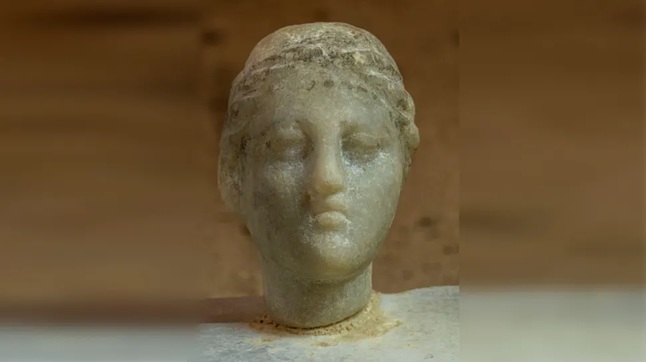
The bust discovered by archaeologist Kathleen Martinez and her colleagues - Photo: EGYPTIAN MINISTRY OF TOURISM AND ANTIQUES
Queen Cleopatra VII of Egypt, often simply called Queen Cleopatra, was one of Egypt's most famous pharaohs, the last true ruler of the Ptolemaic dynasty, although nominally her son was the last ruler.
Cleopatra reigned from approximately 70 BC until 30 BC, during a period of great upheaval.
Modern archaeologists have yet to find her actual burial place. In addition, they are still searching for a portrait of her, the queen renowned for her breathtaking beauty.
According to Discovery Magazine, Cleopatra's allure has captivated the imaginations of historians, artists, and storytellers for centuries.
Many artifacts are believed to bear her likeness; for example, a portrait possibly painted after the queen's death was found at the Roman Herculaneum in Italy, dating back to the 1st century AD.
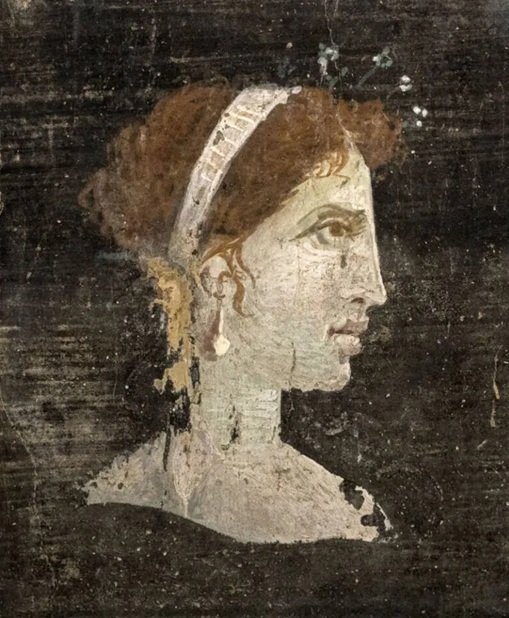
The portrait is believed to have been painted in the 1st century BC - Photo: Ángel M. Felicísimo
A coin dating from 37-33 BC, minted in the Eastern Mediterranean, is believed to feature Queen Cleopatra on one side and her lover Mark Antony on the other.
However, the image on the coin is said to contradict the described and expected beauty of the famous queen.
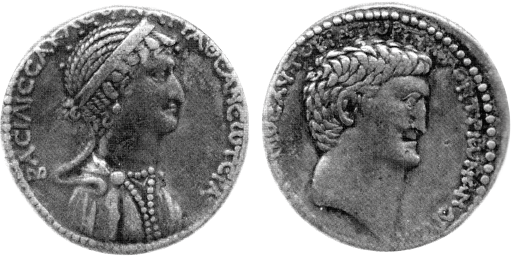
Ancient coins bearing images of Cleopatra and her lover - Photo: DISCOVERY MAGAZINE
There is also a bas-relief depicting Cleopatra in pharaoh's attire offering gifts to Isis, dating from 51 BC.
However, the image on the relief is too small and simplified to fully capture the queen's beauty.
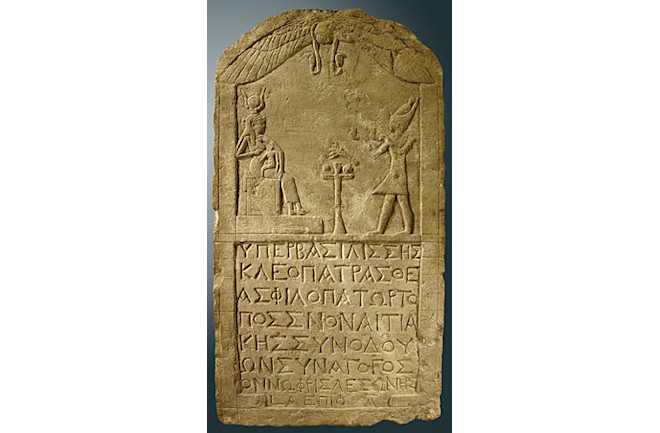
A bas-relief depicting a famous Egyptian queen - Archival photo
Some artists have also attempted to portray her, a portrait that has been controversial due to the uncertainty surrounding her ethnicity.
Many people point out that Cleopatra's family did not come from the land they ruled but from Macedonia, which has led many researchers to believe that her skin was light – as European art often depicts her – and not as dark as that of the native Egyptians.
However, while her father's lineage, Pharaoh Ptolemy XII, is fully documented, her mother's lineage is not.
The uncertainty surrounding Cleopatra's ethnicity has made her an unexpected subject of contemporary cultural debate, including the casting choices for films about her life.
But the concept of a dark-skinned Cleopatra appeared much earlier, with sculptures by 19th-century artist William Wetmore Story.
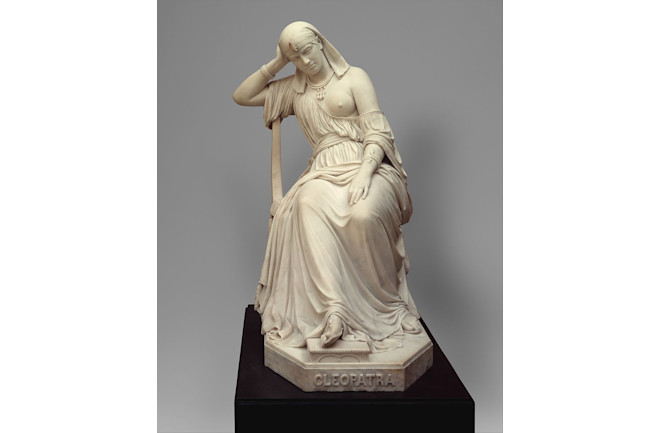
William Wetmore's marble sculpture of Cleopatra - Photo: METROPOLITAN ART MUSEUM
Meanwhile, numerous archaeological teams from various countries are still working to search and analyze, hoping to find clues about the true burial place of Queen Cleopatra, where something might be hidden that reveals her true likeness.
Source: https://nld.com.vn/di-tim-chan-dung-nu-hoang-ai-cap-cleopatra-196250126110614521.htm






































































































Comment (0)