

On December 23rd, the Vietnam Television Center in Ho Chi Minh City (VTV9) organized a seminar on the topic "Public Spaces – From Urban Symbols to Drivers of Economic Growth".
At the seminar, delegates stated that Ho Chi Minh City is aiming to achieve a minimum of 1 m² of public green space per person by 2030, striving to become one of the top 100 most livable cities in the world . However, given the increasingly limited land resources, the city needs to approach public spaces with a new mindset, moving beyond the traditional park model. The city can leverage its unique advantages of waterways and canals, combining them with community activities, tourism, culture, and commerce.
One key point emphasized at the seminar was the role of public-private partnerships (PPP). According to experts, if a suitable mechanism is in place to regulate the increased land value generated by real estate projects adjacent to the public green space, this resource could be reinvested back into the park, square, and public infrastructure itself. This would prevent the concentration of benefits in a few individual projects, while the public green space lacks the necessary funds for maintenance and upgrading. Furthermore, the application of National Assembly Resolution 98 is considered a crucial "lever," allowing Ho Chi Minh City to pilot new management models and financial institutions, empowering districts and communes to be more proactive in socializing the development of multi-functional public green spaces.
Dr. Nguyen Ba Hung, Chief Economist of the ADB Vietnam Office, believes that Ho Chi Minh City is aiming to build an image of a "livable city" based on sustainable, green, integrated, safe, healthy, and resilient criteria. However, Ho Chi Minh City is facing many challenges, especially the lack of both "hardware" and "software" in community services. These include limited public transportation infrastructure, low resilience to natural disasters, while climate factors are increasingly impacting housing and healthcare services.
ADB Vietnam proposed integrated planning and investment solutions, citing examples such as the comprehensive development of Go Vap Park linked to the public transport network, while also promoting the PPP model in the operation and maintenance of urban services.

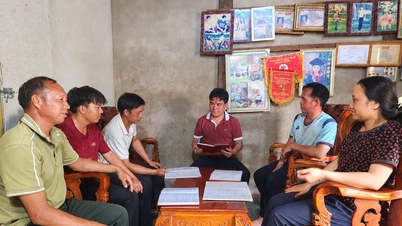
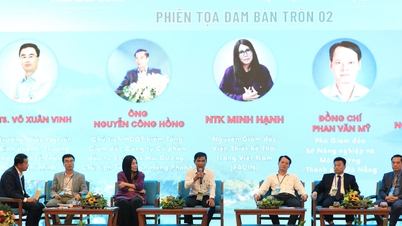
Experts shared their insights at the seminar.
From a market perspective, Dr. Su Ngoc Khuong, Senior Director of Investment at Savills Vietnam, believes that cities with high-quality public green spaces tend to have more sustainable real estate values, attract long-term capital flows, and enhance their prestige in international M&A transactions. According to him, public green spaces are not merely an auxiliary element but an integral part of modern urban planning. To develop effective public green spaces, a synchronized combination of three key factors is needed: urban planning, economic resources, and the role of architects.
Mr. Khuong also analyzed the direct link between public green spaces and the economic value of surrounding areas. Areas with parks, playgrounds, and squares tend to record higher real estate prices and faster product consumption rates due to the high-quality living environment. Therefore, investing in public green spaces not only benefits the community but also helps investors improve business efficiency, while contributing to building a civilized urban landscape for the local government.
From a design perspective, architect Steven Townsend, CEO of Studio Urban Design (SUDV), who previously participated in the planning of the Phu My Hung urban area, emphasized the role of multifunctional public green spaces. These spaces need to be designed to integrate efficient land use, connect transportation, the economy, and society, and contribute to defining the urban identity, thereby becoming a driving force for sustainable development in Ho Chi Minh City in the future.
Source: https://nld.com.vn/tphcm-can-lam-gi-de-dat-muc-tieu-toi-thieu-1m2-cay-xanh-cong-cong-nguoi-196251223154417188.htm
![[Photo] The General Secretary, President and his wife begin their state visit to the Philippines.](https://vphoto.vietnam.vn/thumb/1200x675/vietnam/resource/IMAGE/2026/05/31/1780230559452_anh-man-hinh-2026-05-31-luc-19-28-11.png)
![[Photo] Admire the coral "masterpiece" amidst the million-year-old heritage of Dak Lak province.](https://vphoto.vietnam.vn/thumb/1200x675/vietnam/resource/IMAGE/2026/05/31/1780221235105_anh-man-hinh-2026-05-31-luc-16-53-27.png)

![[Photo] Solemn bathing ceremony and Buddha procession in Hue](https://vphoto.vietnam.vn/thumb/1200x675/vietnam/resource/IMAGE/2026/05/31/1780228263543_1-jpg.webp)












![[Video] Sunset at Lap An Lagoon – Where the sun sets over the fishing nets](https://vphoto.vietnam.vn/thumb/340x192/vietnam/resource/IMAGE/2026/05/31/1780192137701_beach-landscape-sea-water-nature-grass-745871-pxhere-com.jpeg)































![[Photo] Admire the coral "masterpiece" amidst the million-year-old heritage of Dak Lak province.](https://vphoto.vietnam.vn/thumb/402x226/vietnam/resource/IMAGE/2026/05/31/1780221235105_anh-man-hinh-2026-05-31-luc-16-53-27.png)






























Comment (0)