

 |
| The UNESCO recognition of Koshary represents a new step in Egypt's efforts to widely promote the country's cultural and historical identity. (Source: UNESCO) |
Koshary, a unique combination of lentils, rice, and pasta found at almost every Egyptian street food stall, was officially recognized as an intangible cultural heritage by UNESCO on December 10th. This is a new step in Cairo's efforts to promote its cultural identity and historical depth, coming just over a month after the inauguration of a large-scale new antiquities museum.
One legend suggests that Koshary originated in northern India and traveled to Egypt with British soldiers. However, researchers assert that the dish has a much longer history, linked to migration routes, trade, and the exchange of civilizations over millennia. Culinary and botanical archaeologist Hala Barakat states that lentils originated in Mesopotamia over 5800 years ago, rice came from East Asia, tomatoes and peppers from the Americas, and pasta is a modern addition.
These ingredients have converged over thousands of years. The name may bear an Indian imprint, but Koshary in Egypt has developed its own distinct form and varies by region. The nomination dossier clearly shows this diversity. Yellow lentil is popular in coastal areas, while Cairo and Upper Egypt prefer black lentil. Some families add boiled eggs. In Sinai, there is ma'dous, which has a similar preparation method. The unifying element lies in the characteristic flavors of vinegar, garlic, and spicy sauce, depending on individual taste.
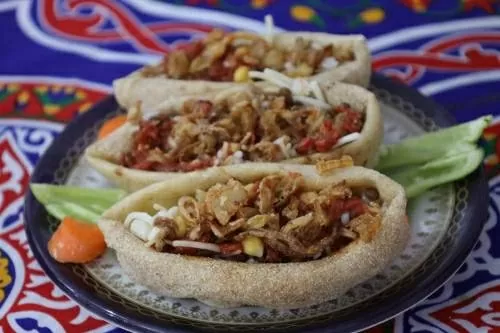 |
| Koshary is a unique combination of lentils, rice, and pasta. (Source: UNESCO) |
The recognition is symbolic and does not come with financial support. Before Koshary, many dishes such as North African couscous and South American ceviche had been recognized by UNESCO. This year, Italian cuisine is also on the list for consideration. Koshary became popular in the 20th century when food carts and casual restaurants sprang up around schools and train stations. Because it does not use animal products, the dish is suitable for the Coptic Christian community during the fasting period and caters to the vegetarian trend among Egyptian youth.
According to Ahmed Shaker, head of public relations at Abou Tarek Koshary, a popular Cairo establishment since 1963, Koshary is now almost a symbol of the country. He says that any tourist visiting Egypt will stop by the Pyramids, visit the museums, and seek out Abou Tarek to enjoy Koshary.
With this inscription, Koshary becomes Egypt's 11th heritage site, following Tahteeb, a traditional stick fighting martial art, and the oral epic Sirat Bani Hilal. The new UNESCO Director-General, Khaled El Enany, who previously served as Egypt's Minister of Tourism and Antiquities, affirmed that he will prioritize the preservation and promotion of cultural traditions during his term.
Source: https://baoquocte.vn/mon-an-cua-ai-cap-duoc-unesco-cong-nhan-la-di-san-van-hoa-phi-vat-the-337655.html






















































































Comment (0)