

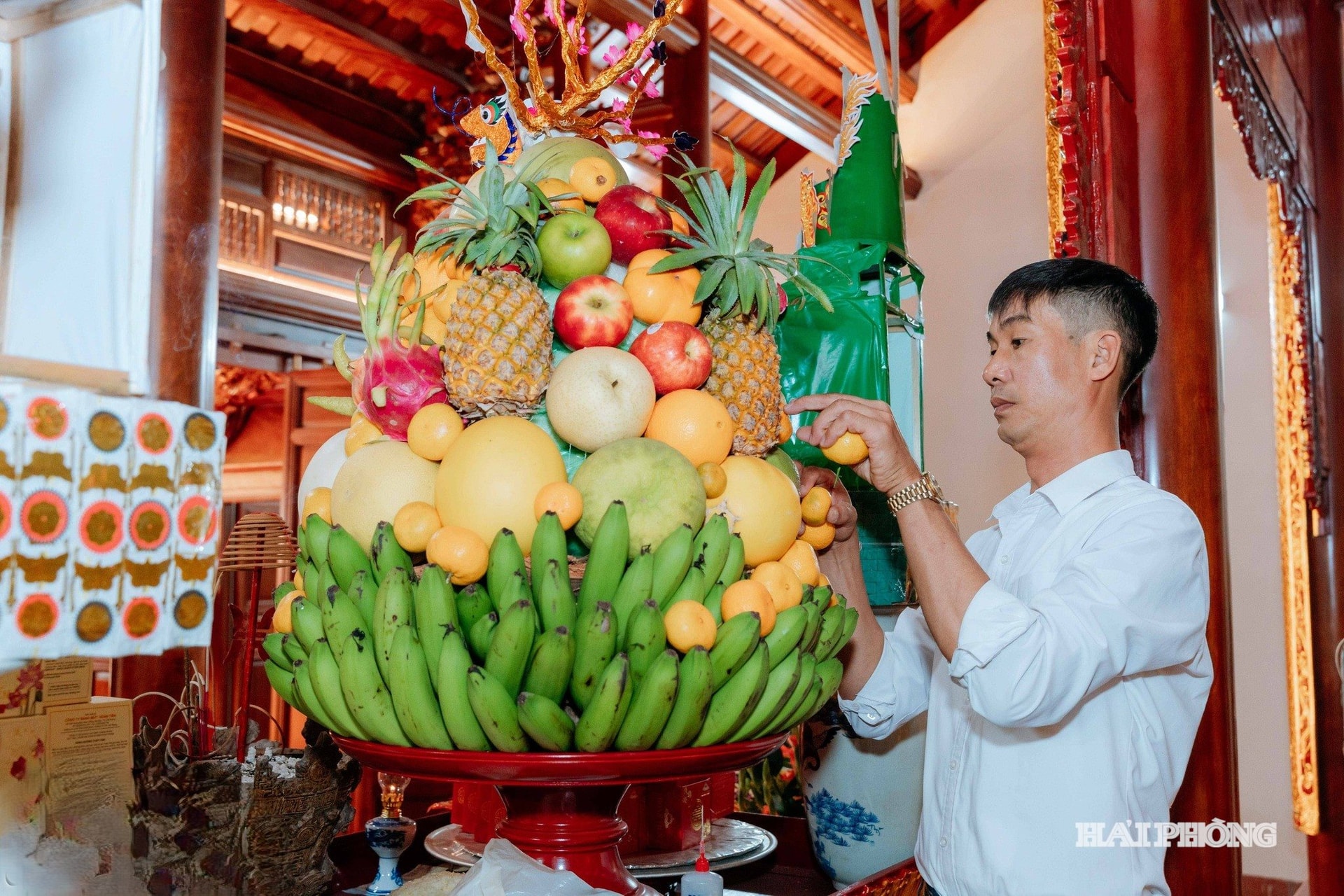
From family tradition to family business
Amidst the hustle and bustle of modern life, in Bach Dang ward ( Hai Phong ), there are still people quietly preserving the essence of Vietnamese Tet (Lunar New Year) with all their respect and love for their craft. Among them is artisan Bui Doan Gioi – the "golden hands" of arranging the five-fruit tray. The skillful and delicate hands of this artisan transform each tray of fruit not only into offerings to ancestors but also into works of art embodying the soul of national culture.
Born into a family with generations involved in the craft, Bui Doan Gioi first encountered fruit platters as a young boy, accompanying his father to arrange them for hire during Tet (Lunar New Year). Back then, he only knew how to help his father wipe the fruit and arrange it on the platter. Little did he know that this seemingly small profession would stay with him for life.
Over the years, his hands became accustomed to the curves of the pomelo, the shape of the banana bunch, the shade of red of the persimmon… and became proficient. He learned how to choose beautiful fruits according to the season, how to keep the colors fresh for longer, and how to arrange each layer so that it was both stable and elegant. But above all, he learned that the five-fruit offering is a token of respect and devotion to ancestors, which is the soul of the custom.
In Minh Tan commune (formerly Thuy Nguyen, now Bach Dang ward), only a few households still practice the craft, but it is people like Mr. Gioi who have kept the flame of this traditional craft alive. From a family custom, he elevated it into a profession, a source of livelihood, and a source of pride for his hometown.
A fruit platter crafted by artisan Bui Doan Gioi not only contains "enough fruit" but also "enough soul." Golden kumquats, red persimmons, green pomelos, and a bunch of curved bananas embracing the platter... are arranged by him according to the philosophy of the five elements, with the wish for abundance and a peaceful new year.
Not content with tradition, he also innovates. One year, he made a fruit platter shaped like a winding dragon using coconut husks and gold foil paper; another year, he added delicate tassels to lift the fruit more gracefully. Viewers not only see a beautiful fruit platter but also appreciate the skill, dedication, and meticulousness of the artisan.
Mr. Gioi shared: "Arranging the five-fruit platter is an art of subtlety. Each fruit placed on the platter must be meaningful, have a suitable shape, and match the color. Whether it's beautiful or not, sacred or not, depends on the heart of the person arranging it."
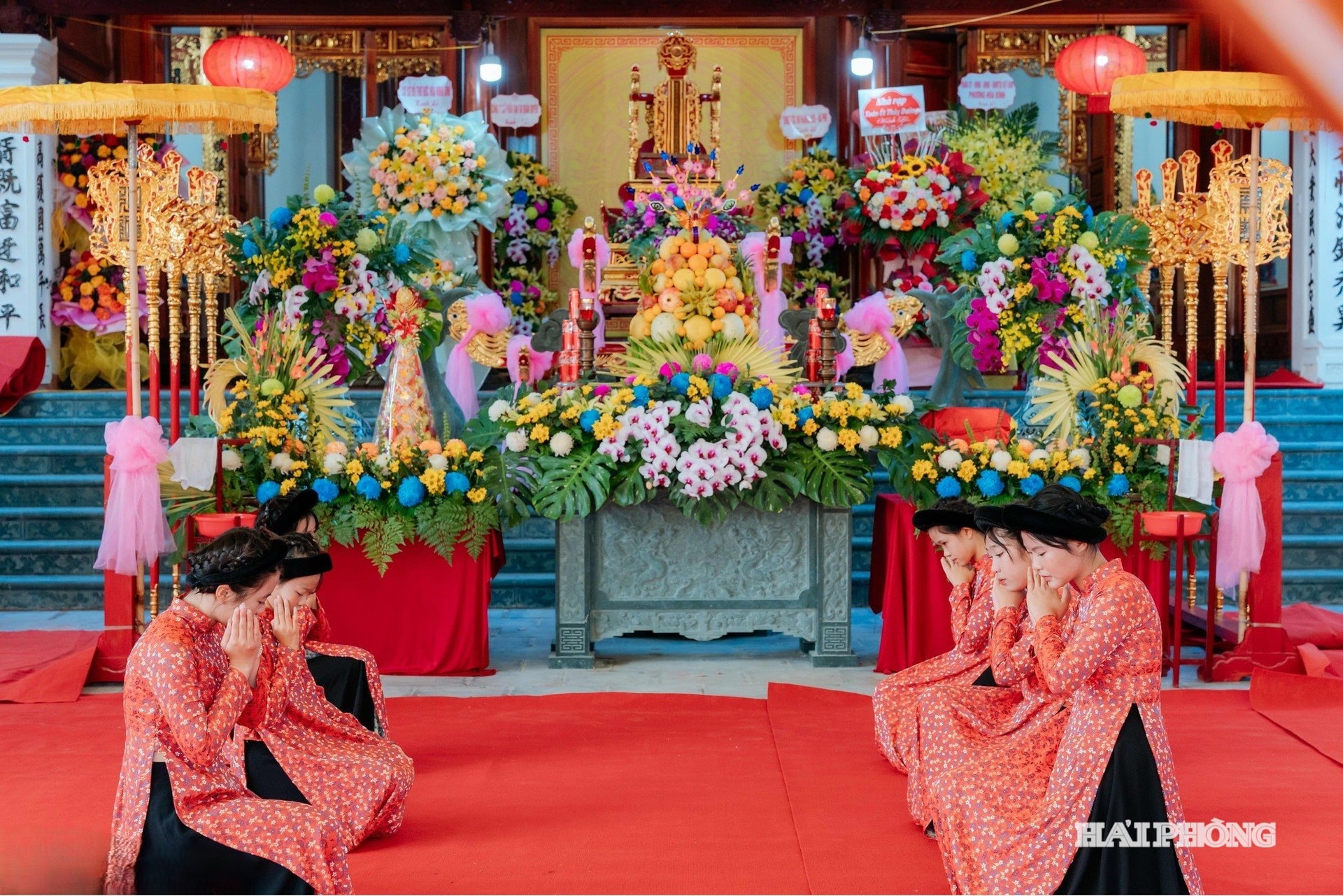
For many families in Thuy Nguyen, just looking at the plate of five fruits on the altar evokes a sense of home and the warmth and abundance of Tet.
Mrs. Luu Thi Hao, 72 years old, residing in Bach Dang ward, said that in the past, each family arranged the fruit platter themselves, but now with Mr. Gioi's help, the platter is both beautiful and in accordance with tradition. Looking at it makes Tet feel more complete. Many young families from within and outside the commune seek out Mr. Gioi to "order Tet platters," as a way to connect with tradition. They say that the five-fruit platter is not just decoration, but also a family lesson, a cultural story told through the colors of the fruits.
Cultural beauty
According to Mr. Nguyen Dinh Chinh, Chairman of the Hai Phong Folk Arts Association, the folk culture of arranging the five-fruit tray is a craft rich in symbolic value, embodying the philosophy of life and beliefs of the Vietnamese people. This custom possesses all the elements to become an intangible cultural heritage, as it is closely linked to the spiritual life of the community, passed down from generation to generation, and clearly reflects the national identity. Artisans like Mr. Bui Doan Gioi are doing the work of keepers of memory. They are not only arranging the five-fruit tray but also contributing to preserving a tradition and a philosophy of life.
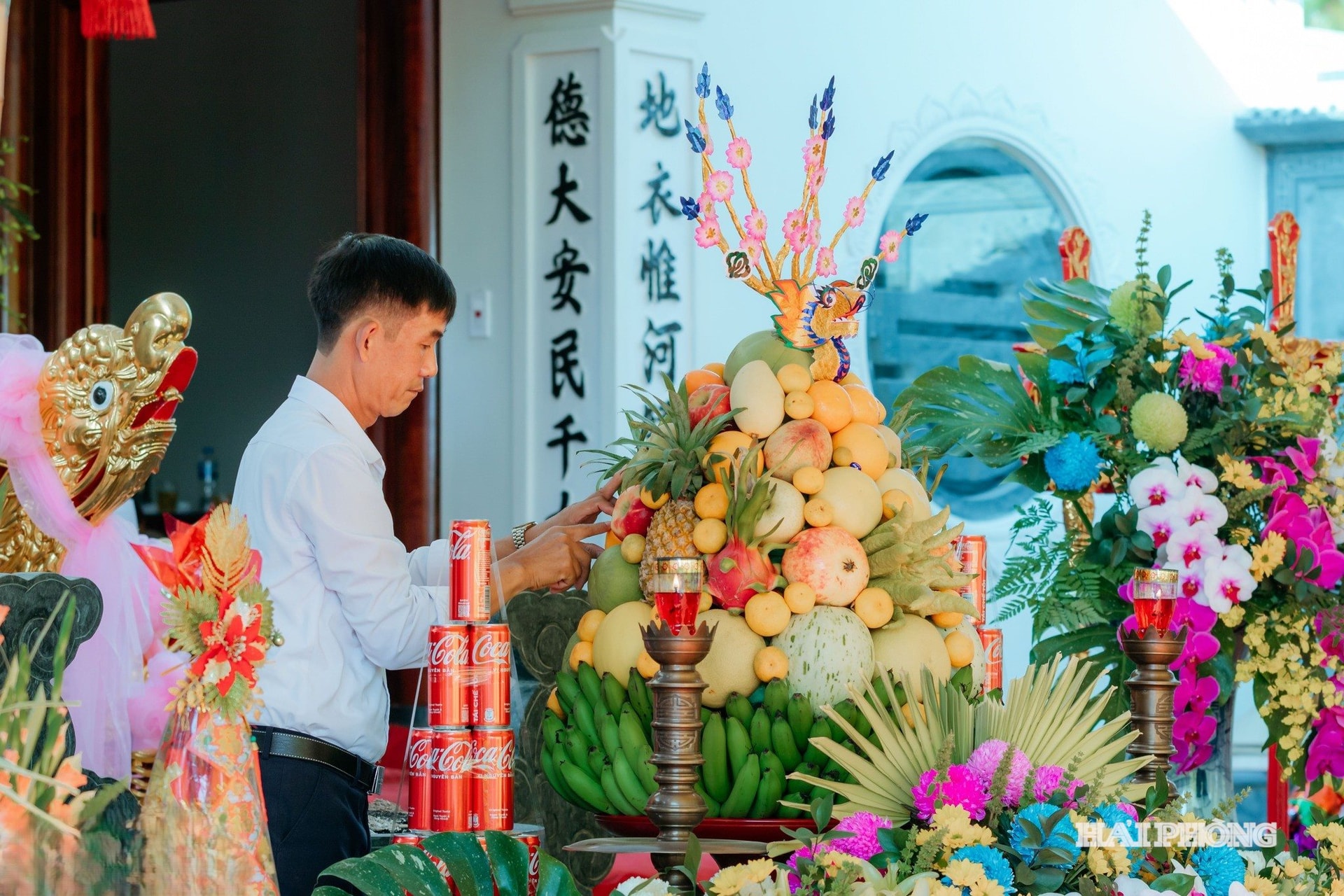
For many years, Mr. Gioi has both worked in the trade and taught the trade. He readily guides local youth, showing them how to choose fruits, how to arrange them on platters, and providing them with deeper knowledge about the meaning of each type of fruit.
He shared that whether this craft can be preserved depends on the younger generation. He deeply understands the need to pass it on to the younger generations. Thanks to this, the traditional five-fruit platter, which at one point seemed to be fading into obscurity amidst modern life, is gradually being revived.
Towards the end of the year, Mr. Gioi and his students receive many orders and hires to arrange fruit platters. The platters he makes are not only found in families but also appear at festivals, cultural events, and folk art exhibitions, contributing to spreading the beauty of Vietnamese Tet (Lunar New Year).
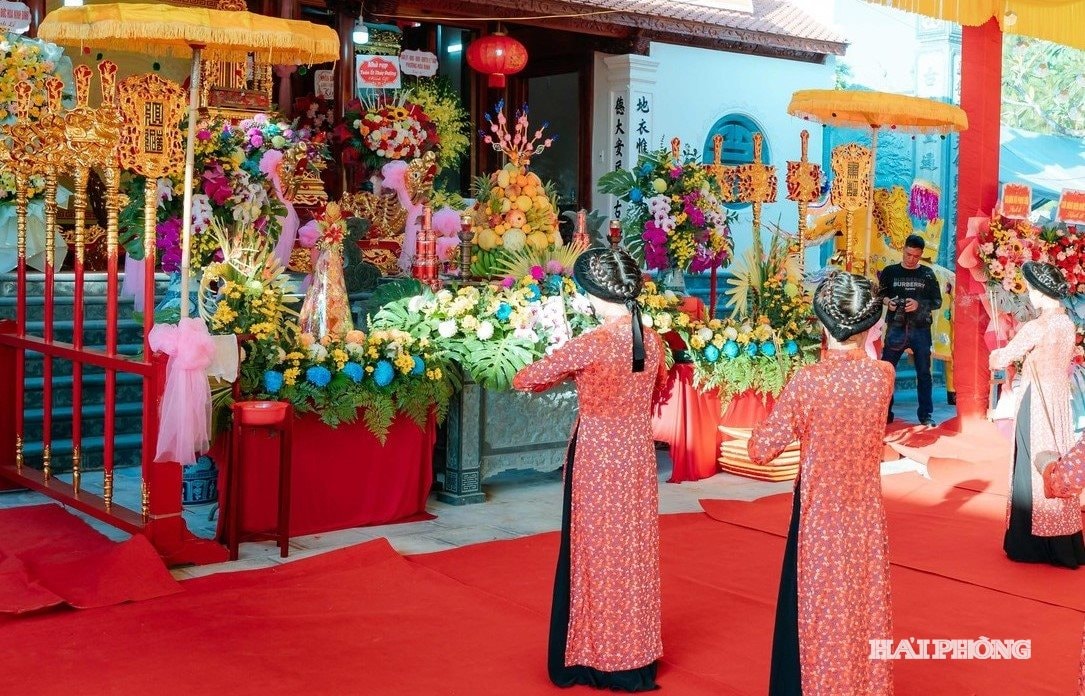
Over the years, the art of arranging five-fruit trays by Mr. Bui Doan Gioi and other artisans has been clear proof that tradition only disappears when people stop preserving it. But with diligent hands and passionate hearts like Mr. Gioi's, tradition is not only preserved but also renewed, infused with new life, and retold each year in a more beautiful way.
Amidst the green of the fruits, the golden hues of the Tet sunshine, and the red of hope, the artfully arranged five-fruit platter serves as a message to preserve what belongs to our roots. For it is not just a custom, but also the identity and soul of Vietnam in every home.
THU HANGSource: https://baohaiphong.vn/nghe-nhan-xep-mam-ngu-qua-bui-doan-gioi-nguoi-giu-gin-ky-uc-529134.html
![[Photo] The captivating scenery of the fragrant maple forest in Quang Tri](/_next/image?url=https%3A%2F%2Fvphoto.vietnam.vn%2Fthumb%2F1200x675%2Fvietnam%2Fresource%2FIMAGE%2F2025%2F12%2F10%2F1765353233198_lan09046-jpg.webp&w=3840&q=75)


![[Photo] Explore the US Navy's USS Robert Smalls warship](/_next/image?url=https%3A%2F%2Fvphoto.vietnam.vn%2Fthumb%2F1200x675%2Fvietnam%2Fresource%2FIMAGE%2F2025%2F12%2F10%2F1765341533272_11212121-8303-jpg.webp&w=3840&q=75)



















![[Video] The craft of making Dong Ho folk paintings has been inscribed by UNESCO on the List of Crafts in Need of Urgent Safeguarding.](https://vphoto.vietnam.vn/thumb/402x226/vietnam/resource/IMAGE/2025/12/10/1765350246533_tranh-dong-ho-734-jpg.webp)



















































Comment (0)