

Considered a foundational industry with significant contributions to economic development, the chemical industry plays a crucial role in the nation's "era of progress." To enhance its importance in this period, our reporter interviewed Mr. Vuong Thanh Chung, Deputy Director of the Chemical Department ( Ministry of Industry and Trade ).
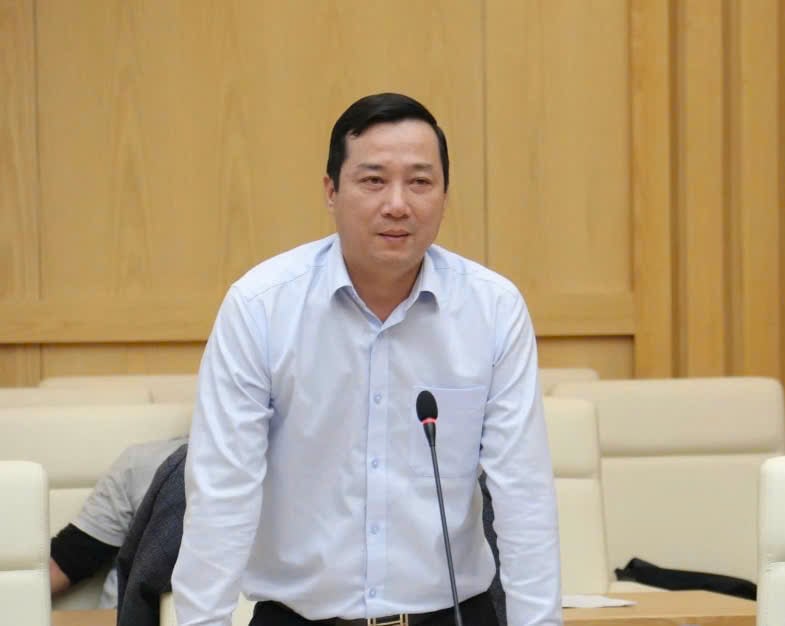
Mr. Vuong Thanh Chung - Deputy Director of the Chemical Department (Ministry of Industry and Trade)
- How do you assess the role and outstanding achievements of the chemical industry in the Vietnamese economy over the past years?
Mr. Vuong Thanh Chung: Chemicals are present in almost all aspects of life: from agriculture , processing industries, textiles - leather and footwear, construction materials to healthcare and high technology.
The more the economy develops, the more important the role of the chemical industry becomes, because it is an essential source of raw materials for key economic sectors, while also creating a foundation for the development of science and technology, green economy and circular economy.
Over the years, thanks to the attention of the Party and the State, the chemical industry has made significant progress. Currently, there are approximately 2,000 enterprises operating in the chemical sector nationwide. The total annual output of Vietnam's chemical industry accounts for about 10-11% of the total GDP of the industrial sector, and the value of the chemical industry's output accounts for 13-14% of the entire industrial sector. The development of the chemical industry contributes to improving domestic production capacity, gradually reducing dependence on imports, and progressively participating in the global value chain.
Over the years, the chemical industry has made a positive contribution to Vietnam's economic development. Specifically, in the period 2022-2025, the chemical industry attracted 27 outstanding projects with a total capital of nearly 100,000 billion VND, ranging from: technical rubber production; electrochemical power sources (batteries); basic chemicals, petrochemicals; industrial gases, to high-quality fertilizers.
Many international corporations such as AGC (Japan) or Dong Cang (China) have come to survey and invest in large-scale chemical complexes, showing that Vietnam is becoming an attractive destination on the regional chemical investment map.
Vietnam has established chemical industrial parks and complexes in many localities such as Ba Ria - Vung Tau, Phu Tho, Thai Nguyen, Thanh Hoa, etc., proactively incorporating specialized chemical industrial parks into planning, demonstrating a clear shift in perception regarding the role of the chemical industry. These industrial parks are oriented towards: modernity, safety, integration with the circular economy, and leveraging the advantages of seaports and logistics.
Although Vietnam still imports more chemicals than it imports, domestic products have begun to improve in quality and variety. This lays the groundwork for gradually reducing dependence on imports in the future.
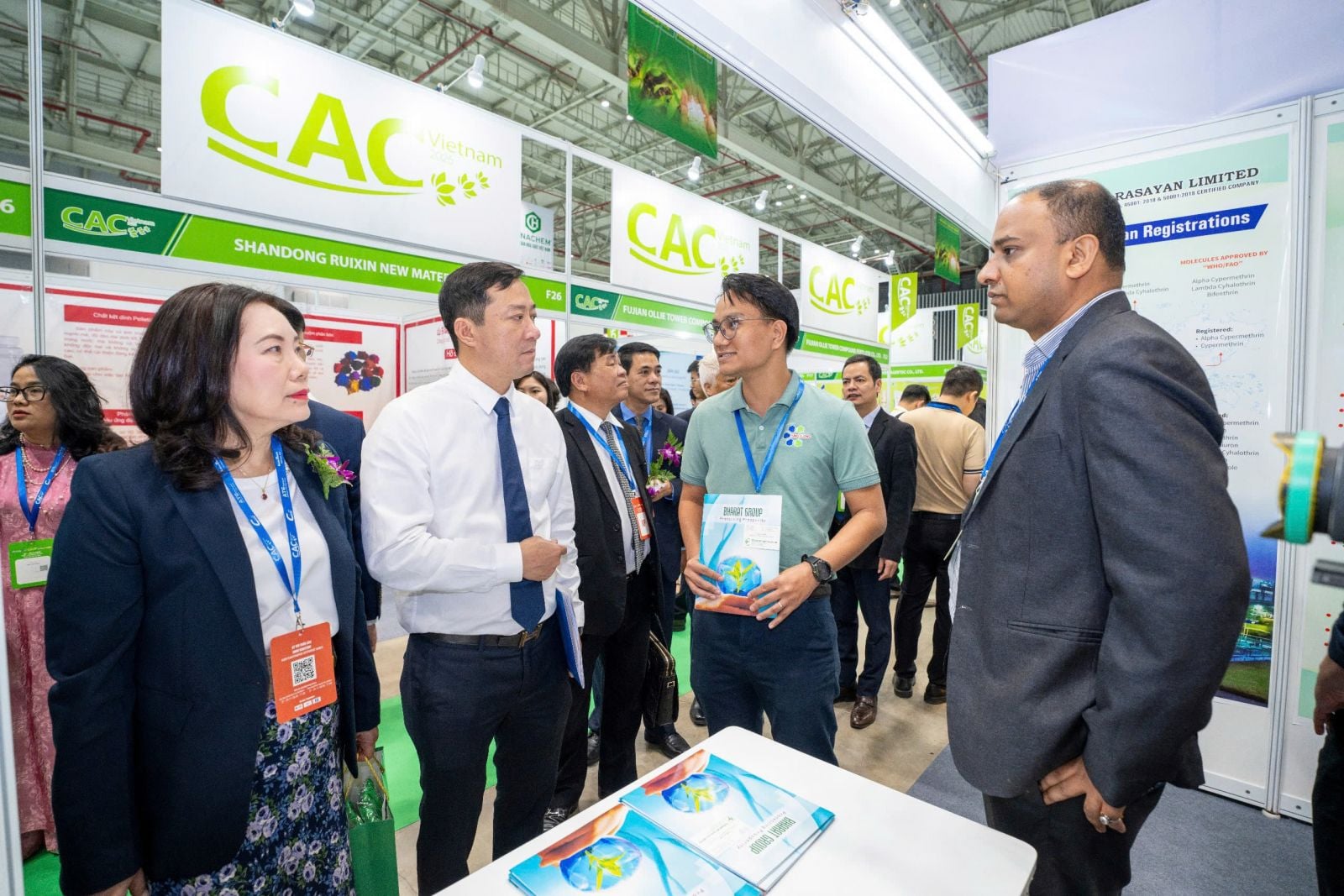
Mr. Vuong Thanh Chung (second from the left) attends the Vinachem Expo in Ho Chi Minh City. Photo: TC
- Besides the opportunities, what challenges is the chemical industry facing, sir?
Mr. Vuong Thanh Chung: Besides its achievements, Vietnam's chemical industry is facing numerous challenges. These challenges include uneven awareness among localities, with some areas still hesitant to attract chemical projects due to concerns about environmental safety.
Furthermore, although there are approximately 2,000 businesses operating in the chemical sector, the majority of domestic chemical companies are weak, lacking capital and technology, and struggling to compete with businesses that have foreign direct investment.
Chemical projects require large investments and advanced technology, while the existing credit mechanisms are not yet fully adequate. A lack of data in the chemical industry hinders forecasting and policy planning by relevant authorities. The legal framework regarding chemicals is inconsistent and does not meet the demands of economic development…
- To overcome challenges and realize the goal of turning Vietnam into a modern industrial country by 2045, what policies have the Party and State had to encourage the development of the chemical industry in the coming time, sir?
Mr. Vuong Thanh Chung: In recent times, the Party and State's policies related to the development of the chemical industry and high-level strategic documents have clearly identified chemicals as a fundamental industry that needs priority development.
Specifically, the Socio-Economic Development Strategy 2021-2030 emphasizes the development of fundamental industries such as energy, metallurgy, mechanical engineering, and chemicals, while promoting the green economy and circular economy. Resolution 29-NQ/TW of the Central Committee of the Communist Party of Vietnam on Continuing to Promote Industrialization and Modernization of the Country until 2030, with a vision to 2045, also emphasizes prioritizing the development of basic chemicals, petrochemicals, pharmaceuticals, and fertilizers.
Conclusion 81-KL/TW of the Politburo dated June 4, 2024, on continuing to implement Resolution No. 7 of the 11th Central Committee on proactively responding to climate change, strengthening resource management and environmental protection, also places emphasis on green transition and reducing dependence on fossil fuels…
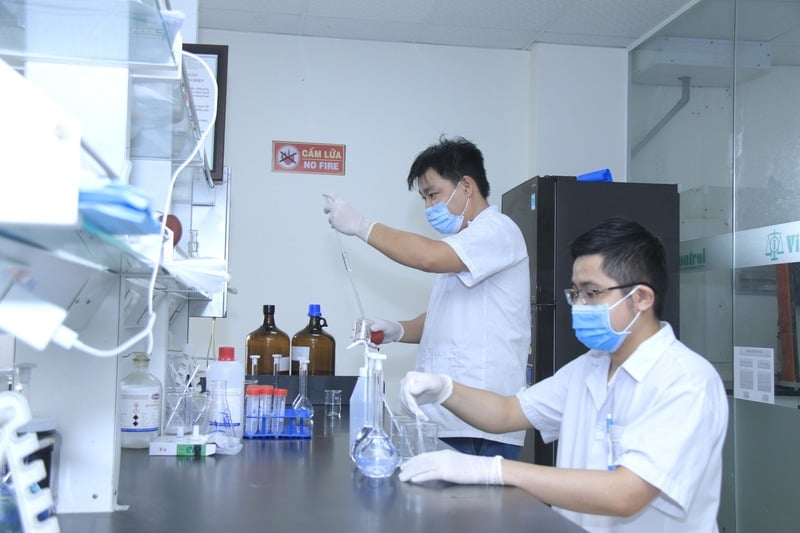
The chemical industry is facing new opportunities for growth. (Illustrative image)
In particular, the Strategy for the Development of the Chemical Industry until 2030, with a vision to 2040, as outlined in Decision 726/QD-TTg of the Prime Minister, is a crucial step, creating a legal framework for the modern and sustainable development of the chemical industry. These orientations clearly demonstrate the determination of the Party and the State to build a self-reliant, green, and high-tech chemical industry.
To ensure the chemical industry truly becomes a pillar of the economy, in 2025 the National Assembly enacted the amended Chemical Law, which came into effect on January 1, 2026. The 2025 Chemical Law for the first time clearly defines key chemical industry sectors such as: basic chemicals, petrochemicals, pharmaceuticals, high-quality fertilizers, hydrogen production, green ammonia, specialized chemical industrial zones, and large-scale chemical complexes.
Accordingly, eligible projects will enjoy preferential treatment under a special mechanism, including: preferential import tax and corporate income tax (10% for 15 years according to the 2025 Corporate Income Tax Law), land incentives, technology transfer support, priority access to credit, and human resource training. This is an important legal framework to encourage in-depth investment in strategic sectors.
To ensure chemical safety and security, the Chemical Law also requires that projects must develop plans to prevent and respond to chemical incidents right from the investment preparation stage. Comply with safety distance planning when arranging the site. The feasibility study report must fully demonstrate safety solutions. These are mandatory regulations to ensure the chemical industry develops sustainably and is safe for the community.
Alongside this, promoting green transformation, circular economy, and digital transformation is crucial. The Chemical Law includes requirements for selecting resource-efficient technologies, reducing the use of hazardous chemicals, minimizing waste, designing production according to green chemistry principles, and applying digital transformation in corporate governance and state management. This is an inevitable trend in the global chemical industry and opens up opportunities for the Vietnamese chemical industry to develop strongly in the new era.
Thank you, sir!
Mr. Vuong Thanh Chung - Deputy Director of the Chemical Department (Ministry of Industry and Trade): The Vietnamese chemical industry is facing a great opportunity to break through and become an important driving force of the economy. With a new legal framework, with the determination of the Government, the support of localities, businesses and the scientific community, Vietnam can absolutely build a modern, green, safe and self-reliant chemical industry. |
Source: https://moit.gov.vn/tin-tuc/phat-trien-cong-nghiep/nganh-hoa-chat-dang-dung-truoc-co-hoi-but-pha.html


![[Photo] Closing Ceremony of the 10th Session of the 15th National Assembly](/_next/image?url=https%3A%2F%2Fvphoto.vietnam.vn%2Fthumb%2F1200x675%2Fvietnam%2Fresource%2FIMAGE%2F2025%2F12%2F11%2F1765448959967_image-1437-jpg.webp&w=3840&q=75)

![[Photo] Prime Minister Pham Minh Chinh holds a phone call with the CEO of Russia's Rosatom Corporation.](/_next/image?url=https%3A%2F%2Fvphoto.vietnam.vn%2Fthumb%2F1200x675%2Fvietnam%2Fresource%2FIMAGE%2F2025%2F12%2F11%2F1765464552365_dsc-5295-jpg.webp&w=3840&q=75)

































![[OFFICIAL] MISA GROUP ANNOUNCES ITS PIONEERING BRAND POSITIONING IN BUILDING AGENTIC AI FOR BUSINESSES, HOUSEHOLDS, AND THE GOVERNMENT](https://vphoto.vietnam.vn/thumb/402x226/vietnam/resource/IMAGE/2025/12/11/1765444754256_agentic-ai_postfb-scaled.png)








































Comment (0)